


Whitcomb: Fading Into Fall; Denser in Newport; For the ‘’Suckers,” Nasty Telegram; Go for Geothermal
Robert Whitcomb, Columnist
Whitcomb: Fading Into Fall; Denser in Newport; For the ‘’Suckers,” Nasty Telegram; Go for Geothermal

As often as he let himself be seen
We pitied him, or scorned him, or deplored
The inscrutable profusion of the Lord
Who shaped as one of us a thing so mean—
Who made him human when he might have been
A rat, and so been wholly in accord
With any other creature we abhorred
As always useless and not always clean.
Now he is hiding all alone somewhere,
And in a final hole not ready then;
For now he is among those over there
Who are not coming back to us again.
And we who do the fiction of our share
Say less of rats and rather more of men.
-- “The Rat,’’ by Edwin Arlington Robinson (1869-1935), American poet and playwright
“I had the new books—words, numbers,
and operations with numbers I did not
comprehend—and crayons, unspoiled
by use, in a blue canvas satchel
with red leather straps.’’
-- From “Three Songs at the End of Summer,’’ by Jane Kenyon (1947-1995), American poet
“The fall season is increasingly being seen as an extension of summer. It’s warming fast.”
-- Jennifer Marlon, a climate scientist at the Yale School of the Environment
xxx

Going to new places, seeing people that you only see every few summers, not having to wear a lot of clothes, etc. But maybe they/we didn’t really want to do all those things anyway, and end-of-summer regrets are simply reminders of bigger, long-term regrets.
Anyway, the weather over the next month and a half is apt to be the best of the year. The mellow weeks.
Do we tend to remember summers with more detail than other seasons?
xxx
I went with some friends to a gorgeous beach, part of a farm/estate, in South Dartmouth, Mass., last weekend. Classic South Coast summer day -- southwest breeze, Buzzards Bay water in the mid 70’s, big boats on the slightly hazy horizon, small ones a few hundred yards off the beach.
The strand has impressive sand dunes whose fast transformations by storms can be wondrous. Beach plums waiting to be turned into jelly. And a river that kids love to float down on to the bay. All recalling an old painting. Such beauty close by.
The beach and the cattle pasturage (interrupted by small groves of low-lying trees) behind it is a conservation area, aimed especially at protecting such endangered species as piping plovers. We saw a few of the tiny creatures, but most of them have already migrated south (by night), having no interest in Labor Day cookouts or beer. Meanwhile, monarch butterflies are migrating south by day.
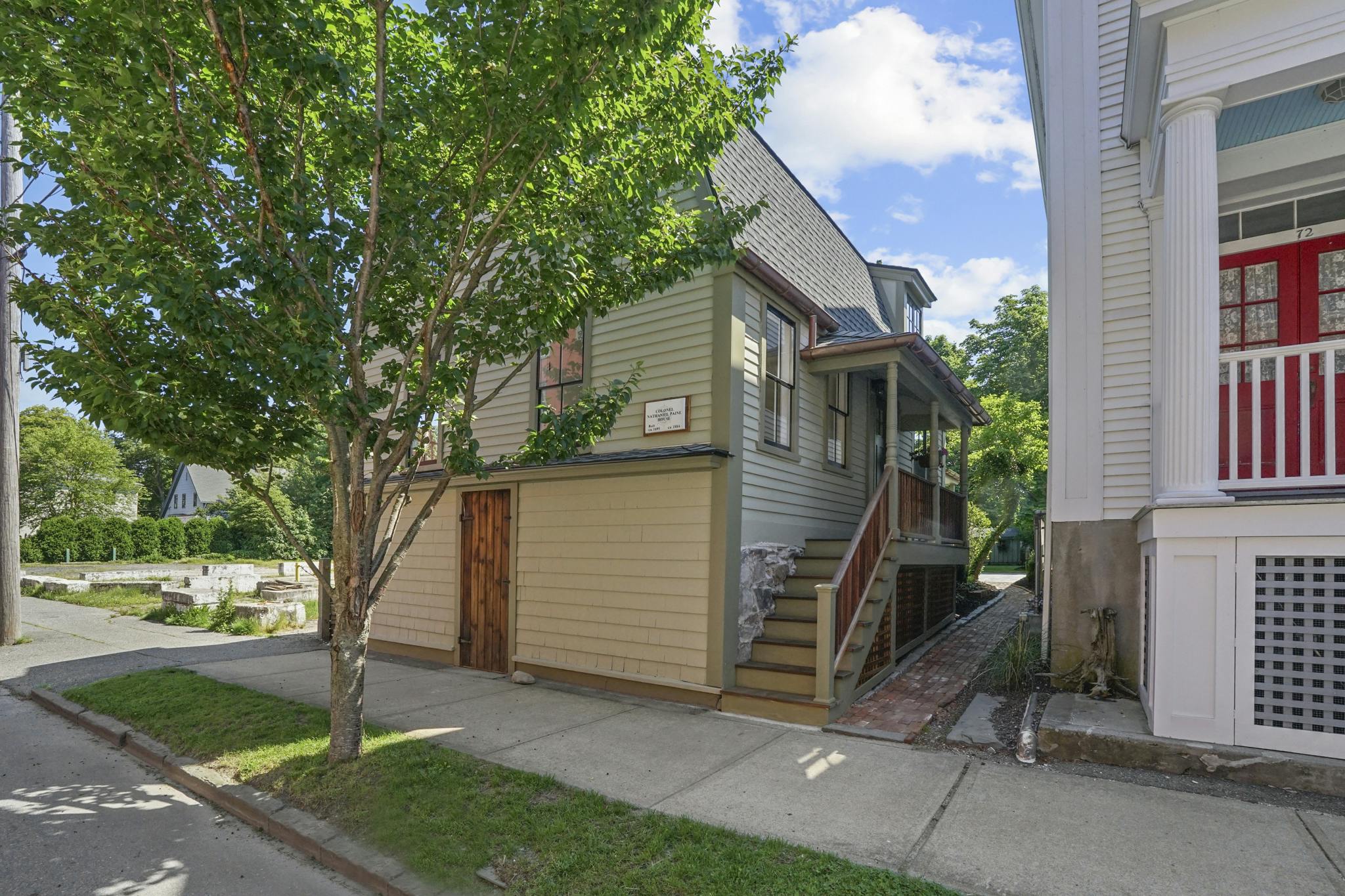
Tight little Newport, and many other places, seek to address the housing shortage and cost by encouraging the construction of accessory dwelling units (ADUs) on owner-occupied residential property. This housing is generally supposed to be primarily for elderly and/or disabled people, and in The City by the Sea would be limited to one-bedroom and studio units of no more than 900 square feet and two-bedroom units at 1,200 square feet.
Certainly creating more space for the elderly, the fastest-growing part of the population, is a fine idea! Rhode Island is ranked as eleventh among the states in its percentage of people 65 and over. We’ll see if many much younger people end up living in the ADU’s, whatever the laws. Meanwhile, using them for short-term rentals – a temptation in mega summer resort city Newport – is banned. All this will be tough to monitor.
Then there’s the always tricky parking issue. While the new rules say that no additional parking would be required for a new ADU, currently required parking removed as part of building an ADU would have to be replaced.
I’ll be curious to see if many people without cars move into the ADU’s, opting to rely on bikes, Uber and Lyft, and public transit instead. Maybe many of them will be young adults.
In any event, increasing the supply of housing is essential, but tough. Too many people oppose greater density, even as the population swells. They want wide-open spaces in their neighborhoods.
The delightful Newport This Week has good coverage on ADU’s in that city:
You Can Bet on Bad Stuff
States that have legalized sports betting – including all six of the New England states – in order to grab more money without (directly) taxing people, reap the social pathologies that go with this states’ taking advantage of gamblers’ hopes and addictions, as a brilliant Bloomberg News report shows. The report says:
“The findings {on the effects of sports betting} were staggering: a 28% jump in bankruptcies and an 8% increase in debt sent to collection, as well as growth in late auto loan payments and weakened credit scores. ‘The fact that we can find anything in the aggregate suggests that the impact for individuals is quite large,’ says UCLA professor Brett Hollenbeck.’’
Of course, sports betting fertilizes a culture of corruption in sports itself. And how do the states spend the money? Ah, the squalor that governments have gotten themselves into! But, then, I’m old-fashioned. For instance, I wish they’d bring back the Sunday “Blue Laws.’’
xxx
Why is road signage so often confusing/incomplete/erroneous in this region? It gets particularly frustrating in the area of a public-works crisis like Rhode Island’s infamous Washington Bridge. It’s remarkably easy to miss your exit and go in circles.
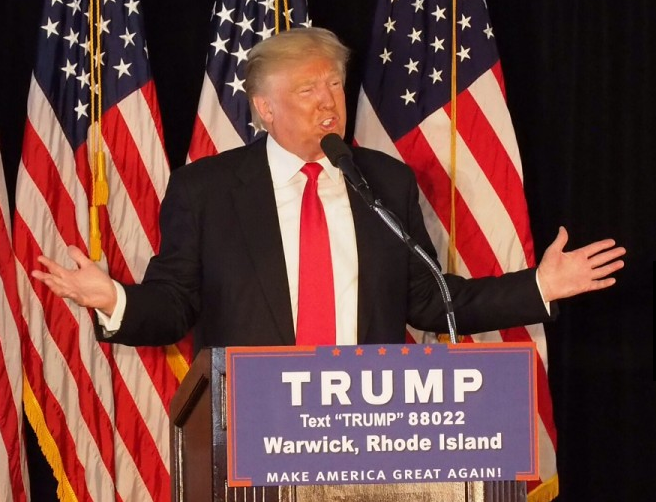
Hilarious remarks for the psychopath worshipped by many millions of Americans:
Trump told TV pop psychologist “Dr. Phil’’ McGaw:
“If Jesus Christ came down and was the vote counter, I would win California, OK….In other words, if we had an honest vote counter, a really honest vote counter — I do great with Hispanics, great, I mean at a level no Republican has ever done. But if we had an honest vote counter, I would win California.”
Recent polls show Kamala Harris leading Trump by more than 30 points in The Golden State.
Here’s another howler from the man who packed the U.S. Supreme Court with anti-abortionists: He said on his Truth Social scam site, more accurately called Lie Central, “My administration will be great for women and their reproductive rights.”
Of course, Trump has no principles one way or the other on abortion; indeed, one wonders if he paid for a few. He was just appealing to right-wing evangelicals and Catholics. He was being, as always, transactional. I’m sure that most of his besotted fans will forgive his latest rhetorical gyrations.
In private, he has called them "fools," "idiots," and "schmucks’ and says about Christianity: “Can you believe that bullshit?’’
And the man who called American soldiers “suckers’’ illegally used Arlington National Cemetery last Monday as a political venue to denounce Biden about our messy exit from Afghanistan, an exit that was put in motion by Trump.
But wait! There’s more!
On Aug. 15, Trump addressed Miriam Adelson, widow of a huge Trump campaign contributor, casino mogul Sheldon Adelson. Trump had given Mrs Adelson the Presidential Medal of Freedom in 2018. He said that that award was "much better" than the Congressional Medal of Honor, the highest military award.
Not Crowded Enough?
As J.D. Vance and other American fascists promote the idea that (just native-born?) Americans should have more children; take a look at what America looks like now, with 340 million people. We need more homeless people and man-made environmental disasters. And look at how the Red States are far less willing to spend the money to help children than are those nasty left-wing Blue States.
But the very smart Vance, whose career is rich with hypocrisy and political plasticity, may actually believe little of what he pronounces on. He could be as transactional as Trump as he appeals to his gullible base. After all, the hyper-ambitious Ohioan has effectively been running for office since he was a teenager.
‘Free Speech’ and Crime
The French have arrested Pavel Durov, the founder and head of Telegram, on charges of enabling child pornography and other crimes on that Internet service. Telegram has become a cesspool of disinformation, scams and far-right conspiracy theories. It would be soothing to think that Durov’s arrest will reduce Telegram’s influence, though it’s hard to see how it can be killed. In any event, it’s always whack-a-mole when it comes to dealing with bad stuff on the Internet.
Of course, some extreme Telegram users will assert that the French are outrageously attacking free speech. But any democracy, such as France, must balance protecting the public’s welfare and free speech -- often a very difficult chore.
Read Darrell West’s new book on disinformation:
Energy From Below
Data centers require massive amounts of electricity. The demand is rapidly increasing, especially with the gargantuan need for artificial intelligence. But at least in some places, clean geothermal energy can be used to generate the juice, using tools similar to those for fracking for natural gas and oil. A great thing about geothermal energy, of course, is that it comes from underground and so doesn’t involve putting up big, very visible -- and thus controversial -- projects, particularly wind turbine and solar farms, on large tracts. Indeed, geothermal facilities take up much less land than they do. It’s a way of avoiding some nimbyism.
Geothermal heating and cooling for homes is very clean and efficient, too, though it can cost homeowners well north of $20,000 to install.
In any event, we need to pay more attention to the promise of geothermal.
Medicare Advantage Scams
I wish they’d never invented Medicare Advantage, a marvelous tool for insurance companies to use to fleece the taxpayers. Recent investigations by The Wall Street Journal and other media have detailed how insurers, such as United HealthGroup, send nurses on home visits to try to add new diagnoses, some bogus, so it can bill Medicare more.
Medicare Advantage, which insurance company lobbyists love, is offered by Medicare-approved insurers, as opposed to the entirely federal system that is traditional Medicare. If you’re really sick, you’re generally better off with traditional Medicare, whatever the snazzy ads by insurers offering Medicare Advantage plans.
Medicare Advantage plans can cost taxpayers around 6 percent more per patient than traditional Medicare. That adds up to many billions of dollars a year.
Here’s a good comparative look: