


Whitcomb: Month of Mock Horror; Zoning Revolution? A Much Bigger Looter
Robert Whitcomb, Columnist
Whitcomb: Month of Mock Horror; Zoning Revolution? A Much Bigger Looter

“Always so late in the day
in their rumpled clothes, sitting
around a table lit by a single bulb,
the great forgetters were hard at work."
-- From “Always," by Mark Strand (1934-2014), Canadian-American poet. To hear him read the poem, hit this link.
GET THE LATEST BREAKING NEWS HERE -- SIGN UP FOR GOLOCAL FREE DAILY EBLAST
“Life is a zoo in a jungle.’’
-- Pete De Vries (1910-1993), American novelist and editor
"Happiness is not a potato, to be planted in mould, and tilled with manure.’’
-- Charlotte Bronte (1816-1855), English novelist and poet, in Villette
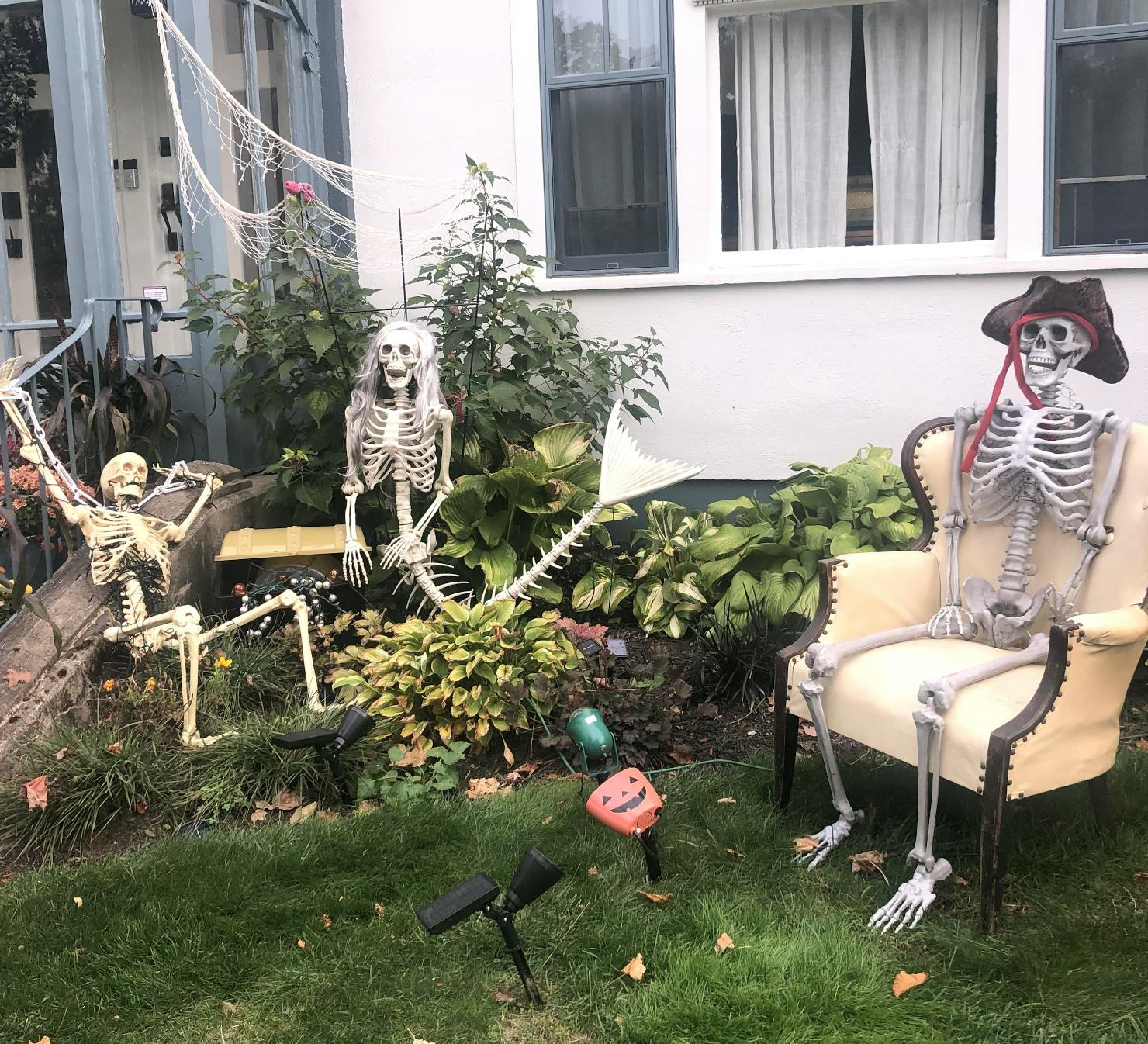
My theory is that despite, or because of, the macabre subject matter, the show cheers up people up as they deal with the dwindling sunlight of fall, creating a sort of month-long festival feeling. And maybe for a few people particularly worried about death, the annual show acts as a kind of exposure therapy.
Of course, Halloween decorations and kids’ trick-or-treating gives many people a pleasant sense of neighborhood friendliness and cohesion.
That more adults have been celebrating what had for decades after World War II had been mostly a show for young children from two-parent households says something about changing demographics and mores. These days, Americans tend to have fewer children, and to marry later, if at all. So younger adults, say 30 and under, decide to enjoy acting like kids themselves on Halloween.
So there’s less trick or treating and more highly liquid parties attended by adults in crazier costumes than the little kids wear. As poet Ogden Nash famously noted in “Reflections on Ice-Breaking,’’ liquor works quicker than candy.
Halloween is definitely more evocative in New England, with its innumerable old houses and cemeteries, than in the rest of the country.
Anyway, on All Souls Day, Nov. 1, there’s a sugar-crash letdown even as we look forward to what people feel they must say is their favorite holiday -- old, heavy, gray Thanksgiving.
xxx
I love the silliness of contests for growing the biggest pumpkin. Orange seems such a comic color.
xxx
You could say that New England is the heartland of American college football, going back to the late 19th Century. And for years, in what became known as the “Ivy League,’’ the region’s teams were national-level players.
That dominance ended many decades ago. But still, watching public and private colleges play football on a Saturday afternoon hereabouts can be a joy: The crisp air, the bright foliage and a mood in the stands more relaxed and even jokey than in what has effectively become professional football at big universities in most of the country. We’ve hung on to our amateurism.
xxx
Is it time to remove the screen panels from windows as the nights grow cooler?
We watch rhododendron leaves curl and uncurl as temperatures fluctuate.

Will the building still be there in five years? I’d guess no. Sad. I hope that I’m wrong. What’s the commercial attraction of this Art Deco pile?
New England states should do much more of this sort of partnership to boost their negotiating power in various sectors. And after all, it’s a compact region.
Massachusetts, Rhode Island, and Connecticut will collaborate to try to attract up to 6,000 megawatts from big offshore wind-power projects at rates hopefully more affordable than if they negotiate separately.
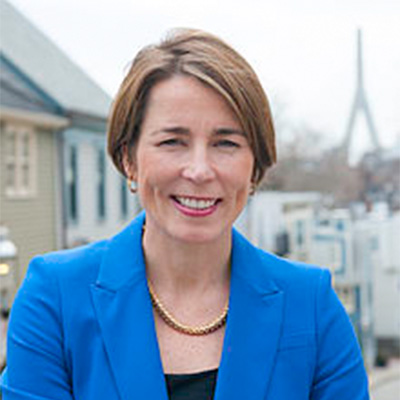
Massachusetts Gov. Maura Healey said:
“Working together, through this new agreement, we can align our procurements to leverage our collective buying power. We can lower project costs and maximize benefits for ratepayers across the region. And we can increase efficiencies and reduce project risk for offshore wind developers.’’
We’ll see how this works out, but it’s a good approach, especially as higher interest rates, supply-chain snarls and higher equipment and other costs -- make getting such big utility projects done even tougher.

Other cities and states will be watching carefully to see what happens to a program, dubbed “Yes, in My Backyard,’’ proposed by New York City Mayor Eric Adams’s administration. The plan is to add 100,000 new housing units over a 15-year period by removing many zoning rules. This would include ending mandates for parking in new developments, encouraging shared housing (“dorm style”) and “accessory housing (e.g., “granny buildings”), letting developers expand apartment houses by 20 percent if new units are deemed “affordable,’’ and facilitating housing construction along rail and bus lines, in order to cut back on car traffic, free up land for parks and other non-parking uses and ease commuting for low-and-middle-income people.
The administration also seeks ways to accelerate the conversion of office buildings into housing now that it’s clearer than ever that in an age of remote work, a lot of big office buildings will never be filled with offices again.
Of course, New York City will need a lot of support from state officials to push this through. But variations of the Adams program will need to be enacted, and not just in Gotham. Not in My Backyardism (NIMBYism) and long-outmoded zoning rules promise to steadily worsen America’s housing supply-and-affordability crisis. Actually, in many jurisdictions it’s more Build Absolutely Nothing Anywhere Near Anything (BANANAism).
New York’s housing problems are similar to those in other American cities, just bigger and more dramatic.
Meanwhile, and not surprisingly, Adams wants to suspend New York City’s longstanding obligation to provide shelter to anyone who seeks it, as thousands of migrants pour in from the southern border.
Just how tough it can be to build any new housing was displayed when a developer recently gave up trying to build an attractive 495-unit apartment complex on parking lots that are now mostly empty at inner Boston suburb Braintree’s South Shore Plaza after strenuous opposition from many in that community.
Thus evaporated what you’d think would have been an inviting and not entirely car-dependent mixed-use village and a source of sorely needed tax revenue to pay for the town’s services.
Towns and cities are legal children of the states, and as the housing crisis worsens, the states will have to step in many cases and override such local opposition to new housing.
xxx
In a world in which so much of the GOP had not turned into a nihilist nightmare, voting for Gerry Leonard over Democratic political operative Gabe Amo in the First Rhode Island Congressional District race might have seemed reasonable. But do responsible voters around here, conservative or otherwise, really want to boost the GOP power in the U.S. House, run by right-wing extremists from Red States?
xxx
On and on they go, whining about federal deficit spending (which has swelled under Republican and Democratic presidents since Bill Clinton left office) while demanding ever more tax cuts. But most of the spending is for programs that polls indicate that the voters want; indeed, they’d like an expansion in some areas, such as for universal health care.
Yes, federal deficits are too big, but they can be brought down with federal tax increases that would strengthen the economy by stabilizing our fiscal condition. As things stand, federal tax policy favors the affluent, especially because they pay capital-gains tax rates that are much lower than those on earned incomes. They can and should pay more in taxes to support a country that has been so good for them. Anyway, take a look at this history:
And America, as all other advanced economies have long had, would do well to have a value-added tax. European Union member nations, on average, get about 20 percent of their revenue from these sales taxes.
Wouldn’t it be fair if Americans were actually expected to pay for the services they demand?
xxx

But some GOP/QAnoners would prefer that Putin win. They don’t like democracies and indeed would prefer to have a dictator in America who will clamp down on all the people they hate, as Putin has done to his opponents in Russia. Indeed, the GOP/QAnon leader has indicated his desire to kill some of them.
Take a look at our Ukraine spending:
xxx
The leading Duke of Disorder in the U.S. House is probably Florida’s scandal-plagued Matt Gaetz (R-Narcissism). Now that he has helped get rid of the duplicitous Kevin McCarthy as speaker, it will be interesting to see if the heightened attention means that we’ll learn more about his various activities and maybe also those of his father, Don Gaetz, who made millions in the health-care biz and was a powerful state senator from the far-right-dominated (but heavily supported by federal spending) Florida Panhandle. Apparently, young Gaetz wants to run for Florida governor.
By the way, young Gaetz has been a persistent advocate of privatizing long stretches of beach in his district, which of course would be a boon for developers (bearing campaign donations), if not the public. But then, coastal developers are in the driver’s seat in the Sunshine State.
The melodrama in the House has given rise to all sorts of bloviations in the political-prediction industrial complex about the effects on the 2024 elections. But predicting how an event now might affect an election in a year is a fool’s errand. Who knows what might happen later today to change the course of history and the fortunes of the politicians swimming in it?
xxx

Threatening to shoot looters has a long tradition in America, say in the chaos that follows a natural disaster such as a hurricane.
Hit this link for examples:
xxx
Biden has done some fine things, especially in infrastructure, in helping Ukraine try to survive a barbaric dictator’s onslaught and in trying to speed the transition away from fossil-fuel burning. But Biden and most other luminaries in his administration have done a very crummy job in explaining and touting their achievements. Biden’s age-related weak voice doesn’t help.