


Whitcomb: Providence Recession Prep; Maine Chance; Extended-Family Housing
Robert Whitcomb, Columnist
Whitcomb: Providence Recession Prep; Maine Chance; Extended-Family Housing

“War … panders to instincts already well catered for within the scope of any respectable domestic establishment.’’
-- Alan Bennett (born 1934), English actor, author, playwright and screenwriter
GET THE LATEST BREAKING NEWS HERE -- SIGN UP FOR GOLOCAL FREE DAILY EBLAST
“A good education is not so much one which prepares a man to succeed in the world as one which enables him to sustain failure.’’
-- Bernard Iddings Bell (1886-1958), was an American author, Episcopal priest and conservative cultural commentator.
Nature's first green is gold,
Her hardest hue to hold.
Her early leaf's a flower;
But only so an hour.
Then leaf subsides to leaf.
So Eden sank to grief,
So dawn goes down to day.
Nothing gold can stay.
-- “Nothing Gold Can Stay,’’ by Robert Frost (1874-1963)
We swim in chlorophyll at this time of year, heading into the year’s maximum greenery. Those blooming trees are in their glory for at most a week, and then decorate the ground below for only a day or two with their fading, fragile petals, almost like a warning that fall is coming.

I remember while camping out with a couple of pals on a Maine fishing trip many decades ago waking up on a May morning with our tents sagging under several inches of snow.
Ah, graduations are coming soon.
Of course, as you get older, more and more of your contemporaries are dying. But for some reason, I increasingly think of my friends who died young, of now-curable cancers, car crashes and the Vietnam War. There they were, and then they weren’t.

Of course, it must be carefully studied, and there are many detailed questions to ask, but Providence Mayor Brett Smiley’s proposed budget sounds reasonable and responsible, especially given that the federal dollars that the city got to deal with the COVID pandemic are mostly in the past.
Among his remarks:
“What I found was clear: Our current system is not sustainable. In the last three years, one-time federal funding was used to cover budget gaps that now exist without a permanent solution. And just last year, taxes were cut to historic lows, making Providence the 8th lowest property tax rate in the state, even though we service the most people {many of them poor}, and nearly half of the land is tax-exempt.”
“We are likely on the brink of a recession, and relying on irresponsibly low tax rates will not prepare us for what’s ahead.’’
"That’s why in addition to a commercial tax decrease, we are also proposing a modest increase to our residential property tax rate, which will still make Providence the 11th lowest in the state. These changes keep us competitive with other communities and ensure that our city has a solid foundation for whatever may come.’’
“This budget shifts us away from reliance on one-time federal dollars being used to fund annual expenses, accounts for a large tax appeal settlement that we inherited, and it fully funds our pension payment which continues to increase by 5 percent every year.’’
The proposed cut in the commercial-property tax rate is, of course, aimed at keeping business in the city and drawing some new businesses (with their jobs) to it. Will the tax cut encourage landlords to expand the number of apartments in the city, which urgently needs many more affordable places for low-and-middle income people to live?
Some may say that the increase in the residential tax rate isn’t “modest”. GoLocal reports that “for a homeowner whose property is assessed at $300,000 and there are not many of those — the increase in the tax bill would be about $400 annually.’’ Some homeowners got tax cuts last year; others got hikes.
Into the weeds:
Mr. Smiley proposes a residential tax rate of $18.70 per $1,000 of assessed value, up from $17.80 currently. He’d also decrease the homestead exemption to 40 percent from 45 percent. That exemption is the amount of home value that owner-occupied owners can exempt from the property tax.
His proposed commercial tax rate would be $34.10 per $1,000, down from $35.40 now.
It would be nice if complainers sent the Smiley administration suggestions on which services they’d like to cut to mitigate a tax increase.
Mr. Smiley is wise to try to get the pain of a tax increase over with at the start of his term, and such an increase could prevent a disastrous budget deficit next year.
When he ran for mayor, Mr. Smiley said he’d be a kind of urban mechanic, like the late Boston Mayor Tom Menino, addressing quality-of-life issues. His budget plan suggests that is indeed the way he’d like to go, by such actions as improving the communications system for residents to send in complaints to the city, as well as addressing trash and graffiti issues and fixing up sidewalks.
Meanwhile, the elephant in the room is whether Mr. Smiley can get much more money from big tax-exempt organizations, such as the city’s colleges, to take some of the pressure off homeowners and for-profit organizations. About 40 percent of Providence property is tax-exempt. Which reminds me of the old line that “the difference between a ‘nonprofit’ and a for-profit is that nonprofits don’t pay taxes.’’ And executives of the big “nonprofits” can earn stratospheric pay and benefits.
To read the GoLocal article on this, please hit this link:

There’s recently been progress, albeit still too slow, on making New England’s energy greener.
First, there’s that a state jury in Maine has voted 9-0 to let proceed the long-delayed transmission line for moving electricity from Hydro Quebec into our region. In a deeply dubious move, foes of the line, including three companies with natural-gas facilities in the state, had sought to kill the Avangrid Inc. project, called New England Clean Energy Connect. They did this by putting up a ballot question approved by voters after a massive campaign against the project that was aimed at retroactively killing Avangrid’s project, which regulators had approved. Armed with permits, the company had already spent hundreds of millions of dollars before the ballot question to clear the wooded, mostly wilderness route, logically assuming that it could legally do so. Talk about unfair.
The jury verdict came in the wake of a Maine Supreme Judicial Court ruling that, in effect, backed the continuation of the project.
It seems that as of this writing that the project will be completed, adding more clean juice to the region’s grid to such other new green-energy production as also too long-delayed offshore wind projects and solar. (Will nuclear fusion to generate electricity eventually be our savior? Research on it, much of it happening in New England, is coming along at a good clip.)
Utility Dive reported:
Anne George, spokesperson for ISO New England (which manages the region’s grid), said that it’s pleased that the project can move forward.
“The New England states’ ambitious climate goals will require building significant amounts of new infrastructure in a region where building infrastructure has been difficult,’’ she said.
Phelps Turner, a senior lawyer at the Conservation Law Foundation, said the delay caused by the legal challenge is “symptomatic of building energy infrastructure in New England.”
“We lost a lot of time.’’
New England, despite many of its citizens’ progressive rhetoric, is a remarkably Nimby place, in energy matters, housing and some other fields. Many Red States have done far more than New England in setting up renewable-energy operations.
Then there are such little noted options as geothermal. Consider National Grid’s pilot program at the University of Massachusetts at Lowell. The company will use boreholes to see if a geothermal network can be established there using piping and pumps to pull heat out of the ground to warm the university’s buildings in cold weather and then pump heat from them into the ground to cool them in the summer.

It’s good to see that the Rhode Island General Assembly has been taking steps to encourage the creation of “accessory dwelling units” (aka “granny flats”).
These are additions to housing on the same land, such as by converting part of an existing house into an apartment or, say, putting a new small building in a yard or turning a small garage into a tiny house.
These units would provide ways for families to keep more members together (if they want that!) and, by increasing the number of dwelling units in the state, tend to moderate its housing costs, which have been driving people away to other parts of the country, mostly in the Sunbelt.
Of course, that migration is sharply raising housing costs there, too.
One of the nice things about these units is that they would reduce the need for some folks to drive so much to check into relatives, especially elderly ones. It also would reduce the need to put family members into always expensive assisted-living facilities.
A barrier to such housing has been local zoning ordinances that favor single-family houses on large lots. You might call it in some towns “snob zoning.’’ But the housing availability/affordability problem is serious enough, including for Rhode Island’s economic competitiveness, for the state to step in and force revision of certain local zoning rules. Those rules often greatly favor the building of expensive, even luxurious houses, over those for lower-and-middle-income people. And some affluent communities fight fiercely to keep out rental housing.
In some ways, accessory dwelling units are retro. Back not so many decades ago, large multigenerational families living at the same address were much more common than they are now, e.g., grandparents, aunts, uncles, even cousins all in the same house, for economic, cultural and emotional reasons.
Keep the Drydock
New England has a rich shipbuilding-and-repair tradition, as well it should considering that the region’s first great wealth came from ocean shipping.
But there’s only one major operating drydock left in our regional capital --– Boston Ship Repair’s facility in South Boston. Much of its business has been shifted to docks Down South with nonunionized workforces that are cheaper, if not necessarily as good as those in Boston.
Just as a matter of diversification, and thus national security, the Boston facility should stay open, especially in order to work on Navy ships.
(I remember the excitement of going by the huge Fore River Shipyard, in Quincy, on my way to Boston for summer jobs. Gone.)
xxx

Who Knows?
It’s funny how observers imply that they know what will happen next year in, say, the presidential race. They ignore that there are far too many variables to know. Perhaps, for example, Biden or Trump or both will die or drop out of the race because of illness. Perhaps there will be another war or a gigantic natural disaster, such as a huge earthquake in California or Miami getting slammed by a Category 5 hurricane. Perhaps the latest bird flu will morph into another pandemic.
Or not. Even making a prediction for tomorrow is problematical.
As Harold Macmillan (1894-1986) the late British prime minister, is famously said to have replied to a junior minister’s question on what worried the PM the most: “Events, my dear boy, events.’’
One thing that Biden should do now is seek a running mate who’s no more than 60 years old and who has displayed great executive ability, preferably as a governor, and has a mix of gravitas and charisma. Vice President Kamala Harris just doesn’t have those characteristics, which is more troubling than it would already be considering that her boss is 80.
Might she decide not to run again so that her party can pick a stronger candidate? Highly unlikely. Ambitious politicians rarely step down.
Meanwhile, especially since the U.S. Supreme Court’s outrageous Citizens United ruling, in 2010, big money, much of it camouflaged, pours faster and faster into the campaigns of candidates who donors hope will do their bidding. The more that the news media can find out about where these contributions come from, the more that voters can determine what these candidates would do in office.
Love for sale.
xxx
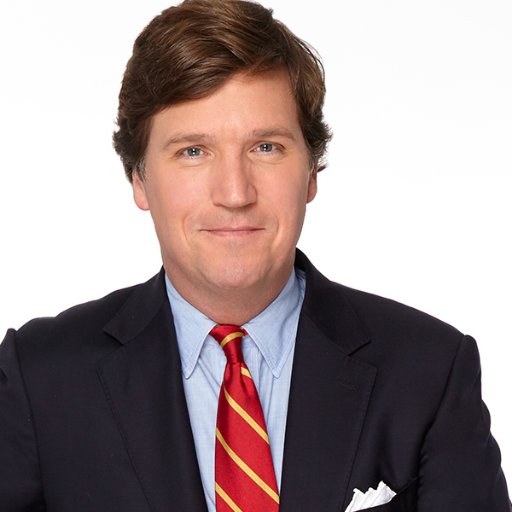
As for Carlson, Newsmax or some other far-right network will pick him up.
xxx
The Chinese government has set up police stations in America (one of them recently discovered in New York) to monitor and intimidate Chinese and Chinese-Americans who oppose the Communist dictatorship. We must throw some sand in Big Brother’s face.
xxx
