


Ensuring the Integrity of the Electoral Process - Dr. Mackubin Thomas Owens
Dr. Mackubin Thomas Owens, MINDSETTER™
Ensuring the Integrity of the Electoral Process - Dr. Mackubin Thomas Owens
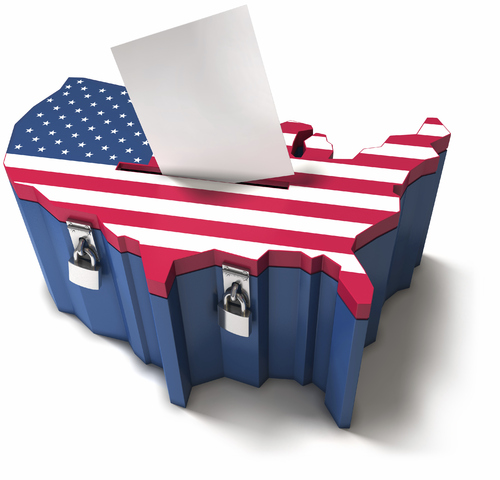
Elections are the lifeblood of a self-governing people. Accordingly, the integrity of the electoral process is of critical importance. Many reasonable people questioned the integrity of the 2020 election. They expressed concern that there were significant irregularities in several large metropolitan areas that benefitted Joe Biden at the expense of Donald Trump. Of course, many of the same people who apply the moniker “election deniers” to Republicans, e.g. Hillary Clinton, continue to claim that Trump’s election in 2016 was illegitimate, the result of corrupt foreign influence.
Stacey Abrams insists that she prevailed in the race for governor of Georgia. Interestingly, during the primaries for the 2022 election, Democrats, who claim that these “election deniers” are a threat to “our democracy,” spent a great deal of money trying to ensure that they would prevail on the Republican side.
GET THE LATEST BREAKING NEWS HERE -- SIGN UP FOR GOLOCAL FREE DAILY EBLASTConcerns about election integrity are nothing new in America. Any biography of John Kennedy notes questions about how he prevailed over Richard Nixon in Illinois during the 1960 election. Nixon led in the state until Kennedy was pushed across the line by late-breaking ballots in Mayor Richard Daley’s Chicago. And readers might consult Robert Caro’s biography of Lyndon Johnson to discover how he earned the sobriquet “Landslide Lyndon” in his 1948 election as US Senator from Texas. In 1948, 1960, and 2020, there was credible evidence of widespread voter fraud. The problem with such fraud is that it is easier to prevent than to prove after the fact.
Concerned about irregularities in 2020, several states have sought to shore up election integrity. In response, Democrats have claimed that such steps constitute voter suppression. Georgia in particular has been a target of such claims. Indeed, President Biden has asserted that steps by the Georgia legislature to ensure electoral integrity amount to “Jim Crow 2.0.” But if voter suppression had been the goal, Georgia’s new rules have failed miserably.
According to a news release from the Georgia Secretary of State two weeks ago, "Georgia Voters Shatter Second Presidential Turnout Record on Saturday." In other words, more people are voting in the midterm election, at this stage of early voting, than voted in the 2020 presidential election. Many of the early voters were black. According to the group Black Voters Matter, "Voter turnout in Georgia reached historic highs on the first day of early voting in this midterm election, and Black Voters comprised 35% of all those who turned out to vote.” About 30% of Georgia's registered voters, and about 33% of its population as a whole, are black, meaning the black turnout in early voting is quite strong. Biden's claim that Georgia's election reforms were "Jim Crow on steroids" was always a vicious slander. As early voting in Georgia demonstrates, election integrity is NOT voter suppression.
But there are other steps we need to take in order to restore confidence in the democratic process by ensuring that only legal and valid votes count. A good place to start is with the report of the 2005 bipartisan Commission on Federal Election Reform chaired by former president Jimmy Carter and former Secretary of State James Baker. Among its 87 recommendations, the commission called on states to increase voter ID requirements, to be wary of mail-in voting, to eliminate the practice of “ballot harvesting,” to maintain up-to-date voter lists — in part to ensure dead people are promptly removed from the rolls — and to allow election observers to monitor ballot counting.
We need to return to the practice of election “day” permitting only a minority of elderly, sick, or people at work voting by absentee ballots. Under this system, voters show their IDs — as they would if they were cashing a check — sign in, have their names checked against voting rolls, and only then move to a booth to cast their vote. The voting process should not go on for weeks or even months as it did this time.
Mail-in voting should be severely curtailed. As the Carter-Baker Commission noted, the opportunity for fraud is too great, as most of our European friends recognized long ago. France banned the practice in 1975, except under limited circumstances. And France was not alone.
We should return to paper ballots. The fact is that this low-tech method of voting makes elections very difficult to hack. Voting in person, on paper ballots, while requiring a voter ID, makes widespread fraud difficult, if not impossible. Finally, states need to enforce the annual cleansing of voter rolls. Outdated voter rolls are a major source of fraud. Such measures are not voter suppression. They are intended to safeguard the integrity of the electoral process by ensuring that only legal votes count.
At the national level, we should insist that elections take place in accordance with the U.S. Constitution. Yes, we have a federal system and states are free, within limits, to determine voter eligibility and the voting process. But in 2020, using COVID-19 as an excuse, non-legislative actors in several states — secretaries of state, attorneys general, and judges — illegitimately changed the rules governing elections without legislative approval or ratification. This violated the Constitution’s Electors Clause, which holds that only state legislatures have plenary authority over the appointment of each state’s electors.
As noted earlier, elections are the lifeblood of a self-governing people. In many countries, elections are merely eyewash for the masses intended to give them the impression that their voices and votes matter, theater designed to lend legitimacy to the ruling authorities. In such countries, as the old saying goes, it’s not the votes that count but who counts the votes. Eternal vigilance is necessary that the United States does not become that kind of country.