


Guest MINDSETTER™ Tom Kenney: Bankruptcy for Providence?
Guest MINDSETTER™ Tom Kenney
Guest MINDSETTER™ Tom Kenney: Bankruptcy for Providence?
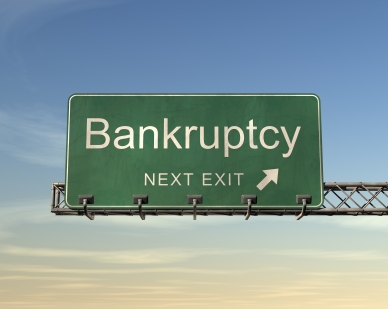
One of the biggest obstacles to simple bankruptcy is that the City’s numerous and various assets would need to be sold off and liquidated. Assets like Roger Williams Park, the Providence Water Supply and possibly the City’s share of the Rte 195 parcel of land from the relocation of the highway to name a couple of high visibility ones. These are options that have already been explored by a couple of our mayors as an attempt to plug holes in their budgets via a short sighted, one-time fix.
One-time fixes, short sighted planning and overly generous tax breaks are all part of the reasons the City finds itself in this position right now. We need our leaders to step up and show long term fiscal responsibility in leading the City through the 21st Century.
GET THE LATEST BREAKING NEWS HERE -- SIGN UP FOR GOLOCAL FREE DAILY EBLASTA big roadblock for the City to take control of its own financial destiny was forged in the 18th Century when RI, and America, was under the colonial rule of Great Britain. In 1765 Great Britain’s King George III bestowed upon a fledgling Brown University a charter which granted them tax-exempt status due to their mission to educate and improve the quality of life for those residing in the Colonies. While this intent may have been, and still may be, a noble idea of quid pro quo between an institution and its surrounding community this charter has become an unsustainable burden to cities such as Providence.
Other educational and medical institutions have claimed the same tax-exempt status as Brown over the years. Most of these institutions in RI reside within the borders of our Capitol City. Even if our leaders believe that this agreement works for the betterment of Providence in theory they would have to agree that in practice it has gone far beyond the intent of the charter. The original charter intended to grant institutes of higher learning the benefit of not paying taxes to the community for property involved in their core mission of educating and improving the lives of citizens of the Colonies. The same was true, I’m sure, in the granting tax-exempt status to those medical facilities within the City.
The footprint cast by the combined total of these institutions, however, has grown to be enormous – as much as 45% of the total tax base of Providence by some estimates. Also, in a development never intended or anticipated by the original charter, these institutions have been allowed to purchase residential as well as commercial, income-producing properties and remove them from the City’s tax rolls altogether – regardless of their use. A 3-story apartment building being rented out for profit or a medical office building being rented out to private doctors for profit should not be exempt to property tax but in many cases this is exactly what is being done.
Many mayors have negotiated PILOT (payment in lieu of taxes) programs with these institutions over the years. The problem with these agreements, however, is that those mayors have been more interested in short-term fixes for their budgets than long-term, sustainable agreements for the City. How else would you explain the ridiculously small amount of income captured by these agreements, the concessions the City has made to these institutions (such as actually selling City streets and parking spaces) or the downright temporary nature of some of these. In one agreement the City agreed to allow the tax-exempt institution to purchase property off the tax rolls as long as the institution agreed to pay full taxes on the property for 5 years, 50% taxes for the next 5 years and 25% taxes for the following 5 years, at which point the property would come off the tax rolls entirely. Such are the short-sighted, temporary fixes our leaders have forged for us thus far.
Those of us who live in Providence, work for or have retired from Providence as well as those who live in or pay taxes to the State of Rhode Island are all vested in the well-being of the Capitol City. The Mayor of Providence, along with the Providence City Council, has the ability to negotiate any type of PILOT program they want with these tax-exempts, but in order to make changes to the original charter which grants their tax-exempt status in the first place the General Assembly must initiate the action. One of Providence’s Reps in the General Assembly needs to take action and submit a bill that would change this agreement to something both sides can benefit from.
Times have changed…we must be fair!
Tom Kenney
Secretary, PPFRA (Providence Police and Firefighters’ Retirement Association)
17 to Watch in 2017 in Rhode Island

Molly O’Brien: 17 to Watch in 2017 in RI
O'Brien, who may be Rhode Island's most-liked TV broadcast journalist, is poised for some big moves in 2017.
She was most recently at WJAR Channel 10, where she was the incredibly popular traffic, technology, and social media reporter. Chances are, you checked in and got a traffic report from O’Brien more than once.
The television newswoman, who got her degree in broadcast journalism (Summa Cum Laude) from Arizona State University, got start as a weather and anchor traffic at KVEW in Washington, followed by work as a morning show host and general assignment reporter for KBMT in Texas, before landing in Rhode Island in 2012, where she got “Best Traffic Reporter” in RI Monthly in 2012 and “Best Morning Personality” in 2014.
O’Brien’s work as an animal rescue advocate has won over even more fans, if that’s at all possible. She’s one of the hardest-working, best-liked media personalities in the market. And 2017 could be her biggest year yet.

Zach Darrow: 17 to Watch in 2017 in RI
For someone who’s been in the game for a while (he was a GoLocal PowerPlayer back in 2011), Darrow’s taking his work as Chairman of the law firm DarrowEverett to a whole other level.
He has the owners of the Superman Building as a government relations client, who upped their game in 2016 by rebranding their effort to develop the historic structure, partnering with the Providence Preservation Society to offer tours, and positioning themselves to attract tenants and make the building viable once again.
He is spearheading Waldorf Capital Management’s 195 play, “Chestnut Commons” — a 116,000 square foot retail and residential development that just saw the land sale approved by the 195 Commission for its proposed location on parcel 30.

Lara Salamano: 17 to Watch in 2017 in RI
This time last year, the RI Commerce Corporation had just announced Betsy Wall had been named the agency’s new chief marketing officer, and the state was due to unveil its much anticipated, $5 million tourism rebranding effort.
Fast forward twelve months, Wall was fired, and the state is still regrouping after a tourism campaign in chaos, having just issued in November a RFP for new business and tourism advertising agencies that was due on December 12.
Now, the urgency — and expectations — rest in part with Salamano, who the state brought on in June to be the new chief marketing officer. The Rhode Island native and URI grad honed her expertise as a marketing exec in the entertainment industry in New York.

Jocelyn Kelly: 17 to Watch in 2017 in RI
The United Way of Rhode Island is one of the state’s leading nonprofits for engaging young professionals — and at a time when the state is trying to retain and attract talented millennials, UWRI plays an important role in connecting them with different communities around the state.
Kelly, the current Chair of the UWRI’s Young Leaders Circle, is the Assistant Vice President, State Government Relations Manager at Citizens Bank, after having served as a government relations specialist following political work for then-Secretary of State Ralph Mollis. On UWRI's website she writes:
We come together to volunteer on projects and try to make a difference. Whether that’s providing eleven children with scholarships to attend summer learning programs or providing six families with emergency funds to keep them from losing their homes last winter, we’re making incremental differences that help our fellow Rhode Islanders.

John Florez: 17 to Watch in 2017 in RI
This past year in Newport, he proposed the municipal ordinance that had been introduced in Providence by former Mayor Joseph Paolino to prohibit distribution of goods or services between pedestrians and occupants of vehicles — which would not just take into account panhandling, but groups looking to raise money such as Pop Warner teams or firefighters.
“It’s a distraction for a motorist behind the wheel to be approached by someone soliciting for money or services, and it isn’t safe for anyone to be standing on a median strip or stepping off a sidewalk to approach motorists,” Florez stated. “This is a common sense and practical solution to practices that compromise the public safety of our city’s residents and visitors alike.”
Florez, who has backed body cameras for the Newport Police Department, a ban on single-use plastic bags, is calling for the creation of a PILOT program to reach agreements with the city’s nonprofits to make some form of payment in lieu of taxes.

Vin Mesolella: 17 to Watch in 2017 in RI
There are many reasons why Rhode Island was able to keep 3,000 jobs in Rhode Island and build a new-mega facility for Citizens Bank in Johnston, but according to Citizens Banks’ top official overseeing the project it would not have happened if Narragansett Bay Commission’s Chairman Vin Mesolella had not already developed expansion plans and engineering in the area and been able to implement a water and sewer plan immediately.
“When we looked at the final site (in Johnston), we thought there was no easily available water and sewer — it was looking like it would have been impossible to develop,” said Mike Knipper, Head of Property and Executive Vice President for Citizens.

George Zainyeh: 17 to Watch in 2017 in RI
George Zainyeh may be one of the key players in the marijuana debate at the RI General Assembly in 2017.
Legislator, Chief of staff for Patrick Kennedy and Governor Lincoln Chafee, and now top lobbyist for many on the big healthcare issues, he is likely to be one of the top players in the discussion about legalization.
Ironically, Zainyeh's former boss Kennedy today chairs the Board of the nation's leading anti-legalization advocacy group.
This session marijuana will take up a substantial amount of oxygen.
With Massachusetts legalizing and Rhode Island facing a $100 million deficit, there is mounting pressure to pass peer legislation to the Commonwealth's.

Dave Paolo: 17 to Watch in 2017 in RI
He is back. In early 2016, Dave Paolo launched his G Media firm and just a few months later he has added more than 25 clients, made an acquisition, and landed a Fortune 50 client. It has been a pretty good year.
Just as media behavior is transforming, so are advertising and marketing agencies.
In April, GoLocal reported:
The company is Rhode Island’s first agency focused exclusively on experiential marketing and content development.
“The age of experiential marketing has matured. These events…combined with the correct social and online digital campaigns are an essential piece of every integrated marketing budget. Its not about driving a one dimensional purchase anymore, it's about building a long lasting relationship (with the consumer) for which you earn repeat purchase,” said Paolo in an interview with GoLocalProv.

The Silks: 17 to Watch in 2017 in RI
The group that’s dubbed itself the “mangy blues rock power trio” has been around, but a big 2016 could signal an even bigger 2017 for The Silks.
GoLocal music reviewer Ken Abrams talked them up when he featured their latest album “Turn Me On” in his ten local music must-buys this holiday season:
The Silks play pure rock and roll throughout New England and beyond. The Providence power trio includes guitarist Tyler-James Kelly, Jonas Parmelee on bass and drummer Sam Jodrey. Check out their latest release Turn Me On, straight ahead rock and roll that’s fresh and vintage at the same time.
In December, the Silks nabbed “Blues Artist of the Year” at the Boston Music Awards — you can catch them Friday night (December 30) at The Met in Pawtucket. Next month, they’ll be at the Narrows Center on January 28 with Matthew Stubs and the Antiguas in Fall River.

Ed Brady: 17 to Watch in 2017 in RI
He’s got a number of success stories under his belt — and he only seems to add to his track record of winning.
From two Thirsty Beavers, to Milk Money, Brady recently expanded his empire when he opened Drift at the newly re-done Hilton Garden Inn Hotel at India Point Park in Providence.
However, it’s the Cranston West graduate's involvement in the community that sets him apart, time and time again.

Colonel Ann Assumpico: 17 to Watch in 2017 in RI
Colonel Assumpico was appointed the 13th Superintendent of the Rhode Island State Police and Director of the Rhode Island Department of Public Safety by Governor Raimondo on November 3, 2016 — she is the highest ranking female to serve in the Rhode Island State Police and the first female to lead a law enforcement agency in the State of Rhode Island.
Will Raimondo finally direct the State Police to release the interview notes from the 38 Studios investigation?
Regardless, all eyes will be on Assumpico, as she takes the helm for her first full calendar year. Following Assumpico’s appointment, GoLocal spoke with Lt. Charles P. Wilson, the Chair of the National Association of Black Law Enforcement Officers:
"Number one, putting a female of any ethnicity in charge of the State Police will have a dynamic impact on the entire law enforcement structure in the state, and that's a good thing," said Wilson, who is a Rhode Island College graduate.

Bankruptcy: 17 to Watch in 2017 in RI
It’s not a person, place, or thing — but it’s very real possibility for the City of Providence.
2016 saw the city battling with the firefighters over the platoon shift change that Mayor Jorge Elorza implemented in 2015, and while both sides touted a new five year contract moving forward as a step in the right direction, the city’s internal auditor projected — multiple times — that the purported savings are off by the magnitude of millions (not to mention the underlying legal battle has not been resolved).
The topic of a potential bankruptcy has been broached in recent years — with Elorza continuously dismissing the prospect — but with critics of the city’s financial position repeatedly advocating for it.

Darryl Kosciak: 17 to Watch in 2017 in RI
As Providence and Rhode Island continue to look for ways to address the issue of homelessness, the Rhode Island Coalition for the Homeless has a new face at its helm in 2017.
Darryl Kosciak is replacing ten-year veteran Jim Ryczek as Executive Director at the end of 2016, after a national search. Kosciak, is originally from Hopedale, MA, had lived in Greensboro, North Carolina for the past twenty years, where he headed up the city’s Youth First Division for at-risk youth starting in 2002, before becoming the Executive Director for Partners Ending Homelessness (PEH) in 2010.

Georgia Hollister Isman: 17 to Watch in 2017 in RI
The State Director of the Working Families Party in Rhode Island came off of 2016 claiming big victories — and has not stopped working since.
“Over all we won 7 of 10 races we took on, including important defenses of Rep. Teresa Tanzi and Rep. Kathy Fogarty and winning Susan Donovan’s race in an open seat. This is an enormous record for our very first election cycle,” said Isman, following the election.
After Trump’s victory, a “Resist Hate RI” group emerged, headed in part by Isman, to be proactive in pushing a progressive, "anti-Trump" agenda — and calling on the state’s elected officials to do the same. The Facebook group has nearly 5,000 members, community forums regularly draw hundreds of Rhode Islanders, and Isman is spearheading efforts as 2017 gets underway.

Patricia Morgan: 17 to Watch for 2017 in RI
The Republican State Representative is no stranger to GoLocal’s year end lists — in 2015, she was tapped for earning the accolades of having made a difference that year for calling into question state contracts with the Rhode Island Convention Center — not to mention the necessity, or efficacy, of truck tolls.
Morgan, who was first elected to the General Assembly in 2010, takes on a new role in 2017, however, when she assumes the role of House Minority Leader. (Representative Brian Newberry had held the post since 2011).

Iftikhar Ahmad: 17 to Watch in 2017 in RI
This September, the Rhode Island Airport Corporation landed one of the most successful airport heads in America, when the Board of Directors announced that it signed Iftikhar Ahmad to lead T.F. Green Airport as the new president and CEO of the Corporation. Ahmad increased passenger growth by 36% at his previous post in New Orleans.
"We have completely turned around this airport and are now underway on a new $826 million north terminal project," Ahmad said in a news release at his departure, as reported by the Times-Picayune. "My goal was to work with the Aviation Board and staff to improve the physical assets of the airport and attract additional air service for the benefit of metro New Orleans and the Gulf South...I feel like I have accomplished that and look forward to new challenges in my career."

The District RI: 17 to Watch in 2017 in RI
The Jewelry District is abuzz with the potential for development to finally get underway on 195 land in 2017, but there is one new addition that’s already opened its doors and ready to go in the new year.
The site of the former popular South Street Cafe is now The District RI, and officially celebrated its grand opening on December 22 — and will be open daily at 11:30 AM (except Mondays).
The restaurant Facebook page has already amassed nearly 1,500 likes, and has averaged 4.9 starts (out of 5) from 48 reviews so far. The menu features burgers, pizza, salads, calamari, and more.


