


Russell Moore: RI Interscholastic League Gouging Fans
Russell J. Moore, GoLocalProv MINDSETTER™
Russell Moore: RI Interscholastic League Gouging Fans
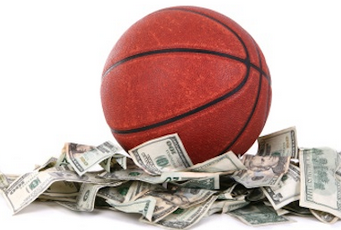
Sports they teach youngsters about discipline, hard work, and sportsmanship—not to mention so many other values and lessons.
But what happens when sports are run in a way that teaches, either directly or indirectly—the wrong lessons? Unfortunately, the Rhode Island Interscholastic League (RIIL) has run its basketball state tournaments this year in a way that certainly opens them up to criticism. It seemed like the state basketball tournaments were run in a way that, first and foremost, sought to make money for the RIIL.
GET THE LATEST BREAKING NEWS HERE -- SIGN UP FOR GOLOCAL FREE DAILY EBLASTMisguided Priorities
Here’s the thing: it really rubbed me the wrong way when I noticed that the RIIL was running two basketball tournaments—as has been the case for a few years now. The state ran a 4 round tournament for every division, culminating in a final round with a champion.
But wait! There’s more. Once that tournament ends, the RIIL then puts on another “open” tournament, where the highest ranked teams from every single division face off in a 16 round tournament.
I really wanted to think that this was being done in order to give the kids more games and more experience playing sports. But I decided to look further into the situation—and I wasn’t exactly pleased with what I’ve found. Basically, it cost parents and student fans quite a bit of cash to keep up with all the basketball being played--at great benefit to the RIIL and the people who run it.
Theoretically, a basketball team could play 4 rounds of basketball in the Division tournament. It would cost $5 dollars per adult for the quarter final game. It would then cost an additional $6 dollars for the semifinal game. And then it would cost $7 for the final game. That means it would cost one parent $18 dollars for the first tournament. Two parents would cost $36.
Fans must shell out big money
And then they’d have to start paying the entry fees to watch the “open” tournament, which is also four rounds. The four rounds in that tournmanent are $6 for the round of 16, $7 for quarterfinals, $9 for semifinals, and $9 for the finals for adult tickets.
All that means that two parents who wanted to watch their teams go all the way in both tournaments it would cost them $49 each! That just can’t sit well for parents from inner city schools like Classical, Hope, or Central, where just getting by presents enough of challenge. It also can’t sit well with parents from La Salle or Bishop Hendricken, where they’re already shelling out upwards of $10,000 per year for their students to attend.
The prices are arguably even worse for student fans. For students, the tickets are always $5, except for the last two rounds of the open tournament where they increase the price to $6. Call me crazy, but I’d think that we should be encouraging students to come out and support their schools—not placing barriers and disincentivizing them from attending games.
(And if you'd like a "program" to see which players are wearing what numbers, that's going to cost you another dollar, despite the fact that it's only a single sheet of paper.)
Long Drive
What makes it even worse is the semifinals games are played at the Ryan Center in Kingston—which means most fans have to spend more money on gas than if they had it at CCRI or somewhere more sensible.
The complaint in years previous about the division champ system was that a state as small as Rhode Island didn’t need to have multiple champions. I guess it’s a rational complaint, but the system worked well for decades.
Yet if it had to be corrected, the way to do so would have been to have one open tournament and add one extra round of games to accommodate the extra teams. Remember, just one extra game accommodates far more teams thanks to the nature of bracketing. But that way certainly wouldn’t have raised as much money for the RIIL.
RIIL: Money in the bank
But is the RIIL really in desperate need of money? The answer is a clear and unequivocal “no”. According to the 990 form the nonprofit filed with the IRS (as all nonprofits are obligated to do), the organization has roughly $1.48 million in total assets. Why an organization that could arguably run just fine by volunteers has that much money is one question.
The bigger question, however, is why an organization that is a nonprofit needs to charge parents and students significant amounts of money (just as much, in some cases, as it would cost to see Providence College Men’s basketball play) for fans to see games.
Come on, ride the gravy train
I couldn't help but notice that Thomas Mezzonatte, the former Classical Principal, who now serves as the RIIL CEO, made $102,817 in the year 2011 (the latest available data). That’s a nice six figure salary for running a “non profit” organization—if you ask most Rhode Islanders.
If anyone was wondering whether or not Mezzonatte needed the money, just keep in mind that he received a pension from the state pension system last year worth $70,966. Add that to his salary from the RIIL, and you get a “big number” to quote Al Pacino in Scarface.
Further, the RIIL’s Treasurer, Donna Kane worked just 16 hours a week, and was paid $27,243. Even if she worked all 52 weeks without a vacation, it still means she was paid $32.74 an hour! That’s not bad work—if you can find it.
What message are we sending our children when we allow a well-heeled non-profit organization that could just as easily be run by volunteers to price gouge Rhode Island basketball fans and students? Is this the Rhode Island way?
At least those numbers may shed some light as to where all the fees paid by the fans of high school basketball are going.
Greatest Players in Brown Basketball History

Cedric Kuakumensah
Class of 2016
Cedric Kuakumensah is the only player in Ivy League history to score 1,000 points, grab 900 rebounds and block 200 shots.
Kuakumensah also is the Ivy league all-time leader with 311 blocked shots, while his 1,181 points rank 16th all-time at Brown and his 907 rebounds rank 4th all time.
Kuakumensah averaged 10 points, 8 rebounds and 3 blocked shots per game in his career.

Russ Tyler
Class of 1971
In addition to being one of the program's greatest players of all-time, Tyler has also been it's biggest supporter remaining close to the Brown basketball for the past 4 decades. There is no one who is more positive in his support of the coaches and players who wear the brown and white. Russ holds the second highest scoring average in the Brown record book, averaging 22.7 points per game for the Bears in 1970-71... His 46-points and 18 field goals against Rhode Island in 1971 rank second in Brown history... Ranks 10th in career scoring average with 15.1 points per game... His 568 points in 1970-71 was a Brown record at the time and still second in Brown's record book... Scored 1,133 career points... ECAC All-East selection... Also owned the Brown records for career assists, consecutive free throws, free throw percentage and most field goals in a season.

Mike Cingiser
Class of 1962
A tough-as-nails player and coach for Brown whose accomplishments on the court and the bench were as good as anyone. Netted 1,331 points from 1959-1962, the Brown record at the time, and now fifth... Only one of three Brown players to be a three-time first team All-Ivy selection... Went on to coach the Bears to their only Ivy League Championship in 1986, posting a 16-11 record, 10-4 Ivy, while advancing to the NCAA Tournament against Syracuse... His team play was evidenced by his leading the team in assists and was second in rebounding throughout his varsity career... Tossed in 492 career field goals, still sixth in the Brown record book.

Damon Huffman
Class of 2008
The prototypical "gym rat," Huffman scored 1,306 points in his illustrious career at Brown. He finished his career in style scoring 39 points in a loss to the Ohio Bobcats the College Basketball Invitational Tournament. Huffman drained a school record 9 three-pointers in that game and graduated as Brown's all-time leading 3-point shooter. He teamed up with Barrington's Mark McAndrew to lead the 2007-2008 team to a school-record 19 wins under then head coach Craig Robinson.
Sean McGonagill
Class of 2014
Brown fans will get to see one of their all-time greats play at least one more game Monday night when the Bears host Holy Cross in the CIT. Heading into the game, McGonagill is the school's 3rd all-time leading scorer with 1,608 points. His 257 career treys are the most of any player in Brown history and his 519 assists are second all-time. Recently named First Team All-Ivy, McGonagill showed his amazing toughness as a freshman when he returned to play quickly after an accident in which his upper lip ripped away from his face. Despite 30+ stitches and doctor recommendations to not play for 4 weeks, he returned less than 48 hours after that accident with a mask on where he proceeded to light up the Columbia Lions with a career-high 39 points.

Alai Nuualiitia
Class of 2003
Recognized as Brown's "Iron Man," having started every game in his four-year Brown career, encompassing 110 games... Scored 1,344 career points, fourth on Brown's all-time list... Held the Brown career record with 119 blocked shots at the time of his graduation... His shooting percentage of .617 (126 of 206) in 2002-03 is second in Brown history... Ranks fifth in career field goal percentage (.557)... Helped Brown to an NIT appearance in 2003, and to a school record 57 victories in his four-year career.

Mike Waitkus
Class of 1986
Brown's all-time assists leader with 577 career assists... Scored 1,165 career points... Brown's first ever Ivy League Rookie of the Year in 1983... Holds Brown records for free throw percentage in a season (.898, 97 of 108 in 1983), and a career (.861, 279 of 324)... His 5.8 assists per game in 1983-84 is also a Brown record... Helped Brown to its first ever Ivy League Championship in 1986... Averaged 5.5 assists per game for his career, a Brown record... Two-time All-Ivy selection.

Phillip Brown
Class of 1975
Holds Brown all-time record for rebounding with 931 rebounds... Scored 1,241 career points... His 24 rebounds against Dartmouth are third in the Brown record book... Helped spark the Bears to 30 wins in three years at Brown, a record at the time... Three-time All-Ivy selection, twice a first team honoree... All-New England selection and team captains in both his junior and senior years... Set Brown and New England records for field goal percentage, and Brown records for rebounding. He accomplished this in just 3 years of play as freshman were not allowed to play varsity basketball in Brown's era.

Jason Forte
Class of 2005
The brother of former North Carolina Tarheel and Boston Celtic Joe Forte, Jason was the Ivy League Player of the Year in 2004... His cat-like quickness made him almost impossible to guard... Three-time first team All-Ivy selection... Scored 1,597 career points, third in Brown history... Posted the Ivy League's first "Tiny," leading the league in both scoring (21.4 ppg.) and assists (5.79 apg) as a junior... Set a single-season Brown record with 155 assists in 2002-2003... Completed his career ranked first in steals (192), second in assists (524), second in free throws (536), seventh in three-point field goals (121), and tenth in field goals (469)... AP All-American as a junior.

Arnie Berman
Class of 1972
Arnie Berman was Earl Hunt long before Earl Hunt was born! A prolific scorer who compiled his gaudy stats in just 3 years of varsity play. Held the Brown scoring record for over 30 years with 1,668 career points... Holds Brown seasonal records for points (658 in 1971-72), scoring average (25.3 ppg in 1971-72) and free throws (250 in 1971-72), and career marks for free throws (636), and scoring average (21.6 ppg)... Connected on 25 of 26 free throws vs. Cornell in 1972... Ranks third in career rebounding (878) and rebounding average (11.4 rpg.)... First team All-Ivy selection in 1972... Held 17 Ivy League, Brown and New England scoring records... Led all New England scorers as a senior with 25.3 points per game, earning New England Player of the Year honors.

Earl Hunt
Class of 2003
To steal a line for the former comedic coach of Providence College Pete Gillen, Earl Hunt is the best Brown basketball player, alive, dead or yet to be born! Hunt could score at will by either making jump shots, getting to the rim or getting to the charity stripe. Brown's all-time career scorer and the only Bears player to score over 2,000 career points (2,041)... Three-time first team All-Ivy selection... Scored 39 points twice in his career (vs. Harvard and Central Conn.), sixth in the Brown record book... Owns three Top 10 seasonal marks for points... His 18.9 ppg career scoring average is second at Brown, while his 499 career free throws ranks third... Helped Brown to a school record 17 wins twice (2002, 2003), and to a school record 12 Ivy wins (12-2) in 2003, with the Bears advancing to the National Invitation Tournament.


