


Will Trump Reinvent Government: A Historical Perspective — Gary Sasse
Gary Sasse, Guest MINDSETTER™
Will Trump Reinvent Government: A Historical Perspective — Gary Sasse
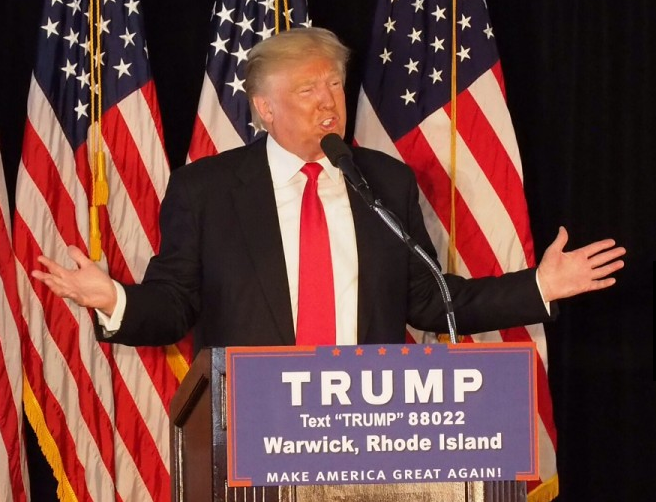
While cynicism about efficiency commissions is understandable, for over 120 years, presidential commissions have successfully produced proposals to make the federal government more effective, accountable, and transparent.
In 1905 President Theodore Roosevelt appointed The Committee on Departmental Methods. It applied best practices which resulted in personnel system modernization, contracting improvements, and records and accounting reforms.
GET THE LATEST BREAKING NEWS HERE -- SIGN UP FOR GOLOCAL FREE DAILY EBLASTIn 1936 President Franklin Roosevelt established The Presidential Committee on Administrative Management. This Committee found federal agencies had grown increasingly powerful, and suggested that the President’s control over them be enhanced. Sound familiar? It provided the foundation for the landmark Reorganization Act of 1939.
In 1947 President Harry Truman created The Commission on Organization of the Executive Branch head by former President Hoover. This Commission made 273 proposals to streamline government and make it more cost effective. Congress enacted the Reorganization Act of 1949, and President Truman submitted thirty-seven reorganization plans. In 1953 President Dwight Eisenhower formed the second Hoover Commission.
In 1982 President Ronald Reagan appointed The Private Sector Survey on Cost Control. Several of its cost control proposals were implemented, but the Commission’s policy plans were generally not.
In 1993 President Bill Clinton directed Vice President Gore to lead The National Partnership for Reinventing Government (NPR). Its work focused on making government more cost effective by using performance measures, taxpayer satisfaction surveys, and technology. The NPR recommendations are claimed to have reduced the federal workforce by 250,000 positions and eliminated 200 programs.
Shrinking the federal government is not easy because federal outlays support politically connected contractors, and two-thirds of the budget funds entitlements such as Social Security, Medicaid, and Medicare. However, DOGE can achieve transformational changes if it assumes a “Manhattan Project” culture, is competently staffed, and functions in a bipartisan manner.
Significant regulatory rollbacks are now feasible since the United States Supreme Court held that bureaucrats cannot impose regulations affecting major policies unless authorized by Congress, and federal courts no longer need to defer to federal agency rulemaking authority.
Precedent has also been set to reform the inefficient permitting process. The Biden Administration identified “categorical exclusions” from environmental review for green energy projects. DOGE can speed up this process to fast-track both infrastructure and energy projects.
DOGE can also suggest ways to fix the nation’s inefficient procurement system by closing loopholes that cause costly overruns. Something is amiss when the Defense Department failed its seventh consecutive audit.
DOGE can also identify redundant programs. For example, the plethora of workforce training programs, Medicaid funding social services, programs passed through to state governments, grants to non-profits, and others should be put under a microscope.
Currently, there are 2.3 million federal workers working civilian jobs. Their median salary is almost $100,000. The Biden Administration aided 120,800. DOGE should set a target to right size federal agencies.
The blurring of state and federal roles and responsibilities has contributed to a dysfunctional government. For instance, the responsibility for education, social services and community development programs should be sorted out.
The greatest challenge facing DOGE is to penetrate the iron triangle of the policy making relationship of the bureaucracy, special interest groups and congressional committees. Based on historical experience this task will be tough but not insurmountable.
Gary Sasse served as the President of RIPEC, and Director of the Rhode Island Departments of Revenue and Administration.