A Modern Masterpiece at Johnson & Wales: Architectural Critic Will Morgan
William Morgan, GoLocalProv Architectural Critic
A Modern Masterpiece at Johnson & Wales: Architectural Critic Will Morgan


A decade after completion, the handsome Cuisinart Center for Culinary Excellence at Johnson and Wales University deserves belated kudos.
GET THE LATEST BREAKING NEWS HERE -- SIGN UP FOR GOLOCAL FREE DAILY EBLASTWhere Liberty Ships were built during World War II, JWU's 100-acre Harborside Campus occupies a prominent site at the head of Narragansett Bay.
Harborside's Cuisinart Center is such a design triumph one wonders how this attractive example of International Style Modernism landed here.
The CCCE could be mistaken for an avant-garde skyscraper in France or Brazil, but beyond that suave impression, this is state-of-the-art teaching facility.

Designed by the Cambridge firm of Tsoi Kobus, the Cuisinart Center provides 82,000 square feet of instructional space that demonstrate the school's pedagogical prowess: the classrooms are essentially kitchen labs for baking, cooking, brewing, wine tasting, and serving, with three practicum dining rooms.
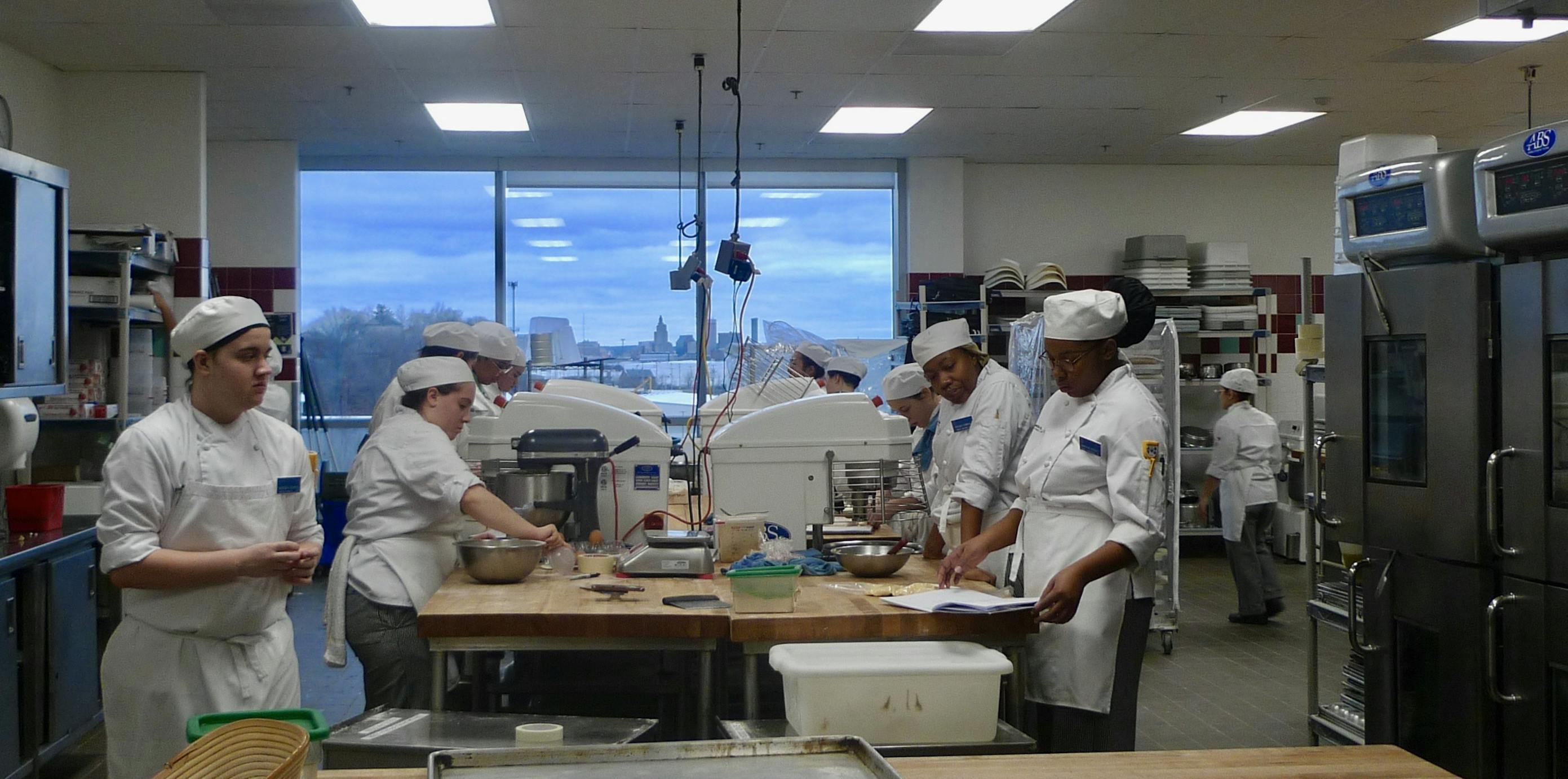
Because of the long, tall, and narrow proportions of the building, the classrooms are bathed in natural light and have sweeping views of Narragansett Bay.
The bay shoreline, which the university is committed to restoring, provides the rationale for the building's advanced environmental design: this exceptionally green building (rated LEED Gold) directly addresses climate change-related rising water.
Sitting on concrete pilings sunk 110 feet below ground, the building grade here is five feet above sea level, with flood stage being just four feet above that.
The first usable floor beyond the lobby/entrance is lifted above the 12-foot flood clearance line.
The ground level glass and brick panels are designed to break away in the event of a massive storm surge, thus allowing water to pass under the building.

The CCCE sits on a berm composed of asphalt recycled from a parking lot that was here, while 90% of construction waste was diverted from landfills.
The curving facade's light-colored concrete reduces reflected heat, while rainwater captured from the roof is used to irrigate the garden of native grasses.
Half of the former brownfield site was restored with drought-tolerant native vegetation, designed by noted New England landscape architect Stephen Stimson.

The Cuisinart Center won the International Interior Design Award for the Best Educational Design back in 2011.
Yet the entire package–kitchens, sustainability, climate awareness, brownfield restoration, siting and landscaping, and notable contemporary architecture–should make the CCCE a more heralded work.
Tsoi Kobus demonstrated here that it can be easier to create an outstanding work of Modern architecture than a neo-traditional one: clean and forceful lines based on an underlying functionality contribute a beauty that no amount of applied columns or fanciful details could.
The CCCE is one architect Rick Kobus' favorite works "because this pedagogy so strongly influences the form of the building," while "Sustainability/Resiliency is the other major form giver."
The architects were chosen because of their acknowledged leadership in designing research facilities, and as Kobus notes, "a culinary art building of this scale is a lab building on steroids."
Much the success of the Cuisinart food processor itself was the result of its makeover by a RISD industrial design professor. Ergonomic genius Marc Harrison took a revolutionary but clunky French kitchen appliance and transformed it into an industrial design icon.
In addition to giving the Cuisinart its characteristic oval profile handle and the easy to operate off/on hand paddles, Harrison raised the motor housing up on a pedestal. The Cuisinart Center at John and Wales, too, is similarly elevated for functional reasons, creating an appropriate icon for the university's culinary program.