Rescue 1 Responding: Chapter 10, a Book by Michael Morse
Michael Morse, Author
Rescue 1 Responding: Chapter 10, a Book by Michael Morse
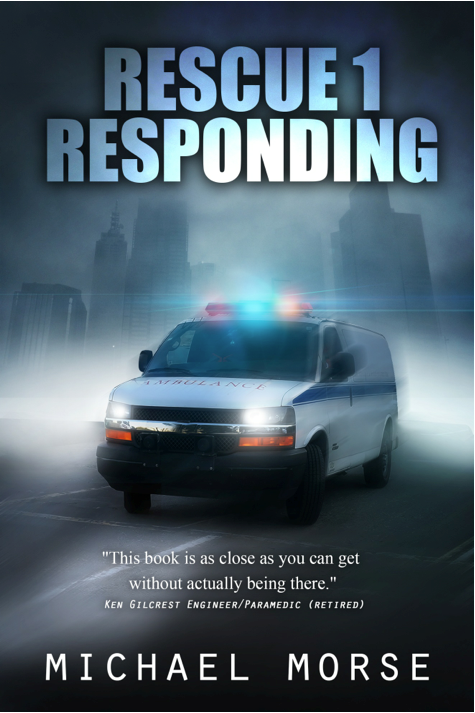
I’m glad I took the time to document what happens during a typical tour on an advanced life support rig in Rhode Island’s capitol city. Looking back, I can hardly believe I lived it. But I did, and now you can too. Many thanks to GoLocalProv.com for publishing the chapters of my books on a weekly basis from now until they are through. I hope that people come away from the experience with a better understanding of what their first responders do, who they are and how we do our best to hold it all together,
Enjoy the ride, and stay safe!
GET THE LATEST BREAKING NEWS HERE -- SIGN UP FOR GOLOCAL FREE DAILY EBLASTCaptain Michael Morse (ret.)
Providence Fire Department
The book is available at local bookstores and can be found HERE.
Note from the author:
I thought I knew everything about work, life and how best to be a man. Then I met Wayne. A white guy from middle class suburbia and a blue eyed black guy from the inner city lead far different lives. We have different experiences and develop different ways to navigate the difficult world we live in, but through shared experiences common ground is found. I learned a lot from Wayne, how to lead with my left, punch with my right and finish with another left, how to not beat myself at Ping-pong and how to run the pump at an occupied building fire. The most important thing I learned though was that there are different ways to work, relax and live. My way is the right way. And so is his. We got off to a rough start, but to this day I love the man like a brother.
Chapter 10
“It’s a good thing you can write, because you can’t cook worth a shit,” says Wayne, with a big grin on his face, as I walk into the day room with Al.
“Maybe he’ll make Oprah’s Potatoes and we can all go home sick,” says Arthur as he looks up from his newspaper. I made the potatoes ten years ago during one of my ill-fated creative forays in the kitchen and haven’t heard the end of it. I was sure potato, honey and horseradish would be a great mix. Oprah was on TV at the time I was cooking so I named them “Oprah’s Potatoes.”
“Big talk for a one-meal chicken cooker,” I say to Wayne, bringing to life another ghost from the past. “Chicken Oliveira” was the only meal Wayne ever made.
Unlike Steve’s Mexican Chicken, it was actually pretty good.
The rest of D group is sitting around, drinking coffee and figuring out the problems of the world. The letter to the editor that I wrote in yesterday’s paper has been tacked to the bulletin board.
“Nice job, Morse,” says the Captain of Engine 2, who was reading the letter when we walked in. He leaves it at that and takes his coffee to his office.
“Did Cheryl write that for you?” asks Kenny. “Because she’s got the looks and the brains in your house.”
“Every now and then I have a moment of clarity,” I say.
“You haven’t a clear thought in that big head of yours since you met Cheryl,” says Wayne. “How’s my girl feeling?” he asks. Every time I see these guys they ask about my wife. We were pretty tight early in my career, our wives and girlfriends all knew one another from the parties and cookouts we shared. I miss that camaraderie and wonder if I’ll get it back before I retire. I don’t see too much of it anymore and that is a pity.
“She’s doing great, thanks for asking,” I say.
“Make sure you tell her I said hello,” says Wayne.
We pass the next hour catching up on things, and then the guys start the Saturday morning routine. Every Saturday the stove, oven and refrigerator are thoroughly cleaned. There is usually a smorgasbord left over from the week’s meals. If not for the Saturday rule, things would get out of hand quickly. Men have a hard time throwing out perfectly good food.
On the apparatus floor, the drivers of Ladder 7, Engine 2, Rescue 3 and Battalion 3 have moved the vehicles onto the ramp so that the floor can be swept and washed. This is a Saturday routine that is being played out in every fire station in the city. Saturday is scrub out day. Period. Later, another firehouse tradition is in store; Saugy hot dogs, baked beans and snowflake rolls. Some stations veer from the course and have gotten healthy, eating chicken or salads, but the majority stick with tradition.
“I don’t see the ping pong table, you must have hid it because you knew I was coming over.” I say to Wayne when we return from the hospital. The apparatus floor is damp from the scrub out, the fresh smell of Spic-N-Span a welcome respite from the usual diesel and sewage. Unspeakable aromas and cat-sized rats come from a grate directly in front of Engine 2’s bay. Closing the overhead doors helps a little but you can’t keep unwanted things from getting in.
“Everybody knows there’s no sense playing when they’ll never win,” says Wayne, acting nonchalant, but the gleam in his eye gives him away. He just can’t pass up a good chance to give some poor soul a beating. If I had a nickel for every hour I spent trying to beat him, I’d have a lot of nickels. We played thousands of games over the years, I’ve only beaten him a handful of times. Every time it looks like I’ve got him, he gets all business and transforms himself into Forrest Gump. Little does he know that in the years I’ve been gone from the Branch Avenue Station, I’ve been training on my own table with a ping-pong master, another person I seldom beat, my brother, Bob. Cheryl surprised me on my birthday a few years ago, took me out to dinner. While we were enjoying ourselves, some of Danielle’s friends went to Sears, picked up a professional grade table and set it up in our basement.
My brother, Bob has a table of his own and loves to beat his boys, Bobby and Danny. It’s something we learned from our father, make the kids earn their victories. Ping Pong was big in our neighborhood when we were kids, the men of the neighborhood would gather at Dr. Carroll’s garage when all of their “chores” were done, drink beer and play all afternoon. Every now and then one of the kids would get a chance at the table, only to be whooped by whoever was the champion at the time. They even had a trophy that they would pass around.
I don’t know how he did it but brother Bob actually got pretty good. His job at the Adult Correctional Institute might have something to do with it, I’m sure the prisoners taught him a trick or two. We have been playing for years now, sometimes at my house, sometimes at his and are pretty evenly matched. He has more wins than I do, but he cheats.
“You gained a lot of weight since the last time,” I say.
“And your head got bigger,” he responds.
“Either your head is growing or your hair is shrinking, pretty shiny up top, I say.”
“That’s a solar panel for a love machine. Let’s go, chump.”
“Where’s my paddle?” I ask. I had a favorite, soft on one side, hard on the other. The skin was wearing off and the handle missing some wood, probably from a flight across the station after one of Wayne’s beatings.
“Don’t matter, you ain’t going to be hitting no balls back,” says Wayne, a toothpick now at the corner of his mouth. He’s all business now that he has a victim.
I grab a paddle, not my favorite but close.
“You want to warm up?”
“For you?” he says with a wicked grin. “Volley.”
I toss the ball across the table and we are underway. We’re both rusty but that will change. Back in the day we played so hard I developed tendonitis in my shoulder and elbow. He wins the volley.
“You sure you want to do this. Last chance to leave with some dignity.”
“Serve,” I say and a blur speeds past me.
“1-0.”
Uh-oh. I have to go around Ladder 7 to find the ball, on the other side of the floor.
As soon as he gets the ball back it’s past me again.
“You’re gonna eat the next one,” he says, not knowing I’m leading him into a false sense of security.
“2-0.”
The next serve is easy to handle and a decent volley ensues. I leave a ball high and he slams it back.
“Told you. 3-0.”
“Is that all you’ve got?”
It’s amazing how a little ball creates a gust of wind when it flies by you.
“4-0.”
I retrieve the ball, somewhere deep down a little doubt creeps in. I quickly crush it. I’ve learned a lot from Wayne over the years, a good lesson being to convince yourself you are unbeatable.
Wayne had been on the job for three years when I came along. Beneath his tough guy façade was a great guy, but it took me a while to figure that out. We came from different worlds, myself a middle class suburb outside of Providence, Wayne the heart of South Providence. A person’s environment has a lot to do with how that person grows up, how they relate to the world around them, how they survive. Wayne’s world, though only ten miles away from mine was altogether different. I lived in relative safety; Wayne learned early that life isn’t always fair. A “blue-eyed black guy” on Broad Street stood out. He learned how to take care of himself, his bravado backed up with experience. He survived; some of his family did not.
“Eleven’s a shutout,” says Wayne, confident now, right where I want him.
“You can quit now before I start playing,” I say, never letting him see me sweat. He shakes his head and blows another one past me.
Early Winter, 1992. A snowstorm blanketed the city with a foot of heavy, wet snow. On the ramp, seven of us manned the shovels, getting ready for the night’s events. To move the snow you had to shovel it like dirt, no way it would be pushed out of the way. I was working like a madman, picking up a shovelful and dumping it thirty feet away on the side of the building then getting another load, over and over. I wasn’t paying attention to the others, just content to move the snow my way, because my way was the right way, of course. I worked my way over to a mound of snow where everybody else had been dumping it, next to a fuel pump in front of the building. I didn’t like the way it looked, it wasn’t neat. I picked up a shovelful from the pile and dumped it next to the building.
“What the fuck are you doing?” Wayne asked, standing in front of me when I returned for another bite.
“Shoveling snow, what the fuck are you doing?”
“I’m watching an idiot make me work harder,” he said.
“Worry about yourself,” I said and thrust my shovel into the drift. Wayne kicked the bottom of the shovel, spilling the snow back where it came from.
“Pick it up.” I said.
“Leave it there,” he said.
“What’s your problem?”
“You’re my problem.”
“What, do you live in a ghetto? It looks like shit in front of the door.”
“What do you know about living in a ghetto?”
“I know I don’t live in one. Go lay on the couch, I’ll move it away from the door.”
“You ain’t moving nothing.”
Things were at the breaking point when Chief Ronny Moura stepped in.
“Enough! Morse, get upstairs and start cooking!”
I had brought the ingredients for dinner in, it waited for somebody to throw it together. Sweet and hot sausage mixed with red skinned potatoes and onions, tossed with olive oil and some “secret” seasonings and a salad on the side. I didn’t want to eat, I wanted to shovel snow. My way.
“Chief, I’ll do it, it looks like shit piled up here.”
“Shit gonna melt, you idiot,” said Wayne, ready to knock my block off.
“Go,” said the chief, pointing toward the stairs. I put my shovel down and walked away, convinced the chief was going to make Wayne move the snow. It wasn’t the result I was looking for, I didn’t want anybody fighting my battles for me, but I took it.
Things cooled down, a peaceful coexistence ensued and we moved on. I noticed later that the snow pile was right where Wayne and everybody else had piled it.
Eventually, the snow melted.
“0-5”
I threw the ball a foot in the air, sliced under it and watched Wayne’s shocked expression as it sailed past him.
“1-5”
This time I put some topspin on the ball, Wayne almost caught up.
“2-5”
I tried a little razzle-dazzle sidespin and missed the table.
“What did I tell you about beating yourself? You ain’t learned nothin’."
“2-6”
He hit my serve back and we battled for a while, I eventually snuck one past him.
“3-6. Is that sweat I see on the dome?” I asked, giving the ball a whack. He whacked it back, right past me.
“Who’s sweatin’ now, chump?”
“3-7, your serve.”
Spring, 1993
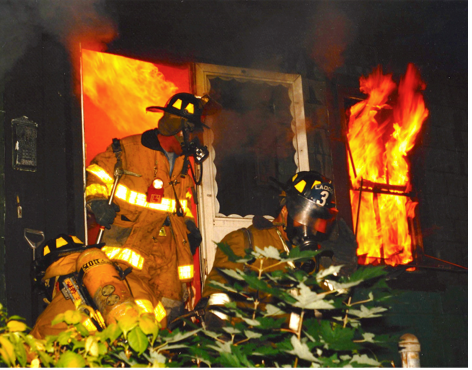
I had bid a spot on Engine 2, this was my first week driving. The driver of the truck, also known as the chauffer is responsible for getting the crew to the incident quickly and safely, apparatus placement on scene, the proper running of the vehicle, all of the tools and EMS supplies and most important, the pump. This particular morning Engine 2 was detailed from the Branch Avenue Station in the North End to South Providence. Our job was to be available for calls while the fire companies from Broad Street were conducting a fire extinguisher drill at one of the fuel companies that inhabit the Port of Providence. Kenny, the officer in charge that day was working overtime and had no idea this was my first week driving the engine. Wayne and Arthur occupied the rear jump seats, each with their own particular set of duties for whatever call we were sent on.
Halfway through the drill the truck radio sparked to life;
“Attention Engine 2, Engine 11, Engine 3, Special Hazards, Ladder1, Ladder 8 and Rescue 1, respond to 151 Washington Avenue for a fire on the second floor, reports of trapped occupants.”
We roared out of the drill yard toward the fire. I saw smoke coming from over the tree line about a mile from our position.
“All companies responding to 151 Washington be advised, there is an infant on the third floor and a handicapped male in a wheelchair on the first.”
I made the truck go faster. Behind me Wayne and Arthur were “getting dressed,” putting on their turnout gear, no easy task in a speeding truck with limited room to move. Kenny did the same while answering the radio.
We were first in. I was responsible for the positioning of the apparatus and the pump. I turned the engine down Washington Avenue and saw flames shooting from a second floor balcony. Cars were parked on both sides of the street leaving just enough room to squeeze through.
“Go fifty feet past it,” said Kenny, calmly, referring to the burning house. Ladder 5, right behind us needed room to set up the aerial ladder. I stopped the truck, Kenny went in looking for victims, Wayne and Arthur went to the rear and grabbed a hand line and started the process of stretching it into the front door of the fire building. Ladder 5 stopped behind me, two members immediately went to into the house, and two got the ladder ready.
At this point I had Kenny, Wayne and Arthur inside the burning building, an infant on the third floor, a handicapped man in a wheelchair on the first, and two firefighters on the roof.
“Charge my line!” came the muffled order from Wayne who had found the fire.
I put the truck in pump by putting the engine in neutral, hitting a switch that transferred the power to the pump, then shifting back into drive. The red throttle handle on the pump panel controlled the pump's RPM, I needed it to get to 150 psi to get the right pressure to the nozzle. I turned the throttle, heard the engine strain and expected the gauge to show something. It stayed at zero. Smoke came from under the truck. Engine 10 had joined the fight, backing up Engine 2.
“Charge Engine 10’s line!” came from the radio. I had nothing to give them. All of my training led me to this point. I felt the crushing weight of the responsibility for all of the lives depending on me. I turned the throttle higher, still no movement on the gauge. The truck jumped a foot forward. I froze. The officer of Engine 10 screamed for water, I tried harder but nothing worked. At the depths of despair, just when I thought the pressure of the situation would crush me, Wayne appeared from the back of the engine, walked over to the pump panel and figured out the problem.
“You’re not in pump.”
It clicked. When I flipped the pump switch on from inside the truck, the adrenaline was so high I probably switched it back off with out realizing it. The truck was in drive. It’s a miracle it didn’t run down the street and kill somebody. Thankfully the maxi-brake held. Wayne opened the cab door, put the truck in neutral, stepped over to the pump panel, throttled down, then put the truck in pump, throttled up to 150 psi, opened the gates for Engine 2 and Engine 10’s lines and told me,
“Go fight some fire.”
He pumped for the rest of the incident, I found Arthur, we eventually put the fire out. The handicapped man and the infant were saved, everybody survived. After the fire, while we were picking up I expected Wayne to start torturing me. Instead, he explained what I had done wrong, even tried to give me an out by suggesting the truck malfunctioned. Some of the other guys were not so forgiving. I learned a lot that day, lessons about pumping, grace under pressure, and that I loved Wayne like a brother.
Wayne is the only person I’ve met whose skull is thicker than my own. He sees things his way, I see them my way, neither one of us will ever admit the other is right. I have come to respect the man and understand that the way he goes about the job, while different from the way I do things, is just as effective when looking at the big picture. The fires go out, the patients are given the best care and the station is maintained. If anything I have learned to relax a little, and am better for it.
“7 serving 3”
The game went on, an up and down battle, both players giving it their all. It was tied at twenty when the bell tipped.