


Rhode Island College Presidential Search Committee Announced
GoLocalProv News Team
Rhode Island College Presidential Search Committee Announced
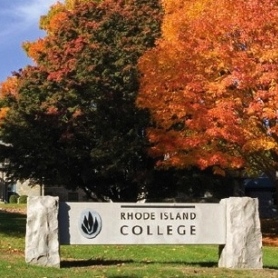
The committee consists of 11 members and includes representatives from RIC faculty, staff, and student body, as well as members of the Council of Postsecondary Education and community leaders.
“The members of the search committee are a diverse group committed to the success of Rhode Island College, and the Council greatly appreciates the time and talent they bring to the search process. I look forward to working closely with them in the coming months to identify the strongest candidates for RIC," said William Foulkes, Chair of the Council on Postsecondary Education who will also chair the search committee.
GET THE LATEST BREAKING NEWS HERE -- SIGN UP FOR GOLOCAL FREE DAILY EBLASTThe Search Committee is as follows:
- (Chair) Mr. William Foulkes, Chair, Rhode Island Council on Postsecondary Education
- Dr. Nicole Alexander-Scott, Director, Rhode Island Department of Health
- Dr. Vincent Bohlinger, Associate Professor, English Department & Rhode Island College Council Member
- Ms. Anna Cano-Morales, Director, University Outreach and Engagement, Roger Williams University
- Mr. William Fazioli, President, Rhode Island College Alumni Association
- Dr. Donald Halquist, Dean, Feinstein School of Education and Human Development, Rhode Island College
- Dr. Quenby Hughes, Associate Professor, History Department & Rhode Island College AFT President
- Mr. William Hurry, Chair, Rhode Island College Foundation
- The Honorable Thomas Izzo, Member, Council on Postsecondary Education
- Mr. John Rainone, Student, Rhode Island College Student & Member of Council on Postsecondary Education
- Mr. Dennis Sousa, Computer Manager & Rhode Island College PSA President
First Meeting Scheduled
The committee will meet for the first time on February 29, while conversations with the campus community will begin in early March.
The committee will conduct its search throughout the spring, with the goal of recommending candidates to the Council on Postsecondary Education by its June Meeting and having a new President in place before the Fall 2016 semester.
RI Experts on the Biggest Issues Facing Public Education

Sasse
"Provide a state constitutional guarantee that all children will have access to an education that will prepare them to meet high performance standards and be successful adults.
Bridge the gap between the educational achievement of majority and minority students. This will require the implementation of a comprehensive agenda for quality education in Rhode Island’s inner cities."
Sasse
"Revisit school governance and clearly define the roles and responsibilities of the state, school districts , neighborhood schools, and school teachers and school administrators. Develop and implement a system to hold schools responsible for student outcomes."
Sasse
"Build a consensus and buy in of all stakeholders around the education reform initiatives being advanced by the Board of Education."

Metcalfe
"Set high expectations and raise our standards across the state for anyone that contributes to the success of our students. From adopting the Common Core to discussing rigorous teacher evaluations, conversations around creating a culture of high expectations have to be at the center of the work."
Metcalfe
"Expand opportunities and start earlier - we must ensure that all kids have access to a high performing public school of their choice, which includes full-day kindergarten."
Metcalfe
"School facilities - with an aging infrastructure, underutilized buildings and the need to provide fair funding for school facilities for all public school students regardless of the public school they attend, this needs to be a top issue tackled by the RI General Assembly in 2014."

Cano-Morales
"Meet the academic potential of all students but especially with regards to urban schools students -- 3 out of 4 are Latinos in Providence, Central Falls, and Pawtucket."
Cano-Morales
"Connect through specific best practices the academic successes of our students to careers jobs. Investing in schools is economic development as a whole for Rhode Island. "
Cano-Morales
"Increase the access to -- and completion of -- higher education and post- secondary opportunities. Poverty? Struggling families? Education and access to careers and competitive wages is the best antidote."

Duffy
"Providing adequate funding is critical -- and there are going to be pressures on the state budget, which mean stresses to meet the education funding formula. With the predictions of the state's projected loss of revenue with the casinos in MA, education funding could be on the cutting board, and we need to ensure that it's not. Do we need to look at strengthening the language of the constitution to guarantee funding?"
Duffy
"Implementing the common core standards will provide continuity -- and comparison -- between states now. With over 40 states involved, we're embarking a new set of standards here."
Duffy
"Accountability and assessing student performance -- how that it's driven by the common core, we'll be able to compare the best districts in RI against the best districts in say MA. That's the intent of the Common Core is a standardization of how we hold the system accountable."

Cylke
"Issue one is quality. Your quality of education should not be dependent on your zip code. And the reality is, certain cities are distressed, or whose property values are not as high, I know each town has a different capacity to fund education. There's an absolute, clear relationship between the quality of public schools, and economic development of states. There's irrefutable evidence that quality public schools can make states more competitive."
Cylke
"Issue two is equality. In West Warwick and Providence, the per pupil spending is around $16K. In Pawtucket it's $12.9. What's wrong with that picture? If I'm in charge of overseeing that my students are college ready, they need to be adequate funding. A difference of $3000 per pupil? We're talking in the tens of millions of dollars -- more like $25 million in this case. An exemplary school district is Montgomery County, MD -- they have roughly the same number of students, around 145,000 -- there's one funding figure per pupil. There's equitable funding for all kids."
Cylke
"Issue three is Infrastructure. A critical issue is whether the state is going to lift its moratorium in 2014 for renovations for older schools, ore new construction. If that moratorium is not lifted, and those funds are not available, it is critical to us here in Pawtucket. The average of my schools is 66 years, I've got 3 that celebrate 100 years this year. These old schools have good bones, but they need to be maintained. These are assets -- and this is all interrelated with the funding formula."


