


Trump, Syria, and the Greater Middle East - Mackubin Owens
Mackubin Owens, MINDSETTER™
Trump, Syria, and the Greater Middle East - Mackubin Owens
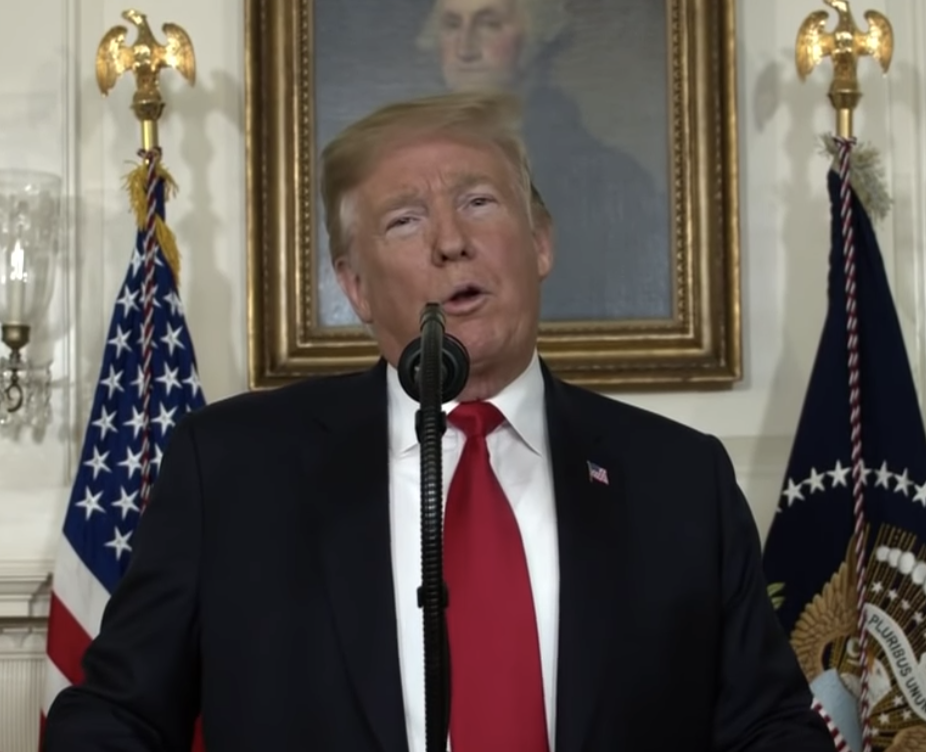
The latest manifestation of this adjustment is the rapid and unexpected overthrow of Bashar Assad and his Ba’athist regime in Syria. How Trump handles this situation will go a long way in determining the foreign policy legacy of his administration. The fact is that while Syria creates some serious challenges, it also provides some opportunities.
Assad was a ruthless murderer who had no compunction about slaughtering his own people. When the Syrian people rose peacefully against Assad in the earliest days of the Arab Spring in 2010, he unleashed his army on them. It is estimated that half a million Syrians were murdered and millions more fled to Turkey, to Europe, and beyond. Over the years, Salafis, including ISIS and al Qaeda have sought to depose Assad. Hayat Tahrir al Sham (HTS), the group that spearheaded the overthrow of Assad, is a Salafi-jihadi collective. But although we may welcome the overthrow of a tyrant, we should not mistake the rebels for friends of the United States, Israel, or the West: they are sharia supremacists whose goal is to establish universal sharia law. What should the incoming Trump administration do?
GET THE LATEST BREAKING NEWS HERE -- SIGN UP FOR GOLOCAL FREE DAILY EBLASTAs I noted in an earlier GoLocalProv column, although the Republican Party has traditionally favored a robust defense posture that supports allies and emphasizes a forward defense posture, many of Trump’s supporters have pushed back against this approach, citing the costs and risks of “endless wars” abroad.
Recently, Trump stated that it is up to Syria to sort things out for itself. He is correct, especially if our enemies in Syria are distracted by fighting among themselves, as the various factions are inclined to do. But it is undeniable that a number of players have interests what happens in Syria. These include: Iran, Russia, Turkey, Israel, and….the United States.
Iran Assad was Iran’s most critical Arab ally, providing the mullahs with a "land bridge" to the Mediterranean, Lebanon, Hezbollah, and Israel. Assad’s Syria served as a critical link in Iran’s Axis of Resistance. Without Assad, Iran’s ability to arm and fund Hezbollah in order to dominate Lebanon will be crippled. In addition, Iran may not be able to recover the tens of billions of dollars in loans and credit lines for oil that Syria owes to Iran.
Russia The collapse of the Assad regime is a major geopolitical blow to Russia and a personal humiliation for Vladimir Putin. Russian forces in Syria could not prevail against the rebels. And tied down in the grinding Russo-Ukrainian War, Moscow could not provide additional material support. Putin’s dreams of reconstituting a Soviet-style Russian empire have likely died with Assad’s fall.
Turkey On the other hand, Recep Tayyip Erdogan benefits from Assad’s fall. Turkey supports the two main opposition forces, HTS and the Syrian National Army, as it seeks to supplant Iran and replace it with Muslim Brotherhood/Islamist domination of the region. It also seeks to eliminate the US-backed Kurdish Syrian Democratic Forces as part of Turkey’s relentless anti-Kurd agenda.
Israel Jerusalem faces increased uncertainty as a consequence of Assad’s fall. On the one hand, Syria has been an active belligerent against the Jewish state since Israel’s war of independence in 1948. On the other, Assad was the devil the Israelis knew, as opposed to the devil it doesn’t: HTS. Although the leader of HTS, Ahmad al Sharaa, aka Abu Muhammad al Jolani, claims to have abandoned his previous affiliation with ISIS, the Israelis suspect an old trick: pretend to favor liberal principles for Western consumption, then slowly implement sharia supremacy. Israel doesn’t need a well-armed, HTS-led sharia state on its doorstep, so the Israelis remain prudently skeptical. Along with US assets, Israel has struck numerous targets in Syria, including weapons depots, missile batteries, potential chemical and biological stocks, air assets, army formations, and Syria’s sparse naval fleet.
The United States Trump has said that Syria is not our fight and he is correct. But we do have interests there. As far as direct intervention in Syria, US interests are limited to 1) securing Assad’s chemical weapons; and 2) ensuring that jihadists cannot turn the country into a new Afghanistan, which jihadist groups will use as a sanctuary to train recruits and orchestrate attacks against the United States and our allies.
But there are sound reasons for not precipitously disengaging from the Greater Middle East. The fact is that many of the problems we face in the Middle East are the result not of US interventions per se but of interventions driven by bad policies. In the broadest sense, Trump needs to reverse the disastrous policies of his predecessors.
It was after all, Barack Obama’s decision to favor Iran over the Sunni Arab states and Israel that lies at the heart of today’s Middle East instability. Obama’s preference for Iran made him indifferent to Syria, as exemplified by his false “red line” in response to Assad’s use of chemical weapons in 2012. But then there’s also the Bush folly of trying to spread liberal democracy to sharia supremacist states, which is as much of a fantasy as the Obama-Biden idea of an Iranian-led peace in the Middle East. Fortunately, Trump has demonstrated an antipathy toward the sort of fatuous “nation building” that such a fantasy entails.
But Trump should also exploit the opportunities created by the conditions that led to Assad’s fall in order to improve stability in the region: Israel’s success in weakening Iran and minions. He seems predisposed to do so. Weakening Iran and its Axis of Resistance and once again expelling Russia from the Middle East will go a long way towards achieving this objective.