


Whitcomb: Me in ME; Even Without Nina; No Taxes All Around! His Churchill Tour
Robert Whitcomb, Columnist
Whitcomb: Me in ME; Even Without Nina; No Taxes All Around! His Churchill Tour

“You say, Columbus with his argosies
Who rash and greedy took the screaming main
GET THE LATEST BREAKING NEWS HERE -- SIGN UP FOR GOLOCAL FREE DAILY EBLASTAnd vanished out before the hurricane
Into the sunset after merchandise,
Then under western palms with simple eyes
Trafficked and robbed and triumphed home again:
You say this is the glory of the brain
And human life no other use than this?
I then do answering say to you: The line
Of wizards and of saviours, keeping trust
In that which made them pensive and divine,
Passes before us like a cloud of dust.
What were they? Actors, ill and mad with wine,
And all their language babble and disgust.’’
-- “You Say, Columbus with his Argosies,’’ by Trumbull Stickney (1874-1904), American poet
“Yes, I received your letter yesterday
(About the time the doorknob broke)
When you asked me how I was doing,
Was that some kinda joke?’’
-- From “Desolation Row,’’ by Bob Dylan (born 1941)
“An irreligious man is not one who denies the gods of the majority, but one who applies to the gods the opinions of the majority. For what most men say about the gods are not ideas derived from sensation, but false opinions, according to which the greatest evils come to the wicked, and the greatest blessings come to the good from the gods.’’
-- Epicurus (Greek philosopher), circa 250 B.C.

The area around their Maine place is becoming increasingly eco-friendly; I suspect that may be driven in part by the wave of affluent newcomers, which got higher in the pandemic as people fled big cities. That disaster led some summer and weekend residents to move to Maine full-time. But most native Mainers, including poor ones, also seek to protect The Pine Tree State’s environment. There’s plenty of poverty in Maine, and most of the wealth is along the coast from Kittery to Acadia National Park.
To protect their gorgeous setting and its resources requires taking away some freedoms. A local rule applying to our friends’ immediate area bans new lawns along the water; old ones are grandfathered in. The rule is meant to curb pollution from the fertilizers, herbicides, and pesticides that many property owners dump on their lawns to keep them looking like a swatch of golf course that ends up in the lake. The rule also, of course, helps curb shoreline erosion, which is less from woods than lawns.
An important factor in rules about Sebago is that it’s the main source of Portland’s water.
Instead, people such as our friends have shrubs and other low vegetation, say two or three feet high, between their house and the water. This has a nice effect as you look at the shining water from their big windows.
As for the freedom to put a lawn next to the lake: Surely locals should also have the freedom of being able to use a clean lake. It reminds me of the MAGA battles against having to wear a face mask to reduce COVID spread in crowded places. How about the freedom to go around without fear that an infected person in a pandemic will get you very sick?
Then there’s the grossly misinterpreted (and badly written ) state-militia-promoting Second Amendment, which MAGA types wielding military-style assault rifles say is essential for their freedom to defend themselves.
How about the freedom to be in public places, including schools, without the fear of being gunned down by yet another young man with a weapon designed to mow down people by the dozens, not just a lone criminal or lunatic.
One person’s “freedom’’ is another’s captivity. There will always be battles.
Besides such joys as the beauty of the fall foliage, which was heading into its height up there, and the sun glimmering on the lake, our visit gave me a greater appreciation of the beauty of granite – the quintessential stone of the region. On our friends’ property, we saw granite boulders, left by the last Ice Age and the bane of old Yankee farmers, artfully used in landscaping, and the effects achieved by the use of granite for steps, terraces, and indoor work, such as countertops and even benches at the side of fireplaces.
Our friends told us about the Orland, Maine, company called Fresh Water Stone that created exquisite granite work for them, such as the terrace in this picture. (I have no commercial, or other connection with the company.)
Stonework is just one example of why the state is renown for its artisans. Consider the long tradition of its boatbuilders, furniture and tool makers, painters, sculptors, ceramists, leather-goods designers, and so on.
Meanwhile, I read about arguments in Maine, as elsewhere, about farmers selling off or leasing land for solar farms. Each local case is different, of course, but it seems to me that reducing local agricultural production can undermine the battle against global warming since it means that more food must be shipped from far away, thus burning more fossil fuel. Can’t many more roofs and abandoned lots be venues for solar panels instead of putting them on farmland or chopping down trees, those crucial carbon-dioxide absorbers?
I’ve noticed a paradox up there: Some of those who don’t like the famously long winters at the same time worry that they’re getting too short and warm, ruining such local activities as ice fishing and allowing in invasive animals and plants from the south.
The Corner Store
As we drove between the lake and Portland, I saw some small grocery stores along the road, which reminded me of a Bloomberg City Lab article about efforts by some urban and suburban places to encourage a revival of small neighborhood grocery stores for convenience and to boost a sense of community and, presumably, civic-mindedness.
Zoning rules (the biggest cause of America’s housing shortage) have long discouraged establishing such “mom and pop stores’’ in many communities and have instead effectively promoted large grocery-store chains with big parking lots.
These stores are mostly for drivers. But some people don’t have cars and can’t or just don’t want to drive. Their numbers are growing.
And not needing a car to go shopping can save you a lot of money.
Wouldn’t it be nice if there were more grocery stores that more of us could walk to? In many European cities people shop several times a week, going on foot to neighborhood stores. And many seem to enjoy it, in part because of the personal relationships they develop with the store owners and staffs. We did when we lived in France many moons ago.
Of course, big chain groceries have a much wider range of products than the likes of corner stores, but that range is wider than many people need. Their wholesale buying power – economies of scale -- also lets them charge less than a neighborhood grocery can. But that competitive disadvantage could be mitigated by cooperatives of small stores to bargain more powerfully with food and other product distributors. And letting lots of corner stores sell and serve wine and beer, as well as coffee, could bring in enough money to subsidize their food prices.
xxx

Things could get very exciting indeed when we get a strong El Nina combined with record-warm ocean water.
xxx
The problem of noise from demolition can be mitigated a bit, including by creative scheduling. But it sometimes has to happen to fix infrastructure, as with part of the infamous Washington Bridge. It’s too bad for the folks living near it (such as my wife and me), but it’s absolutely essential, socially, economically and even psychologically that the bridge reconstruction proceed as fast as possible even in the face of angry complaints.
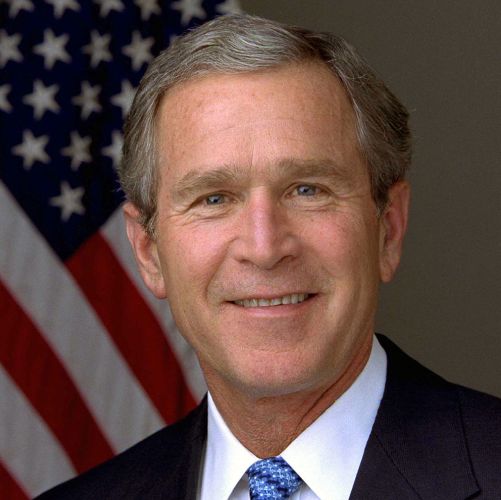
There’s a special place in hell for influential people who know damn well that something and/or someone is evil and don’t speak up. Thus, it is with George W. Bush and some other leading Republicans who have not spoken against Trump. (But reminder: Bush’s disastrous foreign and domestic policies helped lead to MAGA via the Tea Party.)
Then we have such trimmers as Mitt Romney, who though he has denounced Trump, refuses to say he’d vote for Kamala Harris, whose election would be the only thing keeping mobsters out of the White House.
He says:
“I believe I will have more influence in the party {post-election} by virtue of saying it as I’ve said it.’’ Or not said it.
However, the presidential election (which could be our last fair one) turns out that the outgoing Utah senator, 2012 GOP presidential candidate, and former and very good Massachusetts governor won’t have much influence in such a sick enterprise as the national Republican Party. For one thing, at 77 he’s too old. For another, the party, taken over by a cult that combines extreme lie-soaked demagoguery with a lust for tyranny and kleptocracy, may well be beyond repair. Perhaps a new center-right party – “conservative’’ in the classic admirable sense -- will be invented to take its place, if it’s allowed to. God knows, we need it.
xxx
No taxes on Social Security! (Appeals to old folks, who are heavy voters.) No taxes on tips! (Appeals to poor people.) No taxes on overtime! (Appeals to middle class voters, many of them unionized.) And now, the latest promise from Trump: No income taxes on expatriates, who are usually affluent and heavy voters and campaign donors. Watch more rich folks move abroad to countries where they may end up paying no taxes at all.
But then, who needs roads, Medicare/Medicaid, etc.? National Parks? And the armed services? Putin will protect us!
xxx
“We won with poorly educated. I love the poorly educated.’’
-- Donald Trump after his victory in 2016
Of course, he does.
The link below from Tik-Tok reminds me of a core constituency of MAGA: Folks who never look up or cross-check anything, kind of like the lady during the Tea Party orgasm who demanded at a talk by Sen. Sheldon Whitehouse that the federal government stay out of Medicare (she apparently thought it was private) and those folks who denounced “Obamacare” while supporting the Affordable Care Act, which is the same thing.
Blame America’s slob culture, tolerance of mind-boggling ignorance, social-media baloney, and the implosion of history and civics teaching in the schools. But then, it’s increasingly a post-literate society, perfect fodder for political con men and women.
And appeals for saving democracy won’t work for many millions. They don’t care about it.
https://www.youtube.com/shorts/vPfRGJRMbN8

I like how Matthew Mills Stevenson’s notably concise books interweave history, some of it his own, a powerful sense of place and deep understanding of people famous and unknown. His ability to meld travel writing that’s rich with local detail and personal and sometimes quirky asides with big-picture observations is unusual.
His latest book, The View From Churchill: Travels in the Footsteps of Britain’s Last Lion, may be my favorite so far. Mr. Stevenson, sometimes alone and sometimes with oft-enthusiastic family and/or friends, travels, via various modes, including bicycle, to key places in Winston Churchill’s long (1874-1965) life. As with, say Lincoln, truckloads of different books have been written about the great, heroic and flawed Englishman; I myself have read a few over many years. But you’ll learn new and exciting stuff in this thin volume.
Mr. Stevenson visits South Africa, where in 1899 Churchill was imprisoned and then escaped from captivity in the Boer War. He goes to Gallipoli, in Turkey. There he ruminates on the reasons for the failure of Churchill's bold military strategy in 1915, when he was the first lord of the admiralty, to knock the Ottomans out of World War I.
He rides his bicycle along the Western Front of World War I to visit the Belgian town where Churchill commanded a battalion of the Scots Fusiliers after the Gallipoli disaster. He goes to Churchill’s estate, Chartwell, where he lived in a sort of internal semi-political exile in the 1930s while warning about the menace of Hitler.
Mr. Stevenson gets to Yalta, in Crimea, to appraise Churchill's meetings with Joseph Stalin and Franklin Roosevelt that effectively formalized the division of Europe between Soviet and Western spheres.
After reading Mr. Stevenson, one comes away with a fuller understanding of the giant mistakes and triumphs of this statesman, journalist and historian, whose heroic labors at the crucial time helped save Western Civilization. And yes, he was also a very good painter.
I wonder if a kind of Churchill will turn up with the rhetorical skills to effectively take on the present-day fascist dictators who are on the march. Let’s hope we have future lions.