


The World is “Atwitter” Over Twitter Sale – “The Sunday Political Brunch” -- May 1, 2022
Mark Curtis, MINDSETTER™
The World is “Atwitter” Over Twitter Sale – “The Sunday Political Brunch” -- May 1, 2022
“The Value of Twitter” – Folks, the value of Twitter is NOT in political persuasion. It is in “eyeballs!” Ninety percent of Twitter’s revenue comes from advertising, with the remaining ten percent from licensing fees, for things such as music or copyrighted content not in the public domain. Billions of people worldwide of all different political stripes and purpose use Twitter (and watch its ads). They read and share the content, especially from tailor-made subscriber lists, but does it produce any outcome? In many respects, Twitter is an “electronic town square” where people can speak, vent, agree, disagree, protest, or express support for a cause. But to what success? I say, “Nil.”
GET THE LATEST BREAKING NEWS HERE -- SIGN UP FOR GOLOCAL FREE DAILY EBLAST
“Name Something Twitter Actually Accomplished?” – There are two schools of thought on Twitter. One, the provocation of an issue or candidate, which launches all kinds of nasty tweets and opposition. On the other hand, there is the “echo chamber” effect, where people go to hear only content and opinions that are like-minded. So where has that gotten us aside from a sea of vitriol? Can anyone name a candidate who won because of Twitter, any public policy issue that got fixed because of Twitter, or a form of cancer that was cured because of Twitter’s so-called power and influence? I know, crickets! It gives people a voice but guarantees no outcome.
“Do the Rules and Ethics of Journalism Apply?” – The short answer is no! Twitter is a publicly held internet platform, for people to post, share and debate ideas. It generates no original content of its own. Now, if you are a working journalist using Twitter to promote and share your content, then you are still professionally obligated to follow the codes of ethics we subscribe to from SDX the Society of Professional Journalists, the NAB National Broadcasters Association, and the RTDNA Radio Television Digital News Association. Yes, I know many journalists do not, but I do, since the only reporter I can police is me. For everyone else, it is akin to the “Wild West.” I remember in 2008 during the social media explosion, someone came up to me and said, “Because of Twitter and Facebook, now I’m a journalist, just like you!” Sorry, that is just not so.
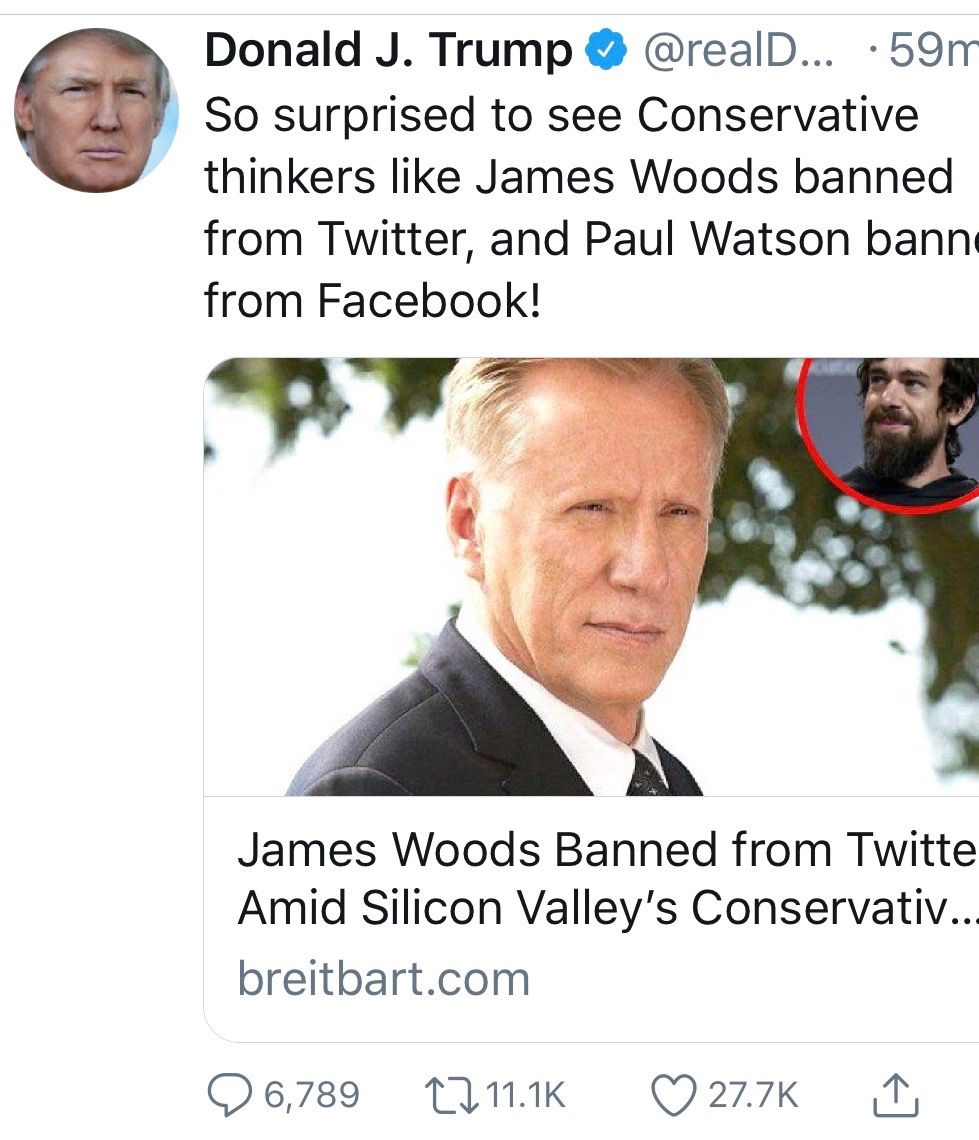
“Is This Censorship?” – Censorship can take a variety of forms, but certainly the one we fear most, (and rightfully so), is when the government censors our speech, artistic expression, freedom to worship, or the right to protest with dissenting opinions. Our Founding Fathers were brilliant in crafting the First (and in my view, the most important) Amendment. It is what I call our “cornerstone” amendment, in that if you pull it out, all other rights contained in the building bricks get crushed upon collapse. I have written about this for months. I do not consider what Twitter and Facebook do as censorship, with a ”Capital C.” Its more “soft censorship” from a private business editing, limiting, or even banning a conversationalist. Legal? Yes. Fair? No, not if we are trying to encourage a robust public debate. I thought Twitter banning President Trump was an optical mistake. Now he looks like a martyr, a victim of censorship. Why not let him vent and let the public decide? I am a full-time media guy who trusts the audience.
“Why I Like Musk?” – When I was a kid in grade school and high school, my favorite books all had a common theme. They were biographies or autobiographies. From an early age inventors, entrepreneurs, and pioneers fascinated me. I read the stories of Henry Ford, the Wright Brothers, Wernher von Braun, the original NASA Astronauts, Ben Franklin, Frank Lloyd Wright, Dr. Christian Barnard, and others. I was fascinated by people who did stuff, that no one did before, and that most thought was impossible. Musk, Bill Gates, and Mark Zuckerberg are among those who have those same attributes. Yes, Musk is a “bull in a China shop,” but we need more of that from all stripes on the spectrum. I believe the U.S, government failed by letting the NASA space program “die on the vine.” But shouldn’t private industry be able to compete and fill the gaps? Why not? Musk, Richard Branson, and others agree, and are doing just that!
“How Social Media Changed the Game” – I wrote a lot about the rise of social media in the political sphere during the 2008 presidential campaign. My doctoral dissertation and campaign book included extensive analysis of the impact. In 2008, it was clear the Obama campaign had seized the advantage on social media as a strategic beachhead. But I successfully predicted every campaign going forward, from dog catcher to the White House, would, by necessity, need a social media strategy. And they have. It is for everyone to use. It is the new landscape. But having a Twitter account merely allows you to get your word out. It does not guarantee victory. And that is why I think its supposed “power” is vastly overrated.
“The Self-Defining Nature of the Messenger" – Here is a dirty little secret. Most politicians do not operate their own social media accounts. Much of the content is the responsibility of communications directors and press secretaries. The boss might give some quotes or the gist of his or her message, but the professional communicators assigned to the task manage the rest. Not so with Trump. He was not shy about self-authoring his own missives, even at 3 am. I found it fascinating but jarring at the same time. I liked the candor, but why does the leader of the free world feel the need to vent in the middle of the night? Didn’t he have more important things to do (especially sleeping?).
What are your thoughts on the Twitter sale? Does it really change the political landscape? How do you find it useful or not? Weigh in!