


Robert Whitcomb: Raimondo Status, Medical Cost-Shifting to the States; & Saving the Citgo Sign
Robert Whitcomb, Columnistt
Robert Whitcomb: Raimondo Status, Medical Cost-Shifting to the States; & Saving the Citgo Sign
It’s entertaining to watch Trump voters, including congressional Republicans, push back against the myopic, incoherent and often ignorance-based Trump federal budget program as they find more and more parts of it that hurt them. Indeed, many Trump-voting constituents depend on federal programs that Mr. Trump seeks to axe. Good luck, suckers and hypocrites! More to come on this.
GET THE LATEST BREAKING NEWS HERE -- SIGN UP FOR GOLOCAL FREE DAILY EBLAST
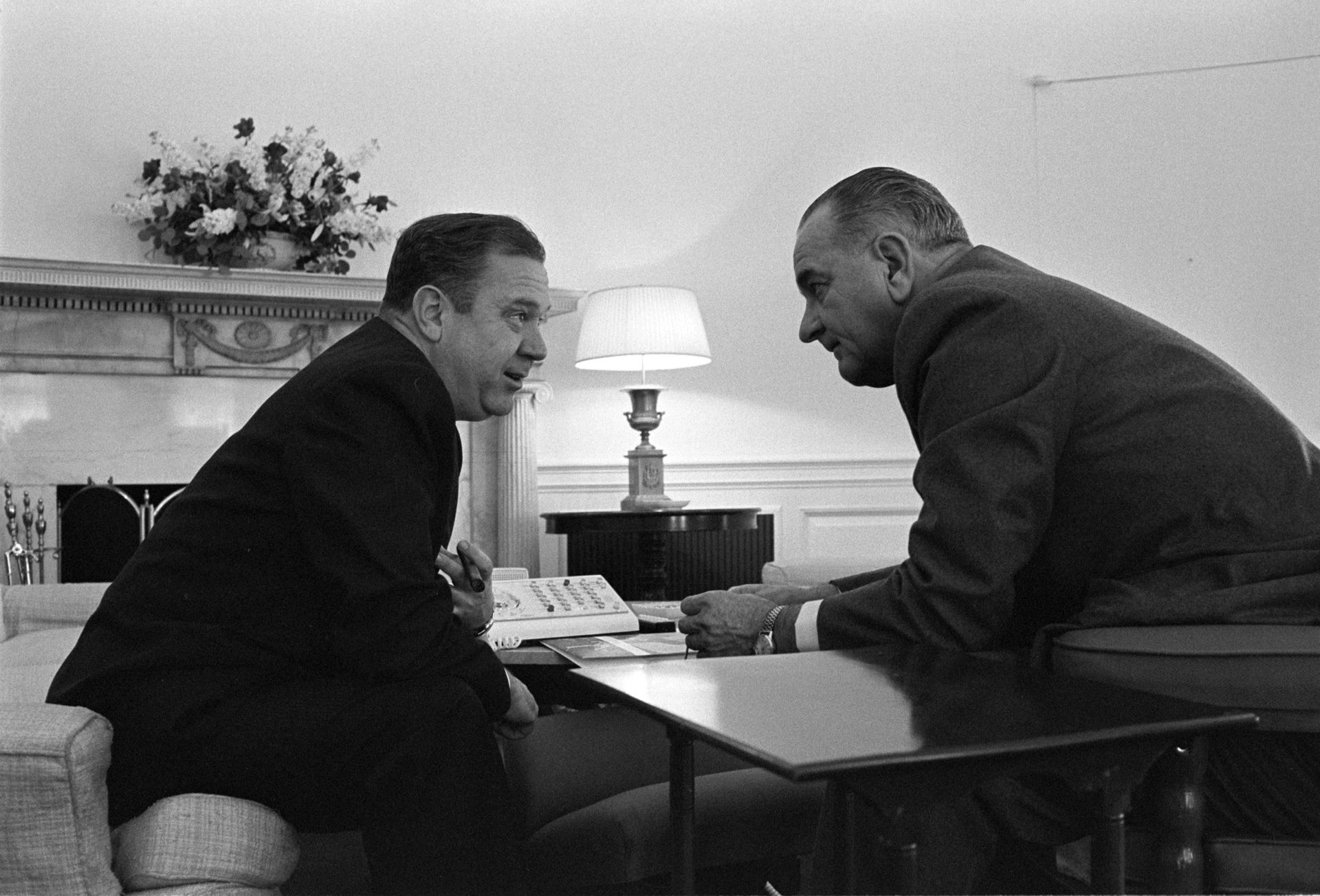
-- The late Louisiana Senate Russell Long
xxx
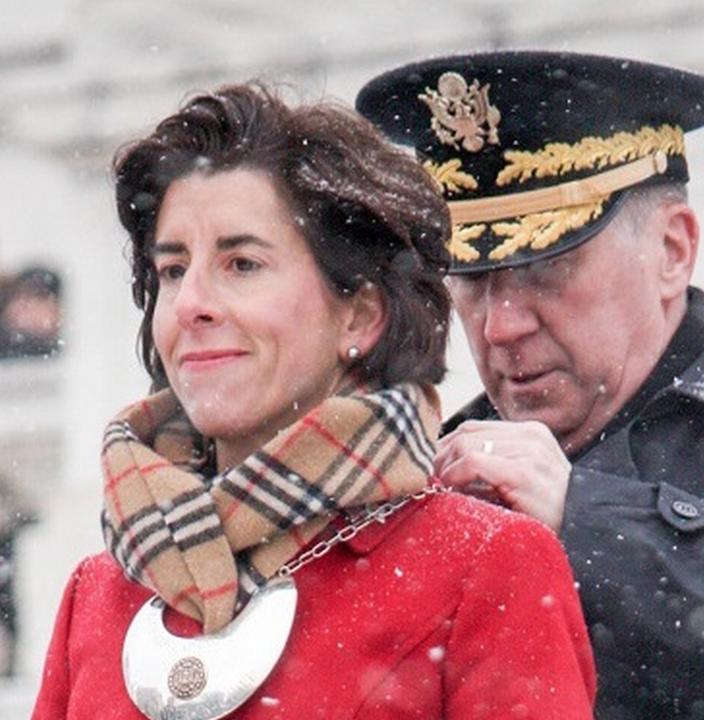
How much of this was due to Ms. Raimondo’s leadership? Economics has so many variables that it’s hard to say. For that matter, the Ocean State is so tiny it’s hard to say that there’s a “Rhode Island economy.’’ It’s part of the much bigger regional, national and international economies. And note that a shrinking state work force explains at least some of the recent jobless-rate drops.
I would say, however, that Ms. Raimondo’s knowledge of business and national connections as a former venture capitalist, her willingness to implement long-overdue reforms and her calm and intelligence have indeed inspired confidence in firms that might be candidates for moving to or expanding in the state. That she’s willing to get very able people from outside the state with fresh perspectives to join her administration rather than automatically pick well-connected Rhode Islanders (“I know a guy…’’) has also been good, although it has, along with her fancy education, gotten her labeled an “elitist,’’ which I don’t believe this daughter of middle-class Rhode Islanders considers herself. The more new people moving into Rhode Island the better, to dilute the parochialism that is at the root of many of its political and economic problems.
As in many states, her administration has had headaches with big computer systems (e.g., public benefits and the Division of Motor Vehicles). Could she have headed these headaches off by firing people faster who were charged with getting them going but didn’t succeed? Probably.
Hire Republican Ken Block, a brilliant systems guy, to oversee state computer systems? That would be exciting.
Ms. Raimondo has gotten a lot of flak from some people about what former Gov. Lincoln Chafee calls the “candy store’’ approach of using tax incentives to lure businesses. I share a lot of this dislike. It can create a race to the bottom as states compete to get sexy companies. As I’ve written here before, for long-term economic success, jurisdictions must focus on broad improvements, especially in education and infrastructure. The governor says she is focusing on those things but the $130 million in tax incentives so far in her term understandably get a lot of attention. And how do you make these companies stay?
Pretty much every state and large city play the tax-incentive game in varying degrees.
Of course, the governor thinks that attracting such big companies as General Electric to set up new operations in the state signals to other companies that it’s now a good place to do business and, they find, a beautiful place to live for many.
She has had some success in changing the perception of out-of-staters about the Ocean State so that many have come to believe that the Rhode Island is finally, if slowly, fixing its business climate. The deeply embedded tribalism, negativity and cynicism in the state militate against her but I believe she’s making progress – two steps ahead, one step back.
Meanwhile, I’m sure that Rhode Islanders would like to see a updated list of companies that have decided to stay and grow in the state as a result of Raimondo administration policies.
On two big issues she’s been embroiled in: the car tax, about which she is less enthusiastic about cutting than some other politicians, and “free college’’ for two years:
Cutting or eliminating the car tax, as hated as it is, will have little or no effect on the state’s economy. And rather than “free college,’’ it might make far more sense to put some of the tax revenue to be spent on subsidizing students into creating a public-private vocational education system (including apprenticeships) like that which has been so successful in Germany. And even more important is pushing aside Rhode Island special interests in order to adopt a K-12 public-education system with the rigor of Massachusetts’s, which has helped make the Bay State so prosperous in the past couple of decades.
xxx

A good example of how Russian dictator Vladimir Putin’s regime operates came last fall in tiny Montenegro, in the Balkans, when the Kremlin tried to have Prime Minister Milo Djukanovic assassinated in order to derail Montenegro’s attempt to join NATO.
The government of the tiny Balkan nation plans to indict two Russian intelligence agents who reportedly spent a few months training some Serbians to seize the parliament building and kill Mr. Djuknanovic. (Serbians tend to be pro-Russian.) The two agents are safely back in Russia now.
Mr. Putin has long seen murder as a standard operating procedure.
But in any event, Montenegro is still due to join NATO in May.
xxx
Steve Bannon, who may well be President Trump’s closest adviser outside of the Trump family itself, has made a recent career of touting the need to reenergize the cultural and moral aspects of Western Civilization. But his chaotic and corrupt personal life suggests that he could use some civilizing himself. For example, read:.
xxx
The publication of President Trump’s federal tax return for 2005 wasn’t worth much: Only two pages were available. The public has no clear idea of where his income came from and or a plethora of other details that would help explain or at least suggest what he’s been up to.
His hiding of his finances as president is scary because, among other things, we don’t know how beholden he is to foreign entities. We do know that his family is moving ASAP around the world to use their presidential proximity to further enrich themselves as much as and as fast as possible.
In the end a court order and congressional subpoena may be needed to get the president’s tax information from the IRS. National security may be at stake.
xxx

Car company senior executives always say that they can’t meet new fuel standards but because of always developing technology they always do. In so doing, they’re making more efficient, better-engineered cars. But they’ll take the easy way out if they can to maximize their short-term profits. Senior execs rarely hold their jobs for more than five years so why should they worry much about bad PR about the long-term environment? Their children and grandchildren can fret about global warming.
But global warming aside, what about cleaner air?
Meanwhile such nasties associated with global warming as acidification of the oceans and the consequent death of coral reefs goes on.
xxx
It seems that the coldest part of our winter this year comes at the end, after the jet stream flipped and decided to send the warm weather Out West and much-below temperatures to the Upper Midwest and New England. It’s doing a number on the plants brought out of hiding by the almost summery weather we had just a few weeks ago. They say that New England weather builds character but it’s just as likely to build bitterness.
xxx
The Congressional Budget Office figures that the Republican healthcare bill would reduce the federal budget deficit by $337 billion through fiscal 2026. I doubt that, but even assuming that it’s true, it doesn’t project how much the bill could cost the states.
A problem is that every state mandates that all sick and/or injured people who show up in inefficient and expensive hospital emergency rooms (which is most of them), and indeed at many other providers, must be treated regardless of ability to pay. There will be a heightened flood of such people at ERs over the next few years if the GOP bill is enacted because many of these folks would no longer have coverage that has let them get preventive treatment as part of a regular clinical relationship with a physician, especially with a primary-care doctor.
Hospitals and other providers and state governments would have to eat much of the cost of caring for the low-income people cast off with the demise of the Affordable Care Act. Unless state governments decide that they’ll just let a lot of poor people die on the street. Now that’s libertarian!
As former Massachusetts Gov. Mitt Romney said in 2006 in explaining his health-insurance plan for the Bay State: “Some of my libertarian friends balk at what looks like an individual mandate {as in the future Affordable Care Act}. But remember, someone must pay for the healthcare that must, by law, be provided: Either the individual pays or the taxpayers pay.’’
As for the alleged evil of “individual mandates,’’ states have long had them for auto insurance, and generally those who want to own a home are compelled to buy property insurance to get mortgages.
In any event, the Republican healthcare plan, among other things, is a great big inefficient cost-shifting to the states.
There are elements of the GOP approach that, in principle, have merit. For instance, the Trump administration wants the states to charge Medicaid patients at least some premiums, require them to pay part of their emergency-room charges (Medicaid patients tend to overuse ER’s) and push recipients to get jobs. These changes might reduce some of the vast amount of waste pervasive in American healthcare. And everyone should be reminded that healthcare is never “free’’; it’s just a question of who’s paying for it. But what percentage of Medicaid folks can meet these demands is unknown. Many of them are already under a lot of economic and other stress.
xxx
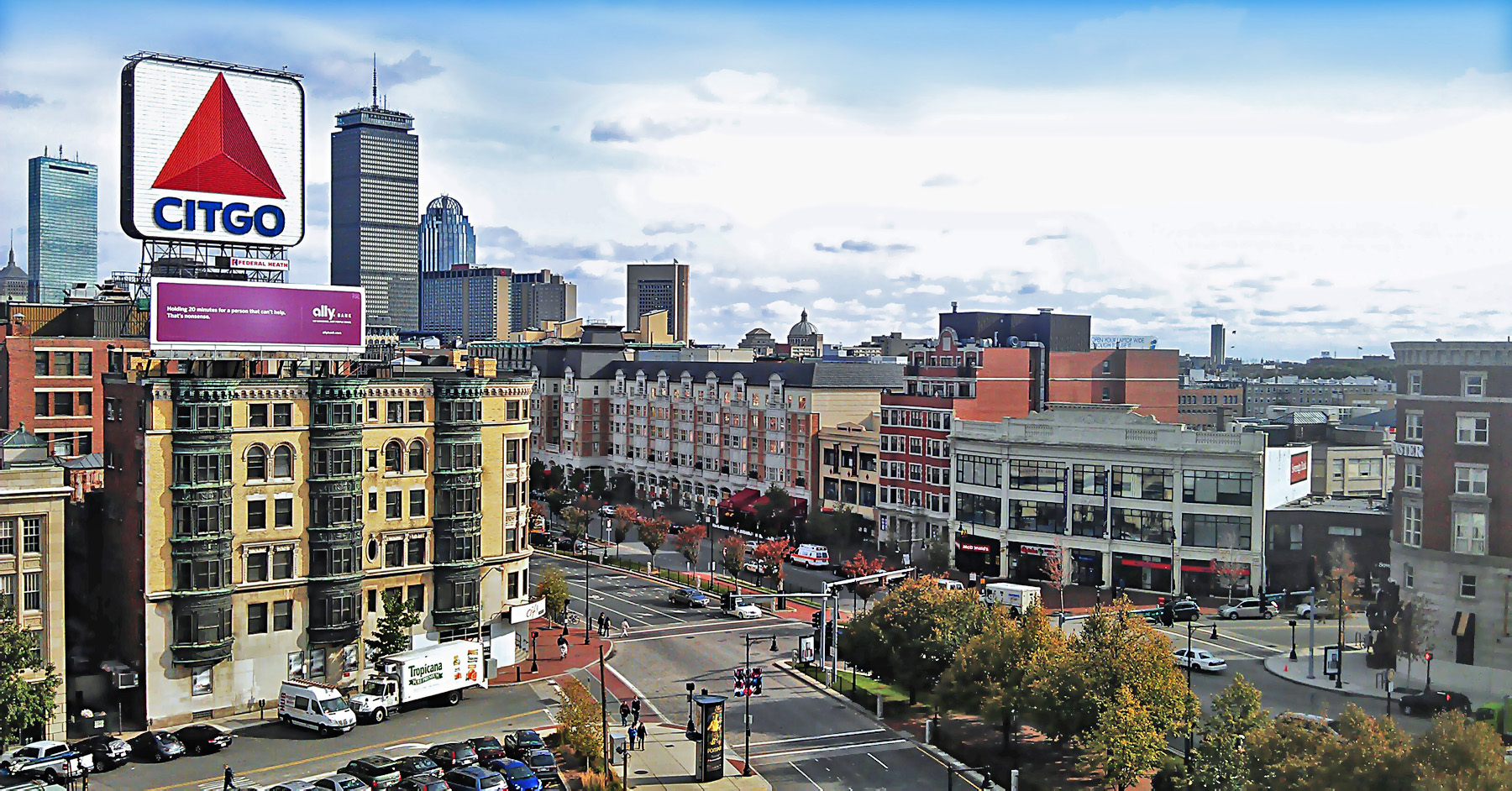
Daniel Bluestone, an architecture-history professor at Boston University, told The Boston Globe he was very happy about the agreement: “It’s a landmark in the truest sense of the word. It helps people know where they are.” Above-the-street landmarks are particularly important in a city with as confused a layout as Boston.
See the Best of GoLocal LIVE - From Penguins to Governors to Rock Stars

Mixologist and Owner of Little Bitte Artisanal Cocktails, Willa Van Nostrand concocts green drinks without any chemicals.
Van Nostrand says the secret to creating a naturally green drink is the base green syrup she made up.
Van Nostrand says she was looking for a specific color and flavor while mixing her green coloring. She wanted to create a shandy flavor when mixed with beer.
Van Nostrand says the green mix is made of honey and water. It’s Spirulina and matcha powder that give it the green color.
To celebrate St. Patrick’s Day, Van Nostrand makes The Emerald Isle, concocted with Whiskey, Ginger Beer, green syrup and garnish.
Van Nostrand says to make a green beer, light beer holds the color better than any other.
Green cocktails and green beer in honor of Saint Patrick's Day. For those of us expressing our Irish heritage, or those of us that wish we were more Irish.
The Emerald Isle
2 oz Jameson
1 oz green tea & spirulina honey syrup*
Top with your favorite ginger beer.
Willa uses locally made Farmer Willie's alcoholic ginger beer or non-alcoholic Reeds ginger beer.
Green tea & spirulina honey syrup. Pour 4 ounces of boiling water over 1 teaspoon of match green tea powder & 1 teaspoon of Spirulina and whisk together. Add 4 ounces of honey and dissolve into the solution.
Preparation: Fill your rock glass with ice, add Irish whiskey, honey syrup & top with ginger beer. Garnish with a clover leaf or fresh herbs of the season.
Green Beer: Naturally
The Shamrock
1 bottle of light beer.
Willa uses Narragansett lager for this application.
2 oz green tea & spirulina honey syrup. Willa says the more you add, the greener the drink.
Preparation:
Pour green tea honey syrup in the bottom of a beer glass & slowly top with beer. There you have it: green beer, naturally.
Add extra 1/2 ounce of honey syrup for more color. Willa is going for an easy sipping light green shandy-meets-Arnold-Palmer vibe.

Commerce Secretary Stefan Pryor talked with GoLocal about Commerce's role in facilitating development of the dormant Superman Building, how he feels about the ownership of the Pawtucket Red Sox looking for assistance with keeping the team in Pawtucket, and how Commerce increased its $1 million budget to $2 million to help businesses across the state with upkeep improvements.

Growing up in Fall River, MA folk artist Mike Laureanno says to some extent his songs deal with his gritty upbringing and heritage.
Laureanno just released his third album titled Tightrope, which was inspired by French high-wire artist, Philippe Petit.
As a guitar and piano player, Laureanno says when it comes to writing music, melodies come more easily to him, while lyrics are a bit more difficult.
Laureanno plays Tightrope off of his album Tightrope, and Spring off of his 2013 album Pushing Back Wintertime on GoLocal LIVE

West Warwick native, Johnny Gates was compared to Mick Jagger on this season’s The Voice. Gates says he couldn’t believe it really was his life.
Gates describes his audition while singing Rod Stewart’s “Maggie May” while he appeared on GoLocal LIVE.
“As soon as Gwen turned around, I had this really calming feeling. I looked at my parents I could kind of seem them. I thought I’m going to finish this out like a regular show,” Gates says, “It was cool, I got to hug Gwen, I got to talk to Alicia Keys, Blake said he was a fan. It was probably the greatest night of my life.”
Gates heads back to Los Angeles for the competition, but he says he wanted to be at home with friends and family to see his Voice debut. Gates says he’s proud to represent Rhode Island and loves coming home when he can, especially to eat clam cakes and hang out at Narragansett Beach.

Audrey Finocchiaro and Sam Lancaster co-owners of The Nitro Cart say they haven’t spent a dollar on advertising. The two have grown their business of locally sourced nitro brewed coffee organically though word of mouth and the power of a post.
Finocchiaro says if they didn’t have social media, especially Instagram, The Nitro Cart wouldn’t be where it stands today.
Lancaster says businesses need to understand social media is an “awesome asset.”
He went on to say their success has grown from posting and reaching out to individuals and a lot of businesses don’t use social media as much as they should.
The power of their product, coffee infused with nitrogen gas, also helped gain followers.
Lancaster and Finocchiaro started the cart in 2016 and have grown to place The Nitro Cart coffee in eight locations so far. By the end of 2017 they hope to be in 30 locations and eventually spread into the Boston market.

p>
Carey Richard from Mystic Aquarium says while a storm might close the doors to the public, Mystic Aquarium never shuts down.
Richard says many of the animals love the cold weather, especially Juno, “he’s right at home in these cold temperatures.”
Juno, a male Beluga Whale, weighs just over 1,800 pounds, and Richard says he’s still growing. Richard says they feed the soon-to-be 15 year old whale about 60 pounds of fish a day.
That’s more than his female tank mate Kela. She’s 35 years old and weighs about 1200 pounds. Richard says in the winter time Kela eats about 40-50 pounds of fish a day.
While the whales stayed in their Arctic Coast exhibit during the storm, the African penguins, as a warm climate species, who visited GoLocal LIVE in February, were moved inside to ensure their safety. Richard says the penguins were doing fine and working with their trainer.
The stingrays from the Ray Touch exhibit and Northern fur seal Ziggy Star were also moved indoors.

Niall MacCarthy joins GoLocal LIVE and discussed the new international flights to and from Cork, Ireland to Rhode Island. MacCarthy heads the Cork Airport.
Cork is one of the the six direct locations from Rhode Island that Norwegian Air announced in late February.
The new service is low cost and high quality and will be T.F. Green's first year-round international service.

Jim Fortier of Blueprint 5 says one of the most important thing in men’s fashion is fit.
While showing off some spring styles at GoLocal LIVE, Fortier says it doesn’t matter if your clothing is expensive, if it doesn’t fit right, it won’t look good.
Fortier encourages men to step out of their comfort zone and try different looks. He also says there is new technology in men’s fashion and fabric, so he encourages men to try on a new pair of pants.
Blueprint 5 is a high end men's store featuring clothing from Italy. Blueprint 5 is located in East Greenwich and is running a rare sale through March 31, offering items up to 78% off.

Former Rhode Island Congressman Patrick Kennedy spoke with GoLocal LIVE on Wednesday about efforts in Rhode Island once again to legalize marijuana - and what he said is the country’s crisis of addiction, and why he is opposed to marijuana legalization.
“We’re going though an epidemic of addiction and depression…and we’re in the midst of the rollback the biggest expansion of healthcare coverage that benefits people with mental illness [and] addiction, and this was the first time the ever got coverage,” Kennedy told GoLocal’s Kate Nagle on Wednesday.
“We ought to think do we want throw gasoline on the fire,” said Kennedy, of legalizing marijuana in Rhode Island. “We know what’s happened with other addictive substances where’s basically there’s no perception of ‘risk’ — alcohol is ubiquitous; tobacco, until the settlements, there was no appetite for addressing [the impact of that].”
“Going down this road of adding a new intoxicant is not a good thing,” said Kennedy.
Kennedy helped found Sensible Approaches to Marijuana after serving as United States Congressman for 16 years. According to his bio:
He has since founded the Kennedy Forum, which unites the community of mental health, and co-founded One Mind for Research, a global leader in open science collaboration in brain research. Kennedy is also the co-author of “A Common Struggle,” which outlines both his personal story and a bold plan for the future of mental health in America.
“Why would we support an intoxicant that effects cognition, motivation, and perception — why as Americans would we want something else to drag us down?" asked Kennedy.
Questioning Pro-Pot Motivations
In his interview with GoLocal, Kennedy addressed the arguments from legalization proponents — and called out who he said will serve to benefit from legalization.
“I think it’s popular to be ‘pro-pot,’ and be rebels and supporter legalization that sounds so attractive, like let’s end prob,” said Kennedy. “It’s not as innocent as it seems. [Legalization] is about supporting Wall Street, big private equity of folks who are already making big money off this.”
“So the people who are traditional supporters [of legalization], need to look at this is not decriminalization, but what we’re talking about is it’s about giving an industry the ability to advertise, market and target an audience of people who are already susceptible to addiction, and young people,” said Kennedy. “And the perception of risk will be lower, because it’s sanctioned by society.”

Teresa Crean, with RI Sea Grant and the University of Rhode Island’s Coastal Resources Center, says the impact of rising sea level in Rhode Island is already being seen in communities like Newport, Wickford, Westerly and Oakland Beach.
URI Coastal Resources Center and Rhode Island Sea Grant have developed STORMTOOLS, where anyone can plug in an address and see your risk of coastal flooding now or in the future.
Based on research Crean says they are looking at one foot of sea level rise by 2035.
Crean says Rhode Island is already seeing those levels along the coastline during extreme high tides.
“We need to start planning for these higher water levels in the future, and acknowledge that if we get a coastal storm on top of a "moon tide", the inland reach of flood water could be greater than we have mapped in the past,” Crean says.

Business Innovation Factory's Saul Kaplan joins GoLocal LIVE and discusses the potential of recreating Rhode Island's economy through leveraging the potential of Rhode Island's higher education talent.

Potential new tenants, taxpayer subsidies, and public support are some of the issues that Bill Fischer spokesperson for the owners of the Superman Building discusses with GoLocal LIVE.

Cranston Mayor Allan Fung talks about the economic growth in Cranston - projects like Chapel View and Garden City -- all done without taxpayer subsidies.
Fung discusses how he helped to drive economic growth and stabilize the city's finances. In 2014, Fung was the GOP candidate for Governor and is rumored to be a candidate again in 2018.

With a strong desire for artisan crafts and vintage goods, Maria Tocco, founder of the Providence Flea says consumers in Rhode Island The Providence Flea want locally made items.
“I think the buy local movement is huge,” Tocco says.
With over 50 vendors, Tocco says there are one of a kind items at the Providence Flea.
“I think there is a big burgeoning maker movement,” Tocco says, “it seems that what’s old is new again. People really love vintage findings, they love turning toward their passion. There are so many people trying to make a living doing what they love.”
That’s part of the reason they expanded to winter and spring markets held indoors at Hope High School, on Hope Street in Providence.
Buying locally can help the environment and the economy as well.
“If you shift 10% of your spending, it could mean hundreds of thousands of dollars that remain in the local community,” Tocco says.
The Providence Flea is held on the 2nd and 4th Sundays of the month through April.
The Flea returns outdoors to South Water Street for their Fifth Season on June 4th.

History is alive at the Coggeshall Farm Museum in Bristol, RI and you can be a part of it. Interim Executive Director of Coggeshall Farm Casey Duckett says you can experience how families lived in the 18th century.
The Museum holds programs for families, schools and visitors including how to make maple syrup, candles and hearth cooking workshops.
“We are integral part of the nation’s history. There is so much that isn’t talked about. If you just focus on the George Washington and those who were in charge, you miss out on how it all happened,” Duckett says, “we can take what was good about the past and bring it back.”
Duckett says the museum relies heavily on charitable donations and currently they have a matching grant opportunity. Duckett says a donor will give $50,000 to the museum if they raise $50,000. They are currently at $13,000. MAKE A GIFT HERE
Duckett says without adequate funding they’ll have to cut programs, so it’s a constant battle to bring look for donors and bring people in the doors.

Shira Hirshberg, a Registered and Licensed Dietitian Nutritionist with All Foods Nutrition says carbohydrates are in a lot of foods, and they aren’t created equally.
Hirshberg says many foods contain carbs that you might not even think about.
She calls those “sneaky carbs” and an example is broccoli.
Hirshberg says one cup of cooked broccoli can contain 11 grams carbohydrates which is relatively low while one cup of black beans can contain 40 grams of carbohydrates, which is relatively high if you are looking to limit the amount of carbs you are consuming.
Hirshberg says most people need a reasonable amount of carbohydrates to continue healthy brain function, maintain energy and to stay full.
If you are trying to maintain or loose weight, Hirshberg says you should keep any eye out for the amount of carbs you are consuming.
“Is there such a thing as too many carbohydrates? Absolutely. Anything that we have too much of, protein, fats, carbohydrates will eventually get stored as fat,” Hirshberg says, “too much carbohydrates will eventually lead to weight gain.”
“We have to love our food, and our food has to love us back,” Hirshberg says, “You have to have a positive relationship with food, you can’t only make choice for health benefits. That’s not realistic.”
To keep a positive relationship with food Hirshberg recommends the 80/20 rule.
“Eighty percent of your choices should be basic supporting your health, twenty percent should be for fun and enjoyment.”

Governor Gina Raimondo joins GoLocal News Editor Kate Nagle on LIVE on Wednesday and discussed the UHIP technology failure, economic development, the status of 38 Studios, and how she builds a lasting legacy for Rhode Island.

Hailey Balletto is an 18 year old singer from Cranston with aspirations to make it big.
The pop, urban performing artist looks to Christina Aguilera and Rihanna for inspiration.
Balletto stops by GoLocal LIVE to perform part of a cover song “Love on the Brain” by Rihanna.

Trudy Coxe, CEO of the Newport Preservation Society, joins GoLocal LIVE to talk about the economic impact of the tourism generated by the organization on the region. Coxe, one of Rhode Island's 50 Greatest Living Rhode Islanders (see list below) outlines the future of the organization that is the keeper of the Newport Mansions and many other historical properties.
In 2016, the organization saw over 1 million visitors tour their properties - a new attendance record.
Coxe helped to build Save the Bay into Rhode Island's most influential environmental organization and now is driving the growth of Newport Preservation.

Mike Reppucci founder of Sons of Liberty Spirits Co. says he’s too neurotic to use other people’s beer to create his award winning whiskey. That’s why they brew their own. Reppucci stopped by GoLocal LIVE to talk all about how the company will be the first producer internationally that has the vertical integration of beer and whiskey products.
Reppucci talks about the distillery process, upcoming beer release and how quitting a job in finance has paid off to do what he loves.

Rhode Island jewelry designer Nicole Romano recently launched five new collections. Romano says the Walker Collection was inspired by architecture in New York.
While her show room is in New York, Romano says all of her jewelry is hand manufactured in Rhode Island.
“The brand itself is inspired by the history of Rhode Island, rich manufacturing industry, which was always inspiring to me,” Romano says.
Romano says she can get inspiration from just about anything, Italian candy, buildings, her mind is always processing. The Miramar Collection was inspired by Newport.

Dorian Murray inspired Rhode Island - and many around the world — with his brave fight against cancer. Nearly a year ago Murray lost his battle, but his mother Melissa is leading the charge to remember her son and raise awareness.
Murray talked about the effort on GoLocal LIVE with Lifestyle Editor Molly O’Brien. Learn what is next for the Foundation named in Dorian’s honor.

Former Assistant Attorney General joins GoLocal LIVE to discuss Governor Gina Raimondo's announcement that she is instructing the State Police to release their records. GoLocal sued Raimondo in October for the release of the documents. Hear Dickinson's update on the impact of the Governor's decision and how it impact's GoLocal's lawsuit against the Raimondo.

Lincoln Chafee, former Mayor, U.S. Senator and Governor, took Rhode Island Governor Gina Raimondo’s administration to task for promoting economic growth by funneling tax dollars to some of America’s richest corporations.
Appearing on GoLocal LIVE with GoLocal News Editor Kate Nagle, Chafee said the Raimondo’s transfer of taxpayers dollars to billion dollar companies such as General Electric and Johnson & Johnson was flawed.
“I have never liked corporate welfare. It's unfair to existing businesses…some out of state business comes in and you give them the candy store. I just don’t like it," said Chafee.
Chafee said the approach needs to be built on fundamentals. “I think a better way to build the economy is through investment and education and infrastructure. Then lower taxes -- under my approach, unemployment went from over 11 percent to under 6 percent. (And) we created more jobs than the candy store approach.”
Chafee said he was disappointed that millions of dollars “out the window to General Electric and J&J. I don’t like it.”
Eye to the Future
Chafee, when asked if he was interested in running for office again, said it was too early to speculate, but did not rule if out.
Chafee also spoke proudly of the success of attorney Max Wistow in recovering over $60 million in 38 Studios dollars. Chafee had developed the strategy and hired Wistow while he was Governor.
See the full interview with former Governor Chafee on GoLocal LIVE.

Five-time boxing champion Vinny Paz, who is featured in the movie “Bleed for This” joined Molly O’Brien to discuss a number of issues — from personal failures to Hollywood moviemaking.


