


Whitcomb: Levy on Summer Folks; Invasives Not All Bad; Europe Bends Knee (For Now); Gorgeous Newport
Robert Whitcomb, Columnist
Whitcomb: Levy on Summer Folks; Invasives Not All Bad; Europe Bends Knee (For Now); Gorgeous Newport

“Why marvel over windows that flip at a touch
from clear to opaque, or carpets that a lifetime
of scuffs will never stain? This all was destined,
down to the newest model ultrasound toothbrush.
Only the stubborn, ordinary ratio
of sadness to happiness seems immune to progress...’’
From “The Future Perfect,’’ by Robert B. Shaw (born 1947), Massachusetts-based poet and emeritus professor of English at Mount Holyoke College
“Appearances are a glimpse of the obscure.’’
-- Anaxagoras (circa 500-428 B.C.), Greek philosopher
“Epitaph, n. An inscription on a tomb, showing that virtues acquired by death have a retroactive effect.’’
-- Ambrose Bierce (1842-circa 1914), American short-story writer, journalist and poet. He is best known for his book The Devil’s Dictionary.
Last Thursday night, while walking the dog in a cool drizzle that made me briefly forget the heat wave of the previous days, I felt the fall coming on.
xxx
Rhode Island’s new tax on luxury properties used mainly in the late-spring/ summer/early fall stretch seems a fair way to raise a bit more revenue in economic times that seem likely to get worse, despite the recent stock-market bubble, and amidst big cutbacks in federal funding of some state programs. The tax will assess second homes (usually meaning houses near the sea) valued at more than $1 million and that are vacant for more than 183 days a year. They’ll be charged $2.50 for every $500 of assessed value over $1 million. That means, for example, the owner(s) of a house assessed at $1.5 million will be taxed $2,500.
But properties rented out for more than 183 days in a year are exempt. The idea is to keep people around.
Most folks, of course, fear taxes, but while there will be loud yelps about this levy, I doubt it will drive away many people. I also doubt that it will lead many people to extend the lengths of their annual residence in Rhode Island. But it would be nice if they did, and spend some more money around here.
Taxing seasonal residents has been a controversial issue for years in various places.
As always, specific suggestions on which taxes to raise or cut, and which programs to cut back or eliminate, are appreciated as we whine: “Don’t tax me, don’t tax thee, tax the man behind the tree.’’
xxx
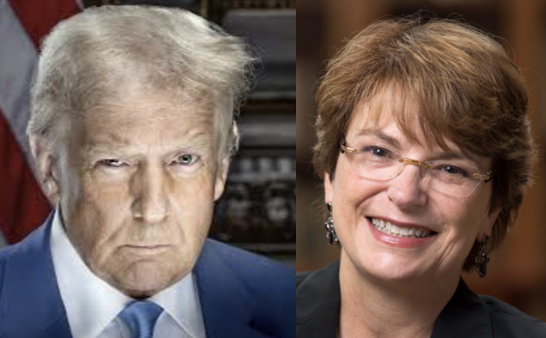
Still, how unsettling to have the government do social engineering in a punitive way, as it pushes to boost affirmative action for affluent students, especially those with minimum melanin.
xxx
Is this something that Rhode Island should consider? An Axios article discussed how a “10-second shift between two street lights was all it took to reduce congestion around (Boston’s) Atlantic Avenue….”
The program “lets Boston use AI and Google Maps driving trends to identify traffic hot spots and implement recommended efficiencies.’’ The system slightly extends the running times of green lights.
Meanwhile, can anything be done to encourage Rhode Islanders to signal before turning? And four-way stop signs continue to confuse drivers, many (or most?) of whom don’t know the rules governing right of way at such places. Crash! Of course, putting traffic lights at many more intersections would help, but installation would consume a lot of taxpayer dollars.
It would boost safety, and not cost a lot, if trees and shrubs that conceal stop signs were trimmed.
Invaders
Invasive plants keep moving into southern New England from the southwest, aided by global warming. They crowd out some native plant species and harm certain native animal species, too. Some are poisonous. Invasive creatures are also moving in as New England’s climate becomes more like that of the Middle Atlantic states – e.g., those creepy but pretty Spotted Lanternflies, a menace to crops and trees.
In this hot and humid summer, the aggressive plants are growing particularly fast! Among them: Barberry, Black Swallow-Wort, Glossy Buckthorn and Oriental Bittersweet. They’ll keep coming. And wait till Kudzu, that invasive vine from Dixie, really gets going around here, strangling everything in sight.
But we can slow down these plants’ population explosion by pulling them out as soon as we see them and by using plant diseases and/or insect predators from their home range. Then there are man-made chemical herbicides, which, of course, must be used very carefully. (My favorite plant killer is vinegar.)
But some of these infuriating, fast-growing plants have medicinal uses!
This reminds me again of Green Crabs, those little invasive creatures that came over here from southern Europe and have been spreading along the New England coast as climate change raises seawater temperatures. The crabs consume vast quantities of high-value shellfish and tear up the ecological treasures that are marshes and eelgrass beds.
But it turns out that they can be eaten and create excellent stock for soups and stews. And they’re good bait. And so some entrepreneurs have started businesses to catch them. Let’s hope that this helps stem the worst of their aggression.
A Rhode Island company, Dune Brothers, serves Green Crabs.

Trump has gotten his 15 percent tariffs on stuff from the European Community. It will hurt some major E.U. economic sectors, as well as American consumers and some U.S. businesses. And I doubt that it will lead to much homeshoring of factories, etc., in America. In any event, new factories here will have far fewer factory jobs than MAGA cultists have hoped. Automation and artificial intelligence will see to that.
Americans will probably first notice that vehicles and drugs from Europe are more expensive.
Of course, as with all Trump trade deals, the details keep changing.
The Europeans’ surrender will cause supply-chain disruptions on both sides of the Atlantic that will last for several years. The E.U. did the deal in part because it wanted a more predictable trade future, if one more unpleasant than they used to hope for. The mercurial, egomaniacal and relentlessly lying Orange Oligarch’s gyrations have worn out the Europeans, and the unpredictability will continue. How in God’s name can anyone plan?
The Europeans had little alternative at this point but to accede to Trump’s demands, especially given the threat from Russia, against which Europe needs help from the U.S. to defend itself. At the same time, E.U. members have come to realize that they have depended too much on the American market, and that they must boost their trading ties with other countries. That’s what they’re urgently working on now, including strengthening economic ties with China, a more reliable partner than the U.S.
Meanwhile, most E.U. members are dramatically, if very belatedly, boosting their defense budgets and defense-related European industries; the latter change will eventually hurt American military contractors. Europeans have long held the idea that Europe and America, which comprise the core of the West, will continue to have very close ties based on shared values, and so the U.S., as by far the most important Western nation, would continue to play the leading role in Europe’s defense.
That idea has been exploded by Trump, who doesn’t generally share Western cultural and political values. That’s sad. But give him credit for scaring Europeans into speeding up their move to much more self-defense, a move that’s been underway for several years.
xxx
I’ll bet that a lot of backers of wind-power projects in New England, particularly along and off its breezy coast, will want to read this article about how such projects on Scotland’s very windy Isle of Lewis finally got the green light. Environmental concerns, some community opposition and a very difficult regulatory process for expanding the electrical grid held up the projects for decades.
xxx
Where will we find all the electricity needed for data centers to service artificial intelligence? This is becoming an energy and environmental challenge.
The Associated Press reports that a huge AI data center in Cheyenne, Wyo., will ultimately eat more than five times the electricity now consumed by all the homes in the state. The idea is to generate the juice to run the center mostly with natural gas and wind power. The high plains of Wyoming are windy.
xxx
The tipping jars at checkout counters, etc., are spreading in all sorts of establishments, at the behest, or at least encouragement, of owners/managers. This makes it easier to underpay employees.
I (who usually tips) don’t find this hugely irritating at, say, an independent mom-and-pop convenience store. But seeing these jars at chain-owned businesses where senior executives get paid millions of dollars a year raises my ire.
Gorgeous Show in Newport
The current exhibition of paintings by Howard Gardiner Cushing (1869-1916) at the Newport Art Museum might be the best art show around this summer. It’s well worth crossing assorted bridges to get there, as my wife (a painter) and I did a couple of weeks ago.
Here are some words I’ve edited from the museum’s statement:
This is “a landmark exhibition celebrating the life and work of Howard Gardiner Cushing, a dynamic force in American art at the turn of the 20th Century. Cushing’s career bridged the traditions of 19th-century realism with the bold innovations of early Modernism….
“Though his life was cut short, his artistic legacy endures through an extraordinary range of works, including evocative portraiture, impressionistic depictions of everyday life, fantastical scenes, and large-scale murals.
“Profoundly influenced by James McNeill Whistler, French Impressionism, and the European Symbolists, Cushing developed a distinctive artistic voice, known for his masterful use of color, elegant linework and emotional depth. A longtime resident of Newport, he found inspiration in the landscapes of New England and the city’s rich cultural fabric, elements that are deeply embedded in his work.’’