


Providence Convenience Store Owner Battles Counterfeit Bills, Kids Stealing and Fake IDs
GoLocalProv News Team and News Editor Kate Nagle
Providence Convenience Store Owner Battles Counterfeit Bills, Kids Stealing and Fake IDs
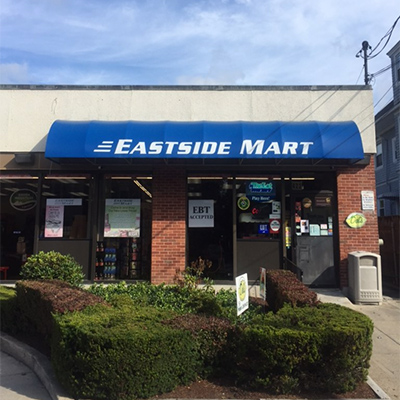
Paul Smith, who has owned the East Side Mart on Lloyd Avenue since 2005, said that in recent months, he had an elementary school-aged serial shoplifter — caught on camera — and high school boys attempting to buy tobacco products with fake IDs.
In the cases of kids, however, Smith takes a unique approach — he contacts the schools and parents, not the police.
GET THE LATEST BREAKING NEWS HERE -- SIGN UP FOR GOLOCAL FREE DAILY EBLAST“Typically I don’t try to get police involved,” said Smith. “I did when I first started but it doesn’t really help the juvenile. The time I did, the juvenile ended up getting kicked out of his foster home — but he came back years later to apologize to me.
Addressing Juvenile Crimes
According to Smith, over the course of the past several months, he caught a ten-year-old girl on camera stealing items over a period of several weeks.
“It was a local girl in the neighborhood who’d been coming for years, and her parents recently let her come herself. She started shoplifting — 5 or 6 different times, and we had it on video,” said Smith.
“I called school principals to ask if they could ID the student, in order to get in touch with the parent,” said Smith, who said he was able to track her down. “When the girl came back one day, I asked if I could talk with her. She was nervous and apologetic, but I told her I wanted to have a meeting with her parents.”
“She begged and pleaded and said she would pay me back — it wasn’t much, maybe in the $25-$40 range in total, but I said it’s a serious offense and I said your folks need to know,” said Smith. “About 15 minutes later she came back with her mom, who has a small business and more than understood. So we talked, and I said to the girl this is serious but if you can be respectful I won’t ban you.”
Smith said the mother took matters into her own hands.
“The mom said she was banning her daughter for a month herself. She insisted on giving me $40 but I said $20 was fine,” said Smith, who said the resolution took place “about a week ago.”
“I hope this is a happy ending for this girl,” said Smith.
As for older juveniles, Smith takes a similar approach — reach out to the schools and parents.
Or at least threaten to.
“I noticed we had some ‘younger gentleman’ with out-of-state IDs, and they were clearly high schoolers,” said Smith. “I refused to accept the IDs — my staff is really good about it as well — and I contacted local schools. I wanted to put a stop to this quickly.”
Sure enough, students were identified and parents were brought in to meet with Paul, who again thanked him for letting them know.
Smith said he was still getting students with fake IDs — and now has the formula down.
“There were other friends trying the same thing,” said Smith. “I said, "If I sent your photo around to local principals, would you be OK with that?'”
“They left pretty quickly,” said Smith, laughing.

Smith, however, says he won’t hesitate to contact the police for counterfeit money.
“In the past two years I’ve seen three counterfeits from 2 different people,” said Smith.
“One guy came in with a hoodie on with the straps pulled, so I could barely see his face. He gave me a hundred dollar bill at first, and then he gave me a 5, so he could get roughly $80 in change,” said Smith. “It’s a technique I’ve learned about that they try and use.”
“I said, where did you get this?” said Smith. “He told me, ‘Oh, the bank around the corner.’ This was during COVID — the branch was closed.”
“I told him I wasn’t giving it back and I was calling the police,” said Smith. “He tried to come around the counter a bit — luckily I had a friend playing scratch-offs who came over to help me, and that’s when he left.”
Smith said that as it was COVID, police eventually sent an officer over days later but the suspect was never found.
Overall, Smith said he’s seen an uptick in shoplifting — and says he fears decriminalizing the crime.
“I do have fears about what you see about decriminalizing shoplifting, the stories about groups of people going into stores and stealing things,” said Smith.
Overall, Smith says business is “doing fairly well” and getting back to pre-COVID levels.
And while Smith and customers utilized online delivery services during the pandemic, Smith says that part of the business has fallen off sharply.
“The delivery companies were charging me upward of 40%. So I had to raise my prices, and even at that I found I was losing money,” said Smith. “People just aren’t in a position to spend that kind of money on a regular basis if they don’t have to.”