


McKee and Alviti Fail to Disclose Real Cost of Replacing Washington Bridge
GoLocalProv News Team and Josh Fenton
McKee and Alviti Fail to Disclose Real Cost of Replacing Washington Bridge

The Washington Bridge is one of the most critical pieces of infrastructure in the northeastern United States. It connects I-195 to the single busiest highway on the East Coast, I-95.
McKee and Alviti have repeatedly held press conferences and made claims only to have those statements proven to be false.
GET THE LATEST BREAKING NEWS HERE -- SIGN UP FOR GOLOCAL FREE DAILY EBLASTIn March of 2024, McKee and Alviti held a press conference and announced that the replacement of Washington Bridge would be completed as soon as March of 2026, but could be as late as August of 2026.
They claimed the cost would be between $250 million and $300 million. That budget and timeline included the demolition of the failed structure.
Those claims were false.
That came after McKee and Alviti had told the public that the Washington Bridge would not need to be replaced and in another instance Alviti claimed the failure of the bridge was caused by a single truck.
None of those statements were true either.

At that same press conference, McKee promised to hold those responsible for the failure of the bridge accountable. "The day of accountability is coming and coming soon," said McKee.
WATCH VIDEO BELOW
On Friday, the two said in a press statement the bid by Walsh Construction Company set "the construction contract hard cost at $339 million. With other soft costs for inspections and potential incentives and contingencies, the total rebuild cost could be up to $427 million.”
Call it a sleight of hand.
But what McKee and Alviti did not disclose was that the cost to replace the bridge is more than $100 million higher.
That $100 million includes “emergency costs” on the failed bridge and the demolition costs of the Washington Bridge. Those costs have skyrocketed, and those total costs are yet to be reported.
In October of 2024, GoLocal reported that Aetna Bridge, the company that was given the contract for the demolition of the Washington Bridge in June of 2024 despite being the high bidder, then received a no-bid change order for tens of millions of dollars more.
In October, RIDOT signed a change order with Aetna Bridge for $38,410,000.
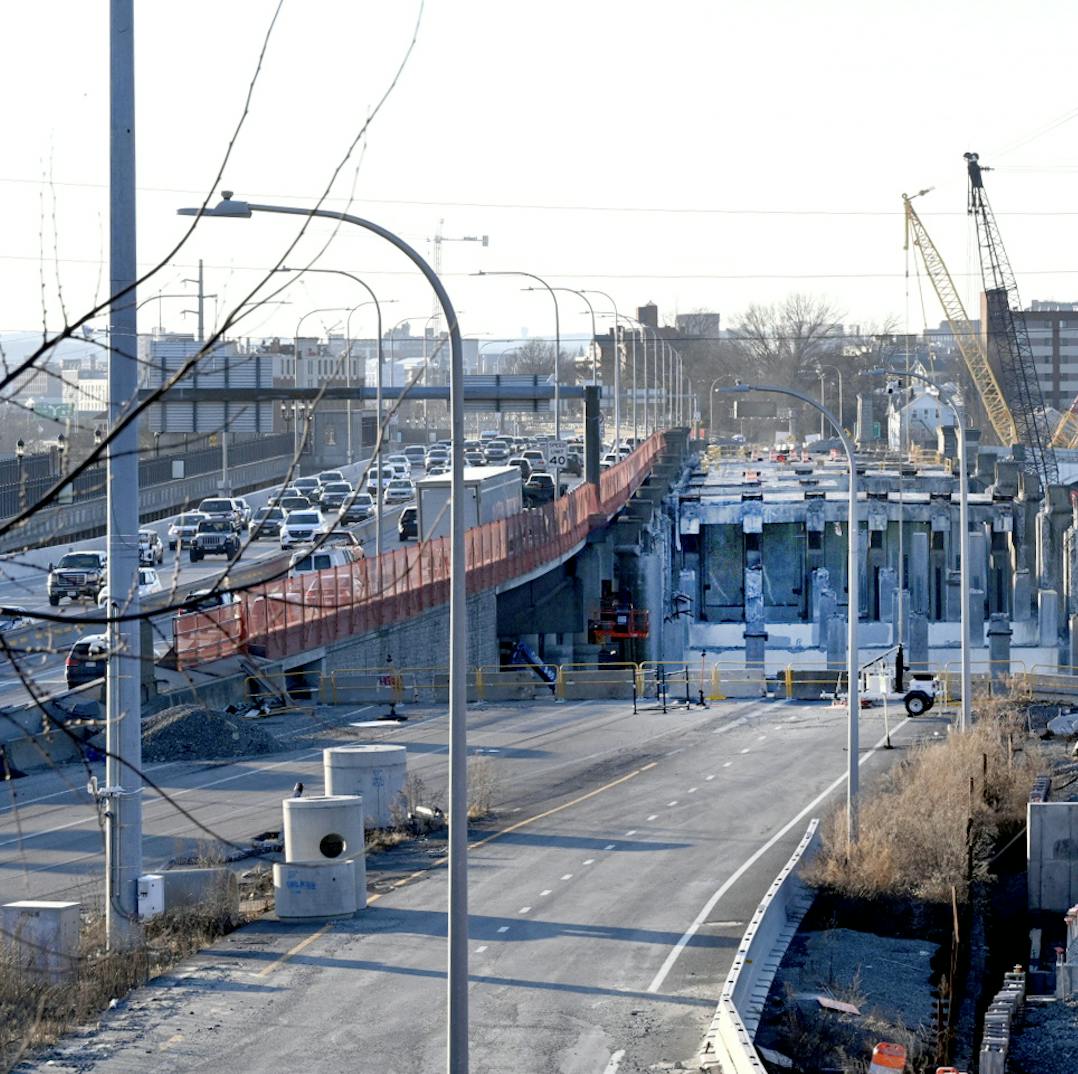
The demolition of the bridge was originally budgeted for $40 million by RIDOT.
What isn’t known is whether any additional change orders have been issued since October of 2024 and what the additional costs are.
In addition, Barletta Heavy Division was paid millions in what was dubbed an “emergency project” on the failed Washington Bridge.
Barletta recently signed a non-prosecution agreement with the Rhode Island Attorney General and paid $11 million to the state for its role in the dumping on contamination material in the Olneyville neighborhood of Providence in the construction of the 6/10 project. Barletta had previously paid the Department of Justice $1.5 million for dumping the contaminated material.
GoLocal unveiled the dumping of contaminated material in September of 2020. Alviti repeatedly denied the report and claimed there was no contamination.
But while Barletta was under indictment by the Attorney General, they continued to receive tens of millions of payments from RIDOT for work on the Washington Bridge, including millions after the bridge was closed.
In an email to GoLocal on Friday, RIDOT Spokesman Charles St. Martin wrote, “The new price does not include the demolition costs or other payments under the emergency project to Barletta.”
Speaker of the House Joseph Shekarchi told GoLocal,“Rhode Islanders who rely on the Washington Bridge have had their daily lives disrupted for nearly 18 months. We will review today’s announcement and evaluate the impact on the budget that the House Finance Committee is preparing. As the bridge project moves forward, the House of Representatives will continue its work ensuring the Administration is accountable.”
An email from Larry Berman, spokesman for Shekarchi, flags additional concerns. “We will be looking for them to give us an apples-to-apples – all in (demo [and] new construction), to the $455M prior budget was based on. This is how [SEE SLIDE BELOW] we can calculate the additional state match needed – regardless of federal source (GARVEE or federal grants), the state must contribute 20%.

RIDOT notified the General Assembly in January that the proposed cost had increased again. This time by another $26.4 million.
“The Governor’s recommended budget maintains the approved amount of $35.0 million from State Fiscal Recovery funds for FY 2025 as a partial state match for the Washington Bridge Project. His budget does not alter the FY 2025 budget assumptions for a total project cost of $455.2 million, with a state share of $83.6 million. The contract for the bridge replacement has not been awarded, and as noted, there were change orders for the demolition component. These will impact the actual project costs. Any additional federal funds would need a state match,” said Berman.
What is clear, in this near-endless series of false statements, is that the total cost of replacing the failed Washington Bridge has yet to be disclosed.
Clearly, the cost to replace the bridge is far in excess of the $250 to $300 million promised by McKee and Alviti in March of 2024, and it is in excess of the $427 million now claimed by the duo on Friday.
READ THE FULL REVIEW BY THE HOUSE FINANCE COMMITTEE BELOW
A House Finance Committee report on the Financing of the Washington Bridge raises more questions about the financing structure.
FY 2025 Budget As Enacted:
Washington Bridge: The Department received a $25.0 million federal discretionary grant toward a $70.0 million project to rehabilitate the Washington Bridge. The project cost was subsequently increased to $78 million. The bridge was built in 1969 and carries approximately 70,000 vehicles per day along I-195 between Providence and East Providence. The project includes rehabilitation of the westbound section of the bridge, realigning ramps, and addressing congestion issues. The Department assumed construction starting in 2021 and the current Transportation Improvement Program includes expenses of $12.5 million for federal FY 2022. On December 11, 2023, the Department closed the westbound section of the bridge due to finding a critical failure of some bridge components. Its quarterly RhodeWorks report, dated January 30, 2024, notes that inspections and analysis of the Washington Bridge must be completed to determine the scope of work that must occur.
The report issued on March 14 called for a full replacement of the westbound span. The preliminary estimate was $250 million to $300 million and demolition and a design/build lasting 30 months. The Department obtained services from two consultants that will oversee the bridge project, and helped revise the project cost to $455.2 million to include a change of scope, contingency and construction incentives. This includes $46.4 million for emergency expenses such as tie rod repairs, bridge inspections, and municipal/State Police reimbursements. It includes $40.5 million for demolition expenses; the request for proposals was issued on April 26 and responses are due by June 21. The Department’s timeline indicates the project would be awarded in mid-July, with demolition starting in July/August and completing by March 2025. A total of $3.0 million in incentives will be provided if the project is completed before March. The contractor would also be charged $12,000 to $37,500 daily if it exceeds the completion date.
The project cost also includes $368.3 million for replacement expenses. The request for proposals was issued on April 30 and calls for a design/build approach. The proposals are due by July 3 and the Department anticipates the project being awarded by July 31 with design starting in August 30. Similarly, $10.0 million of incentives would be provided if the project is done by August 2026. There is a $30,000 daily charge if the date is exceeded.
On March 25, the U.S. Department of Transportation issued a Notice of Funding Opportunity: Multimodal Project Discretionary Grant Opportunity, which consists of three funding categories.
$1.7 billion - National Infrastructure Project Assistance grants program
$2.7 billion - Nationally Significant Multimodal Freight and Highway Projects grants program
$780 million - Rural Surface Transportation Grant program
The funds will be available for obligation on October 1, 2024 and must be obligated by September 30, 2028. There is no statutory deadline for expenses to be incurred. Generally, discretionary grants are awarded in the fall. On May 6, the Department submitted its application requesting $221.0 million toward the replacement cost of the project.
On that same day, the Governor requested an amendment, which would authorize issuances of up to $334.6 million of new debt through GARVEE bonds, and $40.0 million through Motor Fuel Revenue bonds as partial match for the replacement of the Washington Bridge. Another requested amendment includes use of $20.0 million from repurposed State Fiscal Recovery funds, and the Transportation Improvement Program has $37.0 million of available federal funds for the project. The amendment did not identify a source for the remaining $23.6 million. Assuming an interest rate of 5.0 percent, the debt service is estimated at $18.7 million for the first two years, increasing to $66.6 million in later years when older debt is defeased to have overall payments be more level.
The Assembly concurred with the issuance of federal GARVEE bonds; the amount to be issued would be less if federal discretionary grant funds are secured. It provided pay-go funding for the state share, including $45.0 million from Rhode Island Capital Plan funds, $35.0 million from State Fiscal Recovery funds, and $3.6 million from Department of Transportation sources. Assuming issuance of $334.6 million, an interest rate of 5.0 percent and 15-year term, the debt service is estimated at $16.7 million for the first seven years, increasing to $62.2 million.
Governor’s FY 2026 budget recommendation
The Governor’s recommended budget maintains the approved amount of $35.0 million from State Fiscal Recovery funds for FY 2025 as a partial state match for the Washington Bridge Project. His budget does not alter the FY 2025 budget assumptions for a total project cost of $455.2 million, with a state share of $83.6 million.
The contract for the bridge replacement has not been awarded, and as noted, there were change orders for the demolition component. These will impact the actual project costs. Any additional federal funds would need a state match.
Washington Bridge Failure Timeline

December 11, 2023
RIDOT DIRECTOR ALVITI TO ANNOUNCE
CLOSURE OF WASHINGTON BRIDGE WESTBOUND
WHAT: Department of Transportation (RIDOT) Director Peter Alviti, Jr. will host a press conference to discuss the closure of the westbound side of the Washington Bridge due to the finding of a critical failure of some original bridge components from the 1960s.
WHEN: Today, Monday, December 11 at 5 p.m.
WHERE: RIDOT’s Headquarters building 2 Capitol Hill, Providence, R.I.

December 11, 2023
EXCLUSIVE
Hours after the Washington Bridge was closed, GoLocal published this story:
A report written by a leading bridge engineer from Connecticut warned the Rhode Island Department of Transportation that failure of the joints of Washington Bridge was possible if specific action was not taken.
The report was submitted as part of a 2020 bid by the Cardi Corporation for the construction work to repair the bridge. The work was initially awarded to Cardi and then reassigned to Barletta Heavy Machine after legal fights.
After more than 40 stories by GoLocal, the U.S. Attorney in Providence reached a $1.5 million non-prosecution agreement with Barletta and one top employee of the company pled guilty to charges. And then, nearly three months after the U.S. Attorney's action, Rhode Island Attorney General Peter Neronha filed charges against Barletta as a corporation as well as an employee.
According to representatives of Cardi Corporation, who had partnered with the Connecticut engineer Michael “Pete” Culmo, who today is the Chief Bridge Engineer at CHA Consulting in Hebron, Connecticut, the issue was known to RIDOT officials for nearly three years.
Culmo warned in that submission that the design preferred by RIDOT officials had serious technical issues and due to wear, could cause failure.
Rhode Island Department of Transportation Director Peter Alviti said Monday night that bridge closure was the result of the pins designed to brace the bridge having been severed.
This is the very issue flagged by Culmo in his warning to RIDOT in 2020.
“The addition of the link slab alters the location of the hinge point at the end of the beams. Before adding the link slab, the hinge point is at the bearing. With the addition of the link slab, the hinge is now located at the mid-depth of the deck. End rotation brought on by live loads leads to movement at the bearing, resulting in shearing forces on the bearing pin and beam ends. This can lead to several problems. The bearing pin could fail, and the beam end could be damaged due to the force transfer at the pin. Note that the link slabs cannot be moved to the expansion ends of the hung spans, because that will lead to problems similar to those noted above,” wrote Culmo.
“The potential damage to the beam ends with the introduction of link slabs is a significant issue. If the beam ends become damaged, the bridge above the damaged beams would need to be closed for extensive repairs. Our team does not want to burden the State with a design that could potentially lead to significant repairs and lane closures in the future. We feel that the more prudent, conservative and proven approach is to replace the joints with newly constructed deck joints using high-quality materials,” he added.
He further outlined, “The goal of this project is to provide a design for the Washington Bridge with a 25-year design life. The Department and our team have seen mixed results with replacement of aging deck joints, especially asphaltic joints on high truck traffic volume roadways. The use of the EMSEAL bridge expansion joint system is proposed for deck expansion joints. Considered a 25-year design life system, this is a Department-approved product that, in our opinion, is a more durable joint system, especially for interstate highway use. This joint is made with elastomeric concrete headers located within the overlay portion of the deck; therefore, it is also easily removed and replaced when the deck overlay is replaced at regular maintenance intervals.”
Governor Dan McKee's office refused to respond to questions.

December 12, 2023
Alviti Lies on WPRO
On Monday night, GoLocal reported that an engineer for a bid on the Westbound Washington Bridge project in 2020 warned the Rhode Island Department of Transportation about a potential design flaw relating to the failure of pin joints in the project.
The warning was ignored by RIDOT officials.
On Tuesday morning, December 12, on an appearance on WPRO, Peter Alviti, the Director of RIDOT, claimed that GoLocal’s report was false.
He claimed GoLocal “identified the wrong bridge.”
GoLocal had cited the report by the engineering expert but did not report on a specific portion of 195.
On Monday, RIDOT announced that a failure in bridge joints forced the shutdown of half of one of Rhode Island's most important highways. The expert's report was part of the Cardi Corporation's bid to do repair work in 2020.
“Alviti is incompetent. He has proven it by his management of 6/10 and the overall condition of Rhode Island’s infrastructure, which continues to be ranked at the bottom of the state rankings. What GoLocal reported was exactly what was submitted to RIDOT regarding the Washington Bridge construction project, that there was a potential failure,” said GoLocalProv CEO and co-founder Josh Fenton.
“Alviti lied about 6/10 and tried to shift the blame when we broke the story, and he is trying to do the same again,” said Fenton. “He even lied on the same radio show. He lied again when GoLocal unveiled cost overruns on 146."
"Rhode Island has amongst the worst roads and bridges in the United States, and every time Alviti's incompetence is unveiled, he blames someone else," added Fenton.

December 12, 2023
Gridlock and Political Fundraiser
While tens of thousands of Rhode Islanders were stuck in traffic for upwards of three to four hours, Governor Dan McKee was attending a political fundraiser for Rhode Island Department of Transportation Chief of Staff John Igliozzi on the evening of Tuesday, December 12..
Igliozzi, a former Providence City Councilman, is the top staffer to director Peter Alviti. According to state records, Igliozzi makes $175,926.92 at RIDOT.
McKee has repeatedly stated that he and RIDOT officials have been working around the clock to solve the RIDOT Bridge failure.
The fundraiser was held at "The Social" at 1449 Mineral Spring Avenue in North Providence. Igliozzi is expected to run for Rhode Island Attorney General in 2026.
The ticket price: $250 to $1,000 per person.
But while McKee, RIDOT officials, and other politicos were sipping cocktails and downing appetizers, schools in East Providence were being closed, holiday parties were being canceled throughout Rhode Island, and Rhode Islanders' lives were thrown into upheaval.
According to restaurant owners, cancellations continue to spiral and business is off 20% to 30% during the critical holiday season.
At the time, Igliozzi had a cash balance in his campaign account of $71,063.93 as of the last October 31, 2023 report.
McKee's office said in response to questions about his attending the fundraiser, “The Governor is on duty no matter where he is. He did briefly attend that event and then returned to the State House.”

December 13, 2023
McKee Refuses to Answer Question
Governor Dan McKee appeared at a press event with Providence Mayor Brett Smiley in Wayland Square on Wednesday morning and refused to answer GoLocalProv News Editor Kate Nagle’s questions about an independent review of the failure of the Washington Bridge.
The failure has adversely impacted hundreds of thousands of Rhode Islanders, causing schools and businesses to shut down.
“So I am going to hold off on answering your question. We are here to talk about small businesses.”

December 13, 2023
McKee Defends Use of Indicted Contractor to Continue to Do Washington Bridge Work
Governor Dan McKee is defending his decision to use a contractor to conduct emergency repairs to the Washington Bridge that is presently under state indictment.
The emergency repair work, which is expected to cost in the tens of millions of dollars, is being awarded by McKee without a bidding process.
The company — Barletta Heavy Division — is not only under state indictment but also signed a non-prosecution agreement with the U.S. Department of Justice and paid $1.5 million for its role in dumping contaminated soil in a residential neighborhood in Providence.
One of the top employees of the company, the supervisor over the 6/10 project, Dennis Ferreira pled guilty to federal felony charges for his role.
The federal and state enforcement actions took place after a two-year investigation by GoLocalProv that unveiled the dumping by Barletta and the impact on neighbors in the Olneyville neighborhood.
The dumping was part of the $400 plus million Rhode Island Department of Transportation 6/10 project overseen by Director Peter Alviti.

December 13, 2024
McKee Berates Channel 10 Reporter
Brian Crandall, WJAR asked McKee at the December 13 press conference, “There's still a lot of frustration. Has there been any discussion of changes at DOT, the potential resignation of the director?”
But Governor Dan McKee berated Crandall.
“Yeah, so I'm not going to answer those questions; we're here to talk about an emergency. That's out of line, okay? So we're here and no, no, you may be talking about it. But the people I'm talking to are very pleased with what's happening right now,” said McKee.
PHOTO: WJAR Promotional

January, 2024
Alviti Promised the Bridge Would Reopen in Three Months
Repeatedly, RIDOT Director Alvit said in interviews and on talk radio the Washington Bridge would be repaired in three months.
McKee mimicked Alviti.
By the end of January, McKee and Alviti gave up on that false claim.

January 22, 2024
Story Changed Again
RIDOT Director Peter Alviti changed his story again. At a press conference, Alviti said that a “complete rebuild” of the Washington Bridge could be possible, depending on a final analysis of engineers who are currently inspecting the bridge.
It has now been a month and a half since RIDOT shut down west bound lanes on I-195 in early December due to the bridge failure, disrupting traffic for weeks and hurting businesses across the state.
“Expert engineers are doing a thorough review of the bridge,” said Alviti on Monday. “The direction we take will be driven by the facts — no final decisions will be made until we have all the facts from the expert engineers.”
Alviti said that he has been working “24/7” since then.
“They could come in with a number of different scenarios,” said Alviti, of “three scenarios” that engineers could make ranging from a repair of the existing structure, or, he added, “it could be a complete rebuild.”
Alviti could not provide a specific timeline as to when the engineering report will be completed.
“The engineers working on it are continuing to look at various components of this bridge and that takes time,” said Alviti. “I need them to do a thorough and comprehensive look at every component of that bridge.”
Alviti and Rhode Island Governor Dan McKee originally told the public in December that the repairs of the bridge would take three months.
“I’m not going to speculate on the scope of additional deficiencies they found until we have their complete reporting,” said Alviti of the work being done currently by the engineers. “Likewise with the schedule, depending on the scope of deficiency they find, will determine how long it will take to rebuild.”

January 25, 2024
EXCLUSIVE: Top Construction Executive Cardi Says RIDOT Was Warned About Washington Bridge
In an exclusive interview with GoLocal, Stephen A. Cardi, Sr., who helped to lead one of the top construction companies in the Northeast for more than 50 years, said the Rhode Island Department of Transportation (RIDOT) ignored warnings and moved forward with a design that undermined the structural integrity of the Washington Bridge.
For decades, the 100-plus-year-old Cardi Corporation was one of the most successful construction companies in New England.
On December 11, 2023, the westbound lands on I-195 on the Washington Bridge were closed by Rhode Island Governor Dan McKee's administration. RIDOT officials initially claimed that there was a "critical failure" and that the repairs would take just three months.
RIDOT Director Peter Alviti repeatedly claimed that his agency's extensive inspection program caught the issue early, and he said that maybe a heavy truck caused the issues on the bridge.
On Monday, Alviti and McKee held a press conference and admitted that a "complete rebuild" of the Washington Bridge may be necessary.
RIDOT Was Warned Nearly 3 Years Ago
In December, on the night of the bridge closure, GoLocal published documents that unveiled that a top bridge engineer in Connecticut had warned RIDOT years earlier.
Cardi Corporation partnered in bidding for the Washington Bridge rehabilitation work with the Connecticut engineer Michael “Pete” Culmo, who presently is the Chief Bridge Engineer at CHA Consulting in Hebron, Connecticut. Culmo flagged critical issues that were known to RIDOT officials for nearly three years.
Culmo warned in that submission that the design preferred by RIDOT officials had serious technical issues and, due to wear, could cause failure.
Cardi did not mince words about Alviti and Rhode Island Governors Gina Raimondo and McKee for their management failures regarding the Washington Bridge. He says the Washington Bridge is the "aorta" of Rhode Island's transportation system. It is critical to protect the key highways of the system.
Cardi on Alviti and RIDOT Failure
“[Culmo said the bridge repair strategy that RIDOT had pursued] would cause those those pins to fail. Culmo is an engineer, you know, a respected engineer — that speaks for itself. I can't argue; no one can argue with the facts,” said Cardi.
Regarding the misleading statements made by Alviti since the Washington Bridge was closed, Cardi said he was worried that it would damage the trust people have.
“Well, even an atheist has to live in faith, because you have faith that the bridges you're going over are safe,” said Cardi.
“It's faith that the building you're walking next to isn't going to fall on you,” he said. “Think about it — it really is 'faith' that those structures or the infrastructure are sound.”
Cardi discussed the convoluted bidding process for the contract to rehab the Washington Bridge, the legal battles, and the rebidding.
He said, “The invitation for proposals [for the second round of bids] on Washington Bridge...[RIDOT] changed the scoring basis from 50/50 to 60% presentation, 40% price. So it was impossible for anybody else to get the job except Barletta.”

January 26, 2024
US Department of Justice and USDOT Launch Investigation Into Washington Bridge Failure
Governor Dan McKee’s office announced Friday night that it had been notified by the U.S. Department of Justice and the U.S. Department of Transportation’s Office of Inspector General the federal agencies have launched investigations into the failure of the Washington Bridge.
“Today, the Rhode Island Department of Transportation was notified that the United States Department of Justice and the Office of the Inspector General is seeking documents and records related to the Washington Bridge. This is not unexpected, and the Governor welcomes the review. The Governor has instructed the Rhode Island Department of Transportation to fully cooperate. As you know, the Governor has directed his Department of Administration to hire an independent, third-party expert to review this matter as well," said McKee's office.

January 30, 2024
Federal Investigator on RIDOT Washington Bridge Failure Also Investigated 6/10 Contamination
GoLocal has learned that the lead investigator from the U.S. Department of Transportation’s Office of Inspector General (OIG), who is driving the investigation into the RIDOT Washington Bridge failure, has previously investigated another Director Peter Alviti-led RIDOT project.
The investigator is USDOT’s Special Agent Todd Collins, who was one of the investigators into the 6/10 contamination in the Olneyville section of Providence — one of the poorest sections of Rhode Island.
The two investigations have a lot in common — Alviti oversaw both the $410 million 6/10 project and the Washington Bridge rehab; both projects had the same lead contractor, Barletta Heavy Division, and now, it is the same investigator.
Last Friday, Collins sent RIDOT officials by email the demand letter from the U.S. Department of Justice to the state to turn over documents relating to the Washington Bridge dating back to January 1, 2015, which is when Gina Raimondo was sworn into office as Governor of Rhode Island, and Peter Alviti became RIDOT director.
The email was sent to John Igliozzi, Alviti’s chief of staff. The former Providence City Councilman held a political fundraiser just one day after the Washington Bridge closure began — a night in which there were hours of delays on Rhode Island roads. Governor Dan McKee attended Igliozzi’s fundraiser that night.

February 1, 2024
RIDOT Chief of Staff Slammed for Taking Campaign Money From Agency Employees
John Igliozzi, the chief-of-staff to RIDOT director Peter Alviti and an active political candidate for Rhode Island Attorney General, raised about a little less than $20,000 in the fourth quarter, according to his campaign finance report released on Wednesday.
Among the donors were registered State House lobbyists and a multitude of private attorneys.
Two donors were RIDOT employees — the agency where Igliozzi sits high on the organizational chart.
According to Igliozzi’s campaign finance report, Stephen Almago, Assistant Director of Administrative Services, donated $500.
And, RIDOT’s Ronald Ricci, Administrator in Real Estate, donated $150 to Igliozzi.
Igliozzi was served with a U.S. Justice Department demand letter last Friday for RIDOT records regarding the Washington Bridge failure.
Donations from RIDOT Officials Draw Comments from RI Common Cause
John Marion, the executive director of Common Cause Rhode Island, told GoLocal, "It's not illegal for Igliozzi to take campaign donations from RIDOT employees, but it doesn't show good judgment. People enjoy a First Amendment right to make donations to the candidate of their choice, but candidates are under no obligation to accept them.”
“Rhode Island has an ugly history of elected officials soliciting campaign donations from employees — most notably Buddy Cianci — which is why that practice is now illegal,” said Marion.
“Several high-profile officials have been sanctioned for soliciting donations from subordinates, including Don Carcieri and Ralph Mollis. Even if Igliozzi didn't solicit these donations, he shouldn't have accepted them,” Marion added.

Organized Influence - a Three-Part Series About the Interconnected Relationship Between the Bosses of the Laborers International Union, McKee and Alviti
ORGANIZED INFLUENCE: Governor McKee and Armand Sabitoni’s Special Relationship - Part 1
ORGANIZED INFLUENCE - ALVITI: The Keys to the Scheme - Part 2
ORGANIZED INFLUENCE: Two Families Control the Laborers — Coias & Sabitonis - Part 3
Related:
When Golfing With Union Boss, McKee Says He Pays His Own “Green Fees” But Won’t Provide Proof

February 23, 2024
Washington Bridge Report: Bridge Danger to Gano Street, Decay Has Gone on for Years and Not Detected
The draft VN Engineers report on the Washington Bridge raises significant questions about the stability of the structure even while it is not in use and raises disturbing questions about the Rhode Island Department of Transportation’s (RIDOT) bridge inspection program, as it cites the decay to the core of the bridge taking place over the years.
In addition, the report raises questions about the ongoing $78 million design-build contract that is now being worked on by the McKee administration and whether the repairs will do anything to stabilize the bridge in the long term.
Specifically, the report identifies that there is a "risk to Gano Street."
The report examination shows damage to nearly every aspect of the critical structure -- decay and damage to the bridge that, in some cases, has clearly taken place over multiple years.
It raises serious questions about the state's inspection program.
The report flies in the face of the claims made by RIDOT Peter Alviti, who in recent weeks said that his department thought that a heavy truck may have caused the failure of the bridge, as well as claims by Alviti that this damage took place since an inspection of the bridge in the summer of 2023.
Alviti has repeatedly made false statements as RIDOT director.
Prior to serving in his role as Rhode Island's chief transportation director, he had little bridge experience. Alviti worked as the public works director in Cranston and had a mid-level job for 15-plus years working for the Laborers' International union.

March 14, 2024
McKee Claims, Washington Bridge Must Be Torn Down, Replacement Cost $250M to $300M
Three months after the emergency closure of the Washington Bridge due to claims of “critical failure,” a consultant hired by Governor Dan McKee’s administration recommends that Washington Bridge westbound needs to be torn down and replaced.
The estimated cost is between $250 million and $300 million.
According to an analysis by the firm McNary Bergeron & Johannesen, headquartered in Colorado, they have “identified more problems and structural deficiencies that cannot be viably repaired.”
According to the summary by the consultant, the demolition of the bridge will begin in July 2024, and will continue until March 2025.
The design of the new bridge will begin in August and the hope is that the “early finish” of the bridge could be completed by March of 2026 and the “late completion” would be September of 2026.
March 15, 2024
Gov Claims “Day of Accountability Coming” on Washington Bridge
Rhode Island Governor Dan McKee announced that the failed westbound Washington Bridge, which has been closed since December, is going to be replaced to the tune of $250 to $300 million dollars.
However, McKee and Rhode Island Department of Transportation (DOT) Director Peter Alviti have a track record of providing false information about Washington Bridge. Alviti's lies track back to the 6/10 project, where he denied contaminated material was improperly dumped in the Olneyville neighborhood.
At a press conference on Thursday afternoon, McKee promised that a “day of accountability” is coming for those responsible for the debacle that has negatively impacted the lives and economic livelihoods of Rhode Islanders.
McKee continued to defend Alviti's tenure.
Alviti lied when he said contamination was not present at the 6/10 construction site, and contractor Barletta Heavy Engineering — who presently has a contract with the DOT for work on the Washington Bridge — paid a $1.5M penalty and signed a federal non-prosecution agreement with the U.S. Department of Justice; the Massachusetts-based firm is currently under indictment in Rhode Island
As GoLocal reported this week, Barletta CEO Vincent Barletta is facing a myriad of legal issues, including being cited by the Massachusetts State Police for leaving the scene of a car accident that resulted in injury; Barletta was arrested in Needham last month on driving-under-the-influence charges.
“Is this the standard you hold your administration to?” asked GoLocal News Editor Kate Nagle.
“I’m not going to talk to the legal issues outside of what we’re here to [discuss] today and let those unfold,” said McKee, who then tried to move on from the question.
When Nagle then asked if he tolerated lying by members of his administration, McKee said he does not.
“No,” said McKee.

March 19, 2024
Secretary Buttigieg Blames Washington Bridge Design From 1960s for Failure
United States Secretary of Transportation Pete Buttigieg was in Rhode Island on Tuesday to tour the failed Washington Bridge — which last week, officials said would take hundreds of millions of dollars to tear down and replace, and take years to do.
Now, the blame game has a new twist.
Buttigieg, when questioned by GoLocal as to who was ultimately responsible for what had transpired that led to the closure of the westbound portion of I-195, blamed the original designers of the bridge — from over 60 years ago.
Meanwhile, the Federal Highway Administration had approved - twice - making appropriations for repairs to the bridge in 2018 and 2021 and had not suggested taking it down. The 2018 repair work cost $25 million and was approved by the Federal Highway Administration and in 2021 another $78 million was approved for this ongoing project.
“Secretary, as you know, some Rhode Islanders have said they might not survive this — especially small businesses. Where does the responsibility ultimately lie — from the USDOT, to the Federal Highway Administration, to Rhode Island government. The failure of this bridge — who’s ultimately responsible for this, Secretary?” asked GoLocal News Editor Kate Nagle.
“I wish I could have a conversation with some of the people who came up with this design in the 1960s that appears to be the only one of its kind in the country compared to others…but what we know is none of those people here today,” said Buttigieg.
Nagle fired back, however, questioning the role of inspections — which ultimately rest with RIDOT — resulting in what was finally deemed the catastrophic failure.
Buttigieg doubled down on the construct of the bridge itself to be at fault — and applauded the action by the Rhode Island Department of Transportation to shut it down.
“Actually, I’m very concerned about the design of the bridge and that’s why we put the word out in the country,” said Buttigieg. “I don’t think there are any other bridges that have this unique combination of design qualities, but if there are, we’ll have to figure out ways to inspect what otherwise would be [inaudible].

March 26, 2024
Under Alviti, Engineers Out - Projects Run by Interior Designer, Zoo Worker & Salesman
When then-Governor Gina Raimondo appointed Laborers’ International mid-level staffer Peter Alviti to serve as director of the Rhode Island Department of Transportation — he had functionally no experience building roads or bridges.
During Alviti’s more than nine years as the director, he has systematically reduced the number of professional engineers with so-called “project managers.”
In the past three years, the United States Department of Justice has investigated two RIDOT projects -- the $420 million 6/10 project and now, the failure of the Washington Bridge.
According to RIDOT personnel records, the experience of project managers prior to their joining the agency ranged from working for a furniture store, another worked as a manager at a zoo, and another was a restaurant and interior designer.
According to employees and former employees of RIDOT, dozens of engineering positions have been eliminated and replaced by project managers — many of whom do not have engineering, construction, or technical degrees.
In some cases, they have degrees in political philosophy, interior design, and theater.
But make no mistake about it, they are overseeing the biggest and most expensive road and bridge projects in Rhode Island. According to RIDOT payroll records, there are more than 20 full-time project managers.
According to the RIDOT job description, project managers are "responsible for delivering assigned projects from initiation to closeout within scope, on schedule, on budget and to the highest quality; to be responsible for coordinating design, permitting, real estate, public outreach, procurement, federal approval, construction, quality and final closeout; to coordinate Program activities with other functional units and financial programs, ensuring overall cohesiveness among functional units and staff; and to do other related work as required,”
But, the position does not require technical expertise. It has a wide-sweeping job description that allows almost anyone to assume the position.
Education: Such as may have been gained through: graduation from a college of recognized standing with a degree in Public or Business Administration, Finance, Architecture, Engineering or a closely related field; and
Experience: Such as may have been gained through: extensive employment in a highly responsible professional position involving capital asset management, or transportation engineering applying engineering principles, practices, techniques, and project management within a large private or governmental setting. Or, any combination of education and experience that shall be substantially equivalent to the above education and experience.
Interior Design, Theater Design, Political Philosophy
One of the project managers, Leanne DeCesare, before joining RIDOT as a project manager II in March of 2018, worked in a restaurant design firm and was an interior designer. She has a degree in interior design from New England Tech.
Then, there is theater design graduate Ryan Davis, who worked for a number of theater companies, including Trinity Rep, as a carpenter.
He, too, serves as project manager II, overseeing multiple multi-million dollar projects.
After his theater work, Davis became the facilities manager at the Roger Williams Park Zoo & Carousel Village. Since 2018, he has been employed by RIDOT.
There is also Michael Boyd, another RIDOT project manager who, before joining the transportation agency, worked for TJX and CVS doing store layouts.
The man overseeing the project managers and was the lead on 6/10 project for RIDOT was David Walsh. According to his LinkedIn bio, he is the acting manager of project management for RIDOT. And like the others, he does not have an engineering degree but earned a degree from Assumption University in political philosophy. Prior to joining RIDOT, Walsh was a salesman for a furniture company.
DeCesare, Davis, and Boyd did not respond to GoLocal's request for comment.
PHOTOS: L-R Franki Chamaki, Kam Idris, Nikolay Tchaouchev, Unsplash

March 30, 2024
Developers to Bring New Whole Foods to Seekonk, Cite Market Opportunity Due to Washington Bridge
A new Whole Foods Market is slated to come to Seekonk on the Rhode Island border — and the project team cited the huge opportunity for Massachusetts afforded by the Rhode Island Department of Transportation (RIDOT) Washington Bridge failure.
In mid-March, a Seekonk Planning Board meeting agenda had a discussion item for a site plan application for an “industrial zoning district.”
The proposal was for a retail store, fast food establishment, and grocery store on three lots on Fall River Avenue, nestled between the bustling commercial area of Route 6 and I-195.
At the meeting, the project team’s attorney, Eric Brainsky, made the big reveal.
“I’m excited and finally allowed to announce to you this evening that it will be a Whole Foods,” said Brainsky.
One of the planning board members could audibly be heard saying, “Yessssss!” under her breath.
“Everybody knows what Whole Foods comes with and what it attracts,” said Brainksy.
And he went on to state how Rhode Island’s failure will be Massachusetts’ gain.
“It’s really a draw for people who don’t want to go into Providence and deal with the East Side and parking and traffic, especially with this bridge,” he said. “God knows what that’s going to bring, five to six years from now.”
“This is a perfect site for that and we’re very excited,” he added.”
A new Whole Foods will allow residents in Barrington, Warren and Bristol to avoid the Washington Bridge fiasco and shop in Massachusetts.
PHOTO: Unsplash/Brittani Burns

April 3, 2024
McKee Misses Deadline of “Day of Reckoning” on Washington Bridge — Refuses to Answer Key Questions
At a press two weeks ago, Rhode Island Governor Dan McKee claimed that he was angry and that the “Day of Reckoning” was coming for those responsible for the failure of the Washington Bridge.
“…and the day of reckoning for those who are responsible for those who are responsible for the position that we are in. The position that the people in the State of Rhode Island are in. That day is coming, and it is coming very soon,” said McKee.
Later, his office told the media that the "reckoning" would be within two weeks.
Now, the deadline for McKee’s “Day of Reckoning” has come and gone.
Late on Tuesday afternoon, McKee’s press office sent out a message to the media trying to reset expectations and downplay McKee’s previous promise.
McKee’s office failed to answer a number of questions from GoLocal after the delay in the "Day of Reckoning" was announced.
On Monday, a GoLocal editorial asked if Rhode Islanders could trust the claims by McKee and Rhode Island Department of Transportation Director Peter Alviti.
New Plan
“The McKee Administration is committed to conducting a thorough review of the issues and actions that resulted in the failure of the Washington Bridge,” said Olivia DaRocha, press secretary to McKee.
“While we are eager to identify the root causes, we also understand that a methodical and detailed approach is needed to prepare the State for any potential legal action that would allow us to hold responsible parties accountable,” said DaRocha.
McKee’s office is now claiming that their review will go back 50 years.
“As the forensic team – Wiss, Janney, Elstner Associates (WJE) – dug into this analysis, they determined that many additional archival documents throughout the bridge’s 50-year history must also be retrieved, reviewed and considered in order to create a comprehensive forensic report. These additional tasks have extended the time needed to complete the forensic report. As you know, our independent experts – McNary, Bergeron & Johannesen (MBJ) – will review WJE’s findings as part of this process,” claimed DaRocha.
“Ultimately, the State’s goal is to seek financial recovery from any responsible parties. The Governor’s Office is finalizing plans to engage an outside legal team to support this effort. As we began making these arrangements, it became clear that the release of the forensic report must be carefully coordinated with that legal team, to ensure that we maximize the state’s chances of a successful outcome,” said McKee’s office.
"This change in strategy should help the State create the best case possible for Rhode Island taxpayers. After this analysis is complete, we will share this information with the public," they claimed.
McKee’s Office Refuses to Answer a Number of GoLocal Questions
The McKee office wrote in an email to GoLocal in response to a series of questions on Tuesday night, "The Governor was not confused or misinformed – as this forensic analysis process unfolded further, the forensic team determined that they needed to review additional archival documents which is resulted in additional time needed to complete that process."
GoLocal asked who comprised the "forensic team," but the McKee administration refused to disclose the members' names.
McKee's office also claimed, "Additionally, as we moved further into the process of engaging an outside legal team, it became clear that the release of the forensic report must be coordinated with that legal team to ensure that we maximize the state’s chances of a successful outcome. We are in the process of engaging an outside legal team and will share more information when that process is complete.
But McKee's office would not answer the question from GoLocal, "Is there a description of the type of firm that will be engaged, and can you provide a copy of this description?"

April 5, 2024
McKee Names Savage and Wistow to Recover Washington Bridge Damages
Rhode Island Governor Dan McKee is engaging Providence-based Savage Law Partners and attorney Max Wistow to lead the state’s effort to investigate and potentially recover damages from those involved in the failed Washington Bridge.
McKee made the announcement nearly four months after the bridge was closed due to a structural failure.
GoLocal has learned that combined the Savage/Wistow effort will be paid on a contingency of 16.66% of what is recovered -- the same amount Wistow was paid on 38 Studios litigation.
Wistow Led Efforts on 38 Studios and St. Joseph Pension Fund
Wistow led the state’s effort to recover damages from the 38 Studios debacle. In that case, Wistow pursued action not only against a range of companies but also against individuals involved in the failure of the gaming company created by former Boston Red Sox great Curt Schilling.
After legal fees — a total of $11.34 million to Wistow -- Rhode Island recovered $49.66 million in settlements in the 38 Studios litigation.
One of the companies that settled with the state was Hilltop Securities, which paid $16 million. The firm was formerly First Southwest Company.
In 2023, Hilltop raised red flags about financing the Pawtucket soccer stadium project.
Wistow also secured payments from Antonio Afonso, Jr. and Moses Afonso Ryan Ltd. for $4.4 million in addition, in June 2014, Antonio Afonso, Jr. and his then-law firm Moses Afonso Ryan Ltd. settled for $4.4 million
Today, Afonso is Governor Dan McKee’s chief of staff.
Wistow also settled claims against Wells Fargo Securities, LLC and Barclays Capital Inc. for $25.625 million in August 2016, and Adler, Pollock & Sheehan P.C., Robert I. Stolzman, J. Michael Saul, and Keith W. Stokes for $12.5 million in August 2015.
Saul and Stokes were high-ranking staff members of Commerce Corporation. One question is will Savage and Wistow review the actions of high-level Rhode Island Department of Transportation officials. RIDOT director Peter Alviti has led the agency for the past 9 years.
The other recent high-profile case by Wistow was the effort on behalf of the receiver of the failed St. Joseph Pension Fund.
Wistow served as special prosecutor and helped to recover approximately $50 million for the depleted pension fund.
In January 2021, GoLocal was the first to report that St. Joseph’s failed pension fund had reached an agreement with a number of litigants, including the St. Joseph Hospital's former owner, CharterCARE/Prospect Medical Holdings.
That agreement did not include the Diocese of Providence, which, at the time, refused to participate in negotiations.
The settlement announced in 2021 for $30 million did not include legal fees and bolstered the total amount recovered for the past three-plus years to $47 million.
Then in August of 2023, the Diocese agreed to settle for just $2.5 million.

April 30, 2024
Washington Bridge Contractors Sent “Target” Letters by Investigators Wistow and Savage
GoLocal has confirmed with multiple companies who have worked on the Washington Bridge that they have received “target” letters from the team of Jonathan Savage and Max Wistow.
In early April, Rhode Island Governor Dan McKee announced the engagement of Providence-based Savage Law Partners and attorney Max Wistow to lead the state’s effort to investigate and potentially recover damages from those involved in the failed Washington Bridge.
McKee made the announcement nearly four months after the bridge was closed due to a structural failure.
GoLocal has learned that combined the Savage/Wistow effort will be paid on a contingency of 16.66% of what is recovered -- the same amount Wistow was paid on 38 Studios litigation.
McKee said at the press conference announcing the appointment of Savage and Wistow that the two would have not be limited in their investigation.
“We want to make it very clear – any responsible parties will be held fully accountable, and we will use every tool at our disposal to achieve that goal,” said Governor Dan McKee. “The combined expertise on this legal team will put the State in a strong position to build the best possible case for Rhode Island taxpayers and deliver the accountability they deserve.”
Target Letters
The target letters were sent to a wide range of construction and consulting firms that had worked on the Washington Bridge over the past few decades.
The target letter requests all materials be turned over to the state — similar to a simultaneous investigation now being conducted by the U.S. Department of Justice and the Inspector General’s office of the Department of Transportation.
The difference is that the state's investigation is to pursue potential damages against the state.
In December, the westbound lanes of the Washington Bridge were closed due to a “critical failure.”
The crisis all happened during the tenure of Rhode Island Department of Transportation Director Peter Alviti. He was named to head RIDOT in 2015 by then-Governor Gina Raimondo despite having no functional road or bridge-building experience.
Previous to being named to head RIDOT, he was a mid-level staffer for the Laborers' International Union.
The impact of the RIDOT bridge failure has been that it has caused commuting chaos and economic damage to businesses both in East Providence and Providence.

May 13, 2024
Small Business Death Toll Rises From Bridge Closure — Questions Mount Over McKee’s Response
In recent days, a number of well-known Providence businesses have closed or have announced their imminent closing, citing the loss of business due to the failure of the Washington Bridge.
The Washington Bridge westbound was closed to traffic in early December.
As of last week, in an interview with GoLocal, Governor Dan McKee could not answer the cause of the bridge’s failure, why the Rhode Island Department of Transportation’s (RIDOT) inspection program failed, and what the cost of the replacement bridge will be.
McKee has repeatedly defended RIDOT director Peter Alviti and blasted reporters who asked questions about Alviti's job performance.
When WJAR’s Brian Crandall asked McKee about Alviti’s leadership, Crandall was bullied by the Governor, who refused to answer a question that thousands of Rhode Islanders have asked on social media and hundreds of McKee’s own social media pages.
This weekend, GoLocal was first to report the closing of two long-standing East Side institutions — the upscale Salted Slate restaurant— which had been located on Wayland Avenue for a decade, and Minerva’s Pizza, the Greek-style eatery that had been an institution for about half a century.
In addition, lifestyle retailer FatFace closed in Wayland Square three weeks ago. It was located across the street and a block down from Salted Slate.
These closures come after other announced closures and cancelations, including a church festival and Rhode Island's marathon.
Businesses Owners Cite Impact of the Bridge
The owners of both Salted Slate and Minerva’s cited the loss of revenue from the East Bay and the impact of the chaotic traffic which still impacts the East Side of Providence today. Especially hard hit is the Wayland Square shopping area, which has been slammed by additional traffic from the Henderson Bridge, causing daily traffic snarls.
Kaylin Maloney Habchi, who has owned the Minerva’s for years, told GoLocal Saturday that the bridge closure had a significant impact — dramatically decreasing the size of the market she served.

July 3, 2024
Governor McKee’s Washington Bridge Replacement Timeline Collapses - No Bids Submitted
In March, Governor Dan McKee outlined a timeline and budget for the demolition and the construction of a replacement westbound Washington Bridge in March.
Now, on the eve of July 4th, the McKee Administration has disclosed that no construction companies have responded to the state’s request for proposal (RFP).
In a statement on Wednesday, McKee said, “Our goal has been and continues to be building a bridge as quickly as possible—Priorities that were reflected in the initial Request for Proposals and will continue to be reflected in any revised RFP. With that lens, the State is reviewing and potentially adjusting elements of the initial bid request.”
Now, the effort to replace the bridge has been delayed for months or longer.
McKee has repeatedly defended false statements by Rhode Island Department of Transportation Director Peter Alviti.

August 4, 2024
Bally’s President Tells Investors Revenue Down Due to Impact of Washington Bridge
Bally’s President, George Papanier, told Wall Street analysts and investors in the second quarter earnings call that the Washington Bridge’s failure and the impact on traffic are impacting the business in Rhode Island.
Lost revenue for Bally's in Rhode Island also means less money for Rhode Island's budget. Bally's lost $60 million in the second quarter.
Papanier said during the investor call, "We [Bally's] have general stability across our portfolio with a few exceptions. Visitation to our Rhode Island properties, particularly Lincoln, was again impacted by the Providence Bridge [Washington] disruption on Interstate 195,”
“A critical connection between Rhode Island and Massachusetts, this has led to lane closures that disrupt traffic during peak periods. This situation will continue for the foreseeable future," he continued.
Impact on Rhode Island
For Rhode Island's budget, the impact of loss of revenue to Bally's Lincoln and Tiverton casinos due to the bridge failure will mean the loss of millions to the state. Rhode Island receives 61% of all slot machine revenues and 18% of all table game revenues.
GoLocal has chronicled the closure of multiple businesses in Rhode Island due to the Washington Bridge failure.
According to a presentation Governor Dan McKee made in March, the replacement of the Washington Bridges was to be completed by the spring or later summer of 2026. That proved to be false.
Now, McKee says he does not have an expected date of completion. No contractors bid on the construction for the new bridge.
Papanier became President of Bally’s land-based casino business on October 1, 2021. His association with Bally’s began in 2004 when he served as the Chief Operating Officer, an appointment he held until February 2011.

August 16, 2024
RI Sues Barletta, AECOM, and 11 Other Companies Over Their Roles in Failed Washington Bridge
The saga of the failed Washington Bridge took a significant turn on Friday with the anticipated filing of a major lawsuit in Providence Superior Court.
The companies named in the lawsuit filed by the State of Rhode Island include:
Max Wistow and attorneys at Savage Law drafted the lawsuit. In recent weeks, the Rhode Island Attorney General’s office joined the effort.
As outlined by GoLocal in a recent two-part series, this litigation is comprehensive and focused on financial issues, but is unlikely to be resolved quickly.
Similarly, litigation cases brought by Wistow against companies involved in the 38 Studios and the St. Joseph pension fund receivership took years to resolve.
While each of those lawsuits recovered was more than $50 million gross, Wistow received in excess of $16 million in the 38 Studios case and more than $11 million in the St. Joseph settlements.
Today's litigation does not address issues revolving around the failed oversight at the Rhode Island Department of Transportation (RIDOT).
The Lawsuit
AECOM
One of the major firms hired by RIDOT for work on the Washington Bridge and other high-profile projects is AECOM. In February, GoLocal reported that directly prior to his federal appointment, Federal Highway Administrator (FHWA) Shailen Bhatt served as a top executive for AECOM.
Bhatt toured the Washington Bridge on February 5, 2024 along with Governor Dan McKee, RIDOT Director Peter Alviti, members of the Congressional delegation, and other officials.
AECOM has been a leading contractor on the Washington Bridge rehab for about a decade, and AECOM executives have donated more than $40,000 in contributions to top Rhode Island politicians.
During the time in which Bhatt worked at AECOM (2021 and 2022), the state of Rhode Island paid millions of dollars to AECOM.
According to Rhode Island payment records, AECOM was paid nearly $6 million in 2021, $4.2 million in 2022, and more than $2 million in 2023. Records from 2021 are not publicly available presently.
A GoLocal review of AECOM’S work in 2018 unveiled that between 2016 and 2018, AECOM was paid more than $12.4 million by the State of Rhode Island.
Barletta
Another firm named in the lawsuit is Barletta Heavy Division.
Barletta Heavy Engineering — who presently has a contract with the DOT for work on the Washington Bridge — paid a $1.5M penalty and signed a federal non-prosecution agreement with the U.S. Department of Justice in October of 2022 for its role in the dumping of material in the Olneyville sections of Providence.
The Massachusetts-based firm is under indictment in Rhode Island for crimes related to the 6/10 violations.
The others named in the suit include:
Aetna Bridge Company
Aries Support Services Inc.
Barletta/Aetna I-195 Washington Bridge North Phase 2 JV
Collins Engineers Inc.
Commonwealth Engineers Consultants Inc.
Jacobs Engineering Group Inc.
Michael Baker International Inc.
Prime AE Group Inc.
Steere Engineering Inc.
Transystems Corporation
Vanasse Hangen Brustlin Inc.

August 19, 2024
Firms Sued by RI for Washington Bridge Failure Made Big Donations to RI Politicians
The State of Rhode Island claims that 13 construction, engineering, and consulting firms were negligent and guilty of breach of contract, and those very firms have a rich history of their executives pumping nearly $120,000 into Rhode Island politicians' campaign accounts.
Many of the donations were made around the period in which contracts were being awarded.
And a number of the companies have kept the money taps open with a constant flow of contributions to the most powerful in Rhode Island.
The big winners in the donation game were former Governor Gina Raimondo and now-Speaker of the House Joe Shekarchi. Ramondo received more than $50,000.
Today, Raimondo is the U.S. Secretary of Commerce under President Joe Biden.
Shekarchi was a double winner as thousands of dollars in donations flowed to both his personal campaign account and thousands more to Shekarchi’s “Rhode Island Good Government PAC.”
Shekarchi created the PAC in 2010 and presently has a balance of $386,929.46.
His candidate campaign account has a balance of $ 2,826,301.91. Both balances are as of July 31, 2024.

August 22, 2024
Firm Sued for Washington Bridge Failure Wins 3 RIDOT Contracts for $210M - Highest Bidder on Each
The Rhode Island Department of Transportation (RIDOT) has awarded more than $210 million in contracts in the past four months to one of the construction companies that the state is suing.
The company — Aetna Bridge — is one of the defendants in the lawsuit that the State of Rhode Island alleges is responsible for the failure of the Washington Bridge.
The Washington Bridge has been closed since December 11, 2023.
Its failure has been tied to financial losses, business closures, job losses and a near-endless decline in productivity for commuters.
But during the time of the closure, one of the companies that attorneys for the State of Rhode Island say helped cause the damage has won three major RIDOT contracts.
In each contract award, Aetna Bridge was the high bidder.
The politically connected firm's executives have donated tens of thousands to top Rhode Island politicians, including Governor Dan McKee, former Governor Gina Raimondo, Speaker Joe Shekarchi, and Democratic candidate Helena Foulkes.
Aetna Bridge is actually named twice in the state’s lawsuit — individually and for its role in a joint venture.
The state claims the company is guilty of negligence and breach of contract.
When McKee was asked about why the state was continuing to award contracts to a company that the state was alleging was responsible in part for the failure of the bridge, he refused to answer the question.
McKee's office said in an email to GoLocal on Wednesday, "While litigation is pending, we are referring all questions about the lawsuit and the accompanying investigation to the attorneys."
GoLocal followed up that the issue was not a legal issue but a policy issue.
McKee's office refused to respond.

September 10, 2024
“It’s a Nightmare,” Says Neighbor Impacted by Washington Bridge Overnight Demo
Lanre Akinsiku and his eight-month-pregnant wife were rocked by the sound of the demolition of the Washington Bridge on Sunday night, and it continued on Monday night. "It's a nightmare," he said.
It is scheduled to happen five nights a week for weeks.
The noise, he said, is a non-stop rapid-fire bam, bam, bam.
Akinsiku lives in the Fox Point neighborhood about 100 yards from the failed bridge. The Brown professor told GoLocal that his family and his neighbor were caught off guard by the brutal sounds that started on Sunday night before 10 p.m.
“We were not ready for it. Three hydraulic demolition hammers started up at about 9:30 p.m. Our house started shaking, and we measured about 85 decibels on our iPhone app,” said Akinsiku.
He adds, “It was miserable. It went on until about 4 AM and pounded constantly, constantly.”
Akinsiku said that he and his neighbors were given no warning.
“I've actually been reaching out to our State Rep. [Chris] Blazejewski since mid-August to try to get a schedule and figure out what was going on. No indication of a schedule from him or RIDOT. I also reached out to our council member John Goncalves, and we didn't get any answers from him, so all we got was the press release on Friday afternoon," said Akinsiku.
"I'm pretty horrified. I think that not involving the community in the process of understanding the schedule; why they're doing it at night instead of during the day; why they're doing it from 9 PM to 6 AM in the morning -- this is wrong and unethical and it's disservice to the community," he said.
RIDOT Letter Contained Promises to the Neighborhood
In a letter from RIDOT official Lori Fisette to Blazejewski dated August 22, 2024, it was stated, "The Contractor is required to comply with the Department's Noise Abatement Policy. The loudest noise and concussive generating activity is expected to be the use of excavator-mounted hydraulic demolition hammers. As best as possible, we will schedule the use of this equipment during the daytime hours."
Further, RIDOT promised to include the public.
The letter stated:
Public Outreach:
Details about construction communication will be described in the Project Public Involvement Plan developed at the onset of the project and informed by community knowledge. Whether it be noise, dust, or concerns about traffic impacts. we recognize the possible impact to those living adjacent to the project. The contractor in coordination with the Department, will:
1. Coordinate meetings with stakeholders.
2. Host a meeting for interested neighborhood groups, businesses, professional groups, and other organizations.
Topics to be covered can include updates to milestones of contract work and any major traffic changes/impacts planned
Provide graphics/visual aids, handouts as applicable
Meetings can be hosted virtually
Residents of the street told GoLocal that none of these things took place, and if they did, they were not notified.
Blazejewski did not respond to calls or text messages from GoLocal on Monday night.
The media was notified of the bridge demolition schedule on Friday in a RIDOT press release.
RIDOT claimed in their statement that the closures at Gano Street are scheduled to take place Sunday-Thursday nights from 9 p.m. to 6 a.m. and last approximately two to three weeks.
During the closures, RIDOT will be performing overhead demolition of bridge parapets and the concrete deck.
And RIDOT claims that at a future date later in late September/early October, RIDOT will conduct a weekend-long closure of Gano Street for beam removal.
That closure will be announced "in advance" of when scheduled.
When Gano Street is closed, drivers will follow a signed detour using India Street, Wickenden Street and South Main and South Water streets. The on-ramp to I-195 West at Gano Street will remain open.
Frustration in Fox Pont
On Monday night, the pounding began even earlier. The pounding started at about 9:15 PM.
GoLocal video taped the construction from Wade Street — a side street off of Wickenden. SEE VIDEO ABOVE
Debra Booth, whose home was built in Fox Point in 2005, said she while expects noise from the highway, the overnight pounding is unfair to residents. She said it is impossible to sleep.
Another neighbor, Maria Francisco, said this is the worst thing that has ever impacted Fox Point.
Francisco, who says she has lived in her home for more than 40 years, said it is impossible to sleep.
“Why don’t they do [the demolition] during the day?” she asked.

September 17, 2024
GoLocal Drone Shows Dust Blowing Toward Neighbors’ Homes During Washington Bridge Demo
Overnight demolition of the Washington Bridge is spewing dust on the homes in the Fox Point neighborhood in Providence.
GoLocal launched a drone on Sunday night to capture the demolition and the impact on the adjacent homes just a few hundred feet away.
Fox Point residents know they live next to a busy highway, but they did not sign up for oversight jackhammering and dust — dust that neither the State of Rhode Island nor the City of Providence are monitoring.
The demolition is five nights a week for eight more hours.
Drone Video Captures Dust Blowing
At the beginning of the video — filming started a little after 9:30 PM — a worker can be seen spraying water in an effort to minimize the dust, but that only lasted a few minutes.
Even while the worker was spraying, significant dust can be seen blowing towards the homes.
As GoLocal first reported, Fox Point neighbors have repeatedly complained about the noise from the overnight jackhammering.
In other states, specific environmental controls are required to address the environmental risks relating to demolition.
In California, the Department of Transportation, known as Caltrans, has regulations to control dust emissions.
Silica Dangers — Workers and Neighbors
Silica came to prominent attention due to its link to illness and deaths of emergency responders and workers tied to 9/11.
According to CDC:
Construction dust can cause serious damage to workers’ health and life-threatening diseases. Construction workers can be exposed to many types of dust, such as silica, wood, and lead dust. Workplace exposure to small particles of silica dust, also known as respirable crystalline silica, can lead to serious diseases, including silicosis, a progressive lung disease marked by scarring and thickening of the lung tissue; lung cancer; chronic obstructive pulmonary disease (COPD); and kidney disease. It’s estimated that about 2 million construction workers are exposed to silica dust on the job [CDC 2020].
NIOSH sets Recommended Exposure Limits (RELs), including a suggested limit of exposure to silica dust. A recent study of workers exposed to silica dust by industry published in the American Journal of Industrial Medicine found that of 100,000 workers who were exposed above the NIOSH REL, 8 out of 10 of those workers were in the construction industry [Doney et al. 2020].
Construction workers can be exposed to silica dust from many sources. For example, concrete workers can be exposed to silica dust during mixing, sawing, jackhammering, chipping, grinding, and cleaning operations. Masons can be exposed when cutting concrete blocks and bricks, mixing mortar, and tuckpointing.

September 18, 2024
Demolition of Washington Bridge Shut Down
Work on the demolition of the failed Washington Bridge has been stopped, according to multiple sources with direct knowledge.
At about 2 p.m. on Tuesday, union workers assigned to the project were told to stop work and that work would not continue until next week.
According to two people with direct knowledge the order to stop work came from the Rhode Island Attorney General’s and it relates the the preservation of evidence.
As GoLocal previously reported, the company that was the high bidder to demolish the Washington Bridge is also being sued by the state of Rhode Island.
There are also questions about whether Aetna got yet another contract or a multi-million change order to the demolition contract to preserve evidence. The evidence that would be used to build a case against Aetna and the other companies.
Hours after GoLocal first reported the story, the attorney general's office issued the following statement, "The engineers for RIDOT, in cooperation with the state’s legal team, have reached the point in the demolition of the Washington Bridge where work must be paused to preserve evidence for the legal case. The goal is to be able to continue demolition as swiftly as possible while ensuring important evidence is preserved."

October 12, 2024
RIDOT Holds 8 Minute Community Mtg. on Washington Bridge: “It Was a Slap in the Face,” Says Neighbor
Rhode Island Department of Transportation (RIDOT) officials promised a “Town Hall” to address residents' concerns about noise and possible contamination caused by the demolition of the Washington Bridge.
The online meeting was scheduled by RIDOT for 6 PM on Friday before a three-day holiday weekend.
Let by RIDOT Acting Manager of Project Management David Walsh, the presentation lasted 8 minutes.
RIDOT did not allow the public to speak and refused to answer questions during the forum, which began at 6:07 PM and was concluded by 6:15 PM.
Walsh was a player in the 6/10 contamination case. READ MORE ABOUT WALSH BELOW.
“This meeting was a slap in the face,” Lanre Akinsiku, one of the Fox Point residents who lives a few hundred feet away from the Washington Bridge.
“It is absolutely insulting to Fox Point neighbors,” said Akinsiku about the unwillingness to discuss the project with the community.
Legislators React
State Senator Sam Zurier, who represents the Fox Point neighborhood, was critical of RIDOT’s handling of the event. “RIDOT officials failed to notify the neighbors before the demolition. They are not following their own guidelines," said Zurier in an interview with GoLocal.
However, Representative Chris Blazejewski said he believes RIDOT will be responsive.
"I attended the virtual town hall hosted by RIDOT this evening along with many of my neighbors. While I had wished the town hall would have provided more details and an opportunity for live question-and-answer, I'm hopeful that RIDOT will be responsive to the serious concerns that have been raised about the demolition project and will work to mitigate the impact on the neighborhood, including from noise, dust, debris and traffic,” said Blazejewski in a statement to GoLocal.
GoLocal drone footage shows, however, that RIDOT has not controlled dust from impacting the Fox Point neighborhood.
Prior to Friday's event, RIDOT had promised community involvement in the meeting - before failing to do so.
In a letter to the two legislators, RIDOT wrote:
Dear Rep. Blazejewski, and Sen. Zurier,
RIDOT has plans to host a virtual Town Hall meeting to address any questions or concerns regarding the demolition portion of the Washington Bridge repairs. We have worked with both cities, Providence and East Providence, and we plan to have the virtual Town Hall meeting this Friday, Oct.11, at 6 p.m.
The Director would like to extend this opportunity to you, to let us know if there is anyone you feel that should be included in our invitation list. The invitation will be sent as a ZOOM meeting invite. The current list will include any individuals who have signed up to receive any information about the bridge, as well as those who attend our East Bay Bridge Teams meetings.
If there is anyone else you would like to extend the invitation to, please let us know.
Thank you,
Lindsey M. Sasso
Programming Services Officer
Government and Legislative Affairs
This is the second time RIDOT has failed to follow through on meeting with neighbors.
RIDOT Letter Contained Promises to the Neighborhood
In a letter from RIDOT official Lori Fisette to Blazejewski dated August 22, 2024, it was stated, "The Contractor is required to comply with the Department's Noise Abatement Policy. The loudest noise and concussive generating activity is expected to be the use of excavator-mounted hydraulic demolition hammers. As best as possible, we will schedule the use of this equipment during the daytime hours."
Further, RIDOT promised to include the public.
The letter stated:
Public Outreach:
Details about construction communication will be described in the Project Public Involvement Plan developed at the onset of the project and informed by community knowledge. Whether it be noise, dust, or concerns about traffic impacts. we recognize the possible impact to those living adjacent to the project. The contractor in coordination with the Department, will:
1. Coordinate meetings with stakeholders.
2. Host a meeting for interested neighborhood groups, businesses, professional groups, and other organizations.
Topics to be covered can include updates to milestones of contract work and any major traffic changes/impacts planned
Provide graphics/visual aids, handouts as applicable
Meetings can be hosted virtually
RIDOT never held those meetings.
Demolition is scheduled to begin again on Tuesday night.
Walsh on 6/10 and Now, Washington Bridge
As GoLocal reported in September 2020, "RIDOT Piled Contaminated Soil Next to Their Home, Tried to Get Family to Sign Release for $12,600."
In the 6/10 contamination case, Walsh tried to pressure the Carmona family, who lived next to the contaminated soil in Olneyville, to sign an agreement with the State of Rhode Island to release the state from any and all claims.
“In October of 2019, David Walsh tried to get us to sign a release for any damages, we showed it to a family friend who said ‘do not sign’ the release. [Walsh] asked us repeatedly [to sign the agreement] and told us to hurry,” said Teofilo Carmona during an interview in his backyard in 2020, one of the neighbors impacted by the project.
The total amount offered by the state was $12,600.
Walsh, at the time, served as Assistant Director of Administrative Services, told GoLocal, “Sometime this summer, someone from Barletta went over and talked to the Carmonas about the problems."
“You probably should speak to someone at RDOT's communication office. I do know this, the supervisor for Barletta went to Mr. Carmona and talked to him,” Walsh added before ending the call.
GoLocal reached out to Barletta’s then-supervisor on the site, Dennis Ferreira, who was at the time the contact for the Carmonas — he did not respond to phone calls or texts. The company did not respond to requests, and the company’s attorney did not respond to requests to connect GoLocal with Ferreira.
Later, the Department of Justice took action. Barletta signed a non-prosecution agreement with the U.S. Attorney's office and paid $1.5 million.
Ferriera later pled guilty to federal felony charges for his involvement in the cases. And, presently, Ferreira is presently facing state charges. Barletta, the lead contractor on 6/10, was also a lead contractor on the Washington Bridge when it was shut down.
The company is facing multiple charges for its role in the 6/10 contamination case.
And, Barletta is one of the companies being sued by the State of Rhode Island for its alleged role in the failure of the Washington Bridge.
Walsh, who joined RIDOT in March 2018 previously served as Vice President of Licensed Retail for Bassett Furniture Industries for 11 years.
He is paid $141,312.21, according to state records.

October 16, 2024
McKee Says He Wouldn’t Want Dust From Bridge Demo at His Home
At a press conference on Tuesday, more and more questions arose about the McKee administration’s competency in managing the Washington Bridge failure.
Governor Dan McKee again changed the timeline of the demolition and how the replacement bridge will be bidded.
GoLocalProv News Editor Kate Nagle asked McKee about the impact of the demolition on the health of the neighbors who live just a few hundred feet away.
“So the neighbors who live next to the bridge are fully aware they live next to a highway. They haven't complained about the noise of the highway before. But now, since the demolition, dust is flowing all over their materials, their cars, their yards, and gardens — there's a gentleman who had a stroke within the vicinity, and there's a woman who's nine months pregnant — why isn't your Administration doing more to protect these neighbors and why hasn't there been testing of this dust that is now all over the neighborhoods and will resume on Sunday?” asked Nagle.
Nagle pressed, “As we know, the Department of Transportation does not have the best track record when it comes to contamination on projects [a reference to the contamination on RIDOT's 6/10 project]. Why has there been no testing? Will there be testing?"
McKee did not answer why there has been no testing.
McKee said, “I mean, that's certainly the reason I'm stepping in and managing a meeting on Thursday night so that I'm hearing directly from individuals their particular concerns, and when they rise to a level that we need to do some testing, we'll do that. If they rise to a level where we need to provide a certain amount of assistance or help that's not currently in the mix, we will do that.”
Nagle asked if the dust from the bridge should be collected and brought to the Governor’s house.
“Do you think what the neighbors are going through is appropriate right now? Would you like this level of dust to be collected and brought to your homes?” asked Nagle.
“Of course not. You know I've delayed the overnight hammering and jackhammering until we have a chance to talk to the people, and that should have been done prior to. But I can't turn the clock back. I can do everything I can right now to talk directly with those individuals, and I have no problem living by visiting them individually as well,” said McKee.

October 16, 2024
McKee Changes Strategy on Washington Bridge Rebuild Once Again - With No Timeline for Completion
When Rhode Island Governor Dan McKee and the Rhode Island Department of Transportation (RIDOT) announced the failure of the Washington Bridge in December 2023, state officials said the expected time frame for bridge repairs was 90 days.
Then in March of 2024, state officials unveiled a new timeline and said a new bridge was slated to be completed by 2026 - before no companies bid on a request for proposals for a rebuild.
All the while, businesses impacted by the failure of the bridge and state government closed due to its impact.
Now, Rhode Island has announced yet its latest strategy — a new two-step procurement process, “Request for Qualifications” from companies, to occur at the same time that Aetna — who the state is suing — has been granted a change order to demolish the substructure of the bridge.
And McKee and RIDOT said they can no longer provide Rhode Islanders with a timeline for the completion of a new bridge.
“Questions about the schedule and cost and scope and what it will actually look like, until we go through these next several months and select one of [the compaines]...that will determine how quickly, how expensively, and what it will look like," said RIDOT Director Peter Alviti on Tuesday. "Those are all factors in the selection of a company.”
The press conference came on the heels of a disastrous RIDOT online “community meeting” with neighbors to the bridge demolition on Friday, which took 8 minutes and did not allow for questions.
McKee has since apologized for RIDOT’s lack of transparency and accountability, and another meeting has now been scheduled for Thursday, October 17, in which McKee and Alviti have said they will attend - and that questions will be answered this time.
Latest “Timeline”
On Monday, McKee and Alviti announced that the new RFQ is now open for the Washington Bridge rebuild with a “shortlist” of finalists to be named on December 15.
“If RIDOT determines that the feedback received will result in better proposals from the companies (particularly in terms of time and cost), the feedback will be incorporated into an addendum to the RFP and posted on January 24, 2025,” said McKee’s office in a statement, adding that a tentative award will be then made in June of 2025.
On Monday, McKee defended the change order for the demolition of the substructure being awarded to Aetna, which the State of Rhode Island is suing.
McKee and Alviti refused to provide the taxpayer with the cost of that change order on Monday, saying it was still subject to approval.

October 19, 2024
Contractor for Washington Bridge Demo - Gets Nearly $40M Change Order, No Bid
Aetna Bridge, the company that was given the contract for the demolition of the Washington Bridge in June despite being the high bidder, has scored a no-bid change order for tens of millions of dollars more.
On Thursday, the Rhode Island Department of Transportation signed a change order with Aetna Bridge for $38,410,000.
Between the original demolition contract award to Aetna in June for $45,777,000.
Combined, Aetna has now been awarded $84,187,000.
The demolition of the bridge was budgeted for $40 million by RIDOT.
According to the change order, the additional work includes:
Remove Land Based Piers 1·3 and 10s14 to 2' below grade but no deeper than top of existing footing and backfill with compacted gravel. Piers 3 and 10 Columns to be removed to the top of footing base and the base is to remain as the coastal feature to minimize disturbance within the coastal environment.
Water piers 4 thru 9 will be demolished by hoe-ram to the mudline. Piers 4, 5, 6, 8 and 9 are assumed to have some footing demolition. Gano Ramps 2R & 3R assume the footing will be removed and Pier 1R footing to have partial removal to mudllne. The following water piers are assumed to have some existing cofferdam sheeting cut and a portion of the exposed tremie seal removed to the mudline: Piers 5 and 9 and Gano Ramp Pier 3R.
All abutments, wingwalls, backwalls and return walls are to remain.
High Bidder
In the initial Aetna demolition contract, the competitor for the contract was Manafort, a major national firm with deep experience and a track record in Rhode Island.
The two firms had identical scores for firm experience and staff qualifications — with both Aetna and Manafort scoring 85 in each category.
But Aetna won again despite the higher price — $45,777,000.00 to Manafort’s bid of $43,849,500.00.
Aetna won the bid according to the scoring. Aetna’s schedule for the demolition was scored 97 and Manafort a 55. RIDOT wrote in its evaluation, “The Apparent Best Value Respondent, as determined by the above evaluation as specified in the RFP documents, is Aetna Bridge with an overall combined total score of 94.0 (out of 100 maximum). Therefore, we recommend award preparation that will commence outlining all contractual requirements and accepting pricing.”
PHOTO: RIDOT

November 1, 2024
Wistow Out
Rhode Island Attorney General Peter Neronha has announced that Max Wistow has left the state of Rhode Island’s litigation team in the effort to recover funds from 13 companies allegedly responsible for the failure of the Washington Bridge.
Many of those companies filed motions to dismiss the case over the past 24 hours.
“Max Wistow has advised us of his decision to withdraw from this litigation for professional reasons. We are grateful for Attorney Wistow’s contributions to this investigation and this case. It would have been our preference that he remain as part of the litigation team, but we respect his decision and are grateful that he agreed to remain in the case until we secured replacement counsel,” claims the Attorney General's office in a statement.
Wistow was the state’s lead attorney in recovering approximately $60 million in the 38 Studios case and was the special investigator in the receivership of the collapse of the St. Joseph Pension Fund.
Wistow did not give a comment.
“We are also pleased to announce our selection and retention of the law firm of Cohen Milstein Sellers & Toll who will work with Savage Law Partners under the direction of the Attorney General’s Office, to represent the State in the Washington Bridge lawsuit. Cohen Milstein has an extensive track record, which includes successfully navigating complex, high-profile matters, such as the landmark Flint, Michigan Water Contamination litigation. We are looking forward to working with Cohen Milstein and are confident that their expertise will be instrumental in steering this matter to a successful outcome,” according to the Attorney General's office.
This story was first published on 11/1/24 at 2:26 PM.

November 1, 2024
AECOM, Aetna, Barletta and Others File Motions to Dismiss Washington Bridge Lawsuit
Multiple companies, now being sued by the State of Rhode Island for their alleged roles in the failure of the Washington Bridge, have filed motions to have much or all of the case thrown out.
The state sued 13 entities on August 16, 2024.
The motions were filed with the court on Thursday and earlier today, Friday. The case is now before Superior Court Judge Brian Stern.
Aetna Bridge, the contractor being sued for its role in the failure and has been awarded more than $90 million in contracts and change orders to demolish the bridge, is one of the parties asking for legal action by the state against them to be dismissed.
In addition, Barletta Heavy Division, who is under indictment by the State of Rhode Island in the 6/10 Contamination case, is also seeking dismissal.
Also, among the defendants moving to dismiss the case is the global transportation firm AECOM.
AECOM, in its filing, states, “Defendant AECOM, like the 12 other defendants the State named in its Complaint, was one of several companies that performed services relating to the Washington Bridge over the prior several decades. AECOM’s services in relation to the Washington Bridge primarily consisted of providing design services and serving as an “Owner’s Representative” in connection with Rhode Island Department of Transportation’s (“RIDOT”) proposed design-build rehabilitation projects intended to partially repair deterioration of the 50-year-old bridge; and (2) periodically performing routine or special inspections of the bridge per specifications and upon request by the RIDOT, in rotation with RIDOT’s other bridge inspection contractors who are also named as Defendants in the Complaint. Importantly, AECOM did not perform any physical work on the bridge at any point in time and AECOM did not have any responsibility to maintain or physically repair the bridge. All of AECOM’s services were either design or contract administration of the wholly separate contractors the State engaged to perform rehabilitation and maintenance of the bridge at various points in time.
Further, AECOM asserts in its motion that “Not only is the Complaint devoid of any allegation of physical damage to property, it also fails to allege how AECOM’s performance of its design and inspection services caused economic damage or physical damage to the Washington Bridge (a 50-year-old bridge that was under active rehabilitation when the aged and deteriorated tie-rods were discovered). Nor does the Complaint allege that AECOM caused personal injury. Again, it appears that the State is seeking to recover unspecified costs to demolish the existing bridge, and then to design and build an entirely new replacement bridge, without any attempt at pleading causation to any breach of contract, act or omission by the Defendants. Whatever the claimed measure of damages, however, such damages are not recoverable and AECOM is not liable therefore as a matter of law.”
The state's case is led by attorney Max Wistow. He referred questions to the Rhode Island Attorney General's office who did not respond at the time of the publication of the article.

November 7, 2024
Wistow Can Still Make Millions Off the Washington Bridge Case
As GoLocal first reported last Friday, Max Wistow is off Rhode Island’s litigation team on the Washington Bridge, but documents secured by GoLocal unveil that Wistow can still make millions.
Wistow, the high-profile litigator, was the lead attorney on the State of Rhode Island’s lawsuit against 13 different contractors for their involvement in the failure of the Washington Bridge.
GoLocal secured a copy of the new agreement between Governor Dan McKee and Attorney General Peter Neronha, and the law firms show that “Wistow may receive up to two and two-thirds percent (2⅔%) of the total recovery…”
If the recovery by the state is hypothetically $100 million, Wistow could receive approximately $2,666,000.
Wistow was replaced in the case with Cohen Milstein.
Players involved in the case have been tight-lipped on Wistow's departure.
No RFP
The selection of Cohen Milstein was made without a formal request for proposal process — no RFP and no bids were taken.
Rhode Island Attorney General Peter Neronha’s office who is overseeing the case said, “State procurement law does not require an RFP for retention of confidential legal services, legal experts, or consultants. That said, our Office interviewed several firms before selecting Cohen Milstein as the best firm to represent the state.”
Cohen Milstein claims it is “recognized as one of the largest and most diversified plaintiff-side litigation firms in the country — with over 100 attorneys in offices in Washington, DC, New York, Philadelphia, Boston, Chicago, Minneapolis, Palm Beach Gardens, and Raleigh.”
This revised agreement replacing Wistow with Cohen Milstein was signed by McKee on October 31, 2024.
Cohen Milstein and Savage Law Partners will split the other 14% of any funds recovered.
The court will approve any final distribution.
January 7, 2025
Study Reveals $114M Negative Economic Impact & 1,300 Jobs Lost From Washington Bridge Closure
A comprehensive economic impact study conducted by Salve Regina University in partnership with the RI Hospitality Association (RIHA) has revealed significant economic consequences to Rhode Island’s hospitality sector following the December 2023 closure of the Washington Bridge.
The study was released on Tuesday.
The report highlights a projected $114 million loss in statewide hospitality-related revenue during the first 12 months following the shutdown, creating a substantial strain on local businesses and employment.
The Washington Bridge, a critical artery for east-west travel, was closed on December 11, 2023, due to structural failures.
“This study provides critical insight into the economic toll of the Washington Bridge closure on our industry, but also highlights opportunities for recovery,” said Farouk Rajab, President/CEO, RI Hospitality Association. “The data underscores the urgency of continued legislative support to mitigate long-term challenges. Restaurants, hotels, and other small businesses are the backbone of Rhode Island’s economy, and we need collaborative efforts with state lawmakers, as well as the community’s help to sustain them.”
According to the report, Providence County has borne the brunt of the impact, accounting for $56.7 million of the total hospitality revenue loss. Other counties, including Kent and Newport, also experienced notable declines, with economic losses reaching $29.8 million and $16.5 million, respectively. Washington County reported a $17.6 million loss, highlighting the widespread effect of the bridge closure on regions dependent on hospitality-driven revenue.
1,300 Jobs Lost
The report also estimates a statewide job loss of 1,342 positions within the hospitality sector during the first 12 months of closure. The greatest employment losses occurred in Providence County, where 668 hospitality-related jobs were eliminated, while Kent and Washington Counties also experienced significant declines. However, the study revealed a contrasting trend in Bristol County, which saw a 2.3% increase in hospitality revenue, equating to a $6.6 million gain. This uptick suggests a shift in consumer travel patterns, with some economic activity being redistributed to areas less affected by the bridge closure.


