Rescue 1 Responding: Chapter 13, a Book by Michael Morse
Michael Morse, Author
Rescue 1 Responding: Chapter 13, a Book by Michael Morse
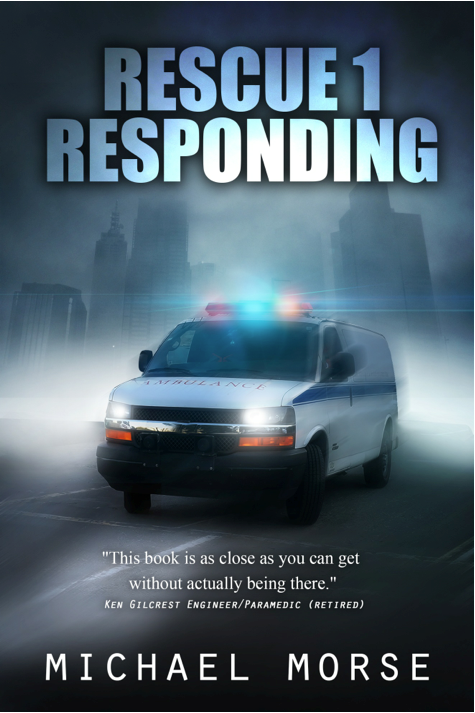
I’m glad I took the time to document what happens during a typical tour on an advanced life support rig in Rhode Island’s capitol city. Looking back, I can hardly believe I lived it. But I did, and now you can too. Many thanks to GoLocalProv.com for publishing the chapters of my books on a weekly basis from now until they are through. I hope that people come away from the experience with a better understanding of what their first responders do, who they are and how we do our best to hold it all together,
Enjoy the ride, and stay safe!
GET THE LATEST BREAKING NEWS HERE -- SIGN UP FOR GOLOCAL FREE DAILY EBLASTCaptain Michael Morse (ret.)
Providence Fire Department
The book is available at local bookstores and can be found HERE.
Note From the Author
A lot of what we do as firefighters and emergency medical technicians has more to do with human interaction than treating medical conditions. People’s ideas of what warrants a 911 response have drastically changed over the years that I responded to those calls. Anything goes these days, nightmares, toothaches, cramps and loneliness are the norm. I used to fight it until I realized I was making myself miserable. Unfortunately, far too often all available resources are tied up on non-emergent calls when something truly disastrous happens.
Chapter 13
“I have got to go see my mom,” I say to Al as we leave Hasbro. Our patient has been checked in at the triage desk, much to the chagrin of the ER nurses. There is nothing they can do for the boy that wasn’t done last night. The boy’s mother had the state sponsored medical card ready when she went to the desk. I wonder if she would have been so quick to bring the boy back to the hospital if she was paying for the visit rather than the taxpayers. The health care situation in this country is out of control. People are paying incredible amounts of money for healthcare, or going without. The poor are covered and the rich aren’t concerned. The folks in the middle continue to bear the brunt of keeping the country afloat
“How about after lunch,” Al says. “I’m starving.”
“Me too. Let’s eat.”
As expected, Saugy hot dogs, baked beans and snowflake rolls await us as we return to Branch Avenue. Saugys are a local delicacy. They are made only in Rhode Island and have been a firehouse tradition for years. I take three, only after telling everyone that there are eighteen grams of fat in each one, fill the rest of my plate with beans and top it off with three snowflake rolls. I cut the hotdogs in half lengthwise, then the other way so that they will fit inside the square rolls. Some catsup, mustard and relish and I’m good to go.
The rest of the guys have finished, they began eating at noon, and have cleaned the kitchen and are clearing out. The morning’s work is done. For the rest of the day there is nothing for them to do but wait for the bell to tip. With any luck, it will be quiet.
As soon as lunch is finished we head to my mother’s nursing home, only a few minutes from the station. When I had to find a place for her, Berkshire Place had just opened. The close proximity to the Branch Avenue fire station helped me decide where best to place her. My mother was one of the first residents there and is well known and liked by the staff. The home has done a great job with her care, for which I am grateful.
1346 hrs. (2:46 p.m.)
“Rescue 3 a still alarm.”
“Bye Mom, happy Easter.”
“Rescue three and Engine 2, respond to University Heights for an elderly man with difficulty breathing.”
“Rescue 3 responding.”
“How is she?” Al asks as I get into the truck.
“Same.”
We make our way to University Heights as Neil Young sings “Old Man.”
University Heights is about five minutes from our present location. Engine 2 will be there in one. I wait for their transmission with the radio mike in my hand, tapping along with Neil’s acoustic guitar.
“Engine 2 to fire alarm, we have a sixty-one year old male, conscious and alert complaining of slight difficulty breathing. We’re assessing vitals now and putting him on 02.”
“Rescue 3 received.”
I can see the flashing lights from Engine 2 as we turn into the University Heights Apartments. Standing next to the engine with a nasal canula attached to his face and dressed in a brown leather trench coat is our patient. He sees the rescue and makes his way toward us. He doesn’t appear to be in much distress.
“He’s fine, some kids were giving him a hard time and he ran away from them now he can’t catch his breath,” says Captain Crowley.
“I was walking like I do every morning. These kids around here are no good,” he says. “I stopped to have a cigarette and the little pricks tried to rob me. I didn’t run away, I walked after telling them the fuck off. I started feeling dizzy so I called 911.”
“Get in the truck,” I say to the man. “Thanks, Cap, you guys are all set.” The engine company heads back to the station and the rescue appears to be heading to the hospital.
Al has the man seated on the bench seat and is assessing his vital signs.
“120/60, pulse 70 and pulsox 99%. You’re in better shape than I am,” he tells the man.
“What is your name?” I ask and get the report out.
“Daniel Webster. I have to go to Miriam. Do you think I’ll make in time for lunch?”
“Why do you have to go to the hospital?” I ask.
“I feel dizzy. I was there on Wednesday and they didn’t do anything but give me some pills.”
“Did you take the pills?”
“I don’t believe in no pills.”
Sometimes the absurdity of what I do to make a living is too much. Runs like these try my patience. I find out that Daniel is on disability because of depression. He hasn’t worked in twenty years. Today’s trip to the hospital, including the three-hundred dollar two-mile cab ride will cost the taxpayers more than a thousand dollars. I hope the lunch is worth it.
Miriam is full, with patients lined up in the hallway. We have Daniel seated in a wheelchair and are waiting for the charge nurse to take our report. We could be waiting a while. I see Bernie is in charge of triage today so I don’t expect to be giving my report any time soon. Al has retrieved a nasal canula from the supply room and has decided to wait for me in the truck. I note the time of arrival on my report and begin to wait. Eventually, Bernie comes over.
“What have you got?” he asks.
“Sixty-one year old male complaining of dizziness, vitals are stable, history of depression. He was here on Wednesday, was prescribed some pills but doesn’t believe in them.” I hand the report to Bernie who signs it and walks away. He has been doing this a lot longer than me and has seen it all so I don’t take his demeanor personally. At times he can actually be pleasant. From the look of things, the hospital will be diverting soon. When an area hospital has no more beds they can close the facility to rescues. An announcement is made over the air that the diverting hospital is diverting. Miriam is usually the first of the area hospitals to use the diversion plan. If two other hospitals follow suit, all area hospitals are forced open.
“Let’s go to Venda,” I say to Al when I get beck into the truck.
The rescue gods have other plans.