Rescue 1 Responding: Chapter 15, a Book by Michael Morse
Michael Morse, Author
Rescue 1 Responding: Chapter 15, a Book by Michael Morse
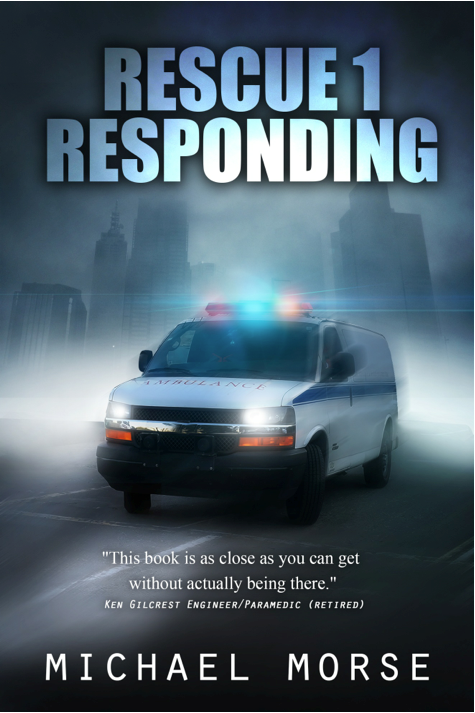
I’m glad I took the time to document what happens during a typical tour on an advanced life support rig in Rhode Island’s capitol city. Looking back, I can hardly believe I lived it. But I did, and now you can too. Many thanks to GoLocalProv.com for publishing the chapters of my books on a weekly basis from now until they are through. I hope that people come away from the experience with a better understanding of what their first responders do, who they are and how we do our best to hold it all together,
Enjoy the ride, and stay safe!
GET THE LATEST BREAKING NEWS HERE -- SIGN UP FOR GOLOCAL FREE DAILY EBLASTCaptain Michael Morse (ret.)
Providence Fire Department
The book is available at local bookstores and can be found HERE.
A Note from the Author
Many of the people who call 911 are experiencing moments that will remain in their memories forever. Inviting strangers into their emergency is a leap of faith. These are stressful times for the people who need us. It matters not that we have in all likelihood seen it all; the people who need us most certainly have not. Sometimes the stress of waiting and the unknown overtakes a normally kind and appreciative person and a demanding, obnoxious alien takes their place.
Understanding that it is the situation rather than the personality that makes people behave poorly during an emergency helps mitigate the stress that is already unbearable. All of the medical training in the world cannot replace simple human kindness and understanding during a 911 response. Remembering that for us it is another call mingled with thousands while for the patient and their family and friends it is a potentially life changing event is imperative. The most effective firefighters and EMT’s and Paramedics have learned to put their ego aside and focus on the solution rather than the problem. People are decent, for the most part, and everybody deserves a little leeway when things go badly.
CHAPTER 15
“Do you need anything while we’re here?” I ask Al as we make our way back to the rescue. This time we go through the main part of the mall.
“I’m all set, let’s get a coffee and head over to Venda.”
“I’m buying,” I say and we walk through the mall while pushing the stretcher. People don’t give us a second look as we pass, they are too busy shopping, or in the case of the teen population scoping out the opposite sex. The two old rescue guys are doing the same, only not as blatantly, and the opposite sex isn’t looking back. I feel a vibration from my pants pocket and know it could only be one thing.
“Hello.”
“What’s up?” Cheryl asks.
“Nothing, just getting through the day. I had to go to the mall for a seizure.”
“Did you go past where that girl fell?”
“No, we went the other way.”
“You have to face it sooner or later.”
“I know, I prefer later.”
“You know what’s best, just don’t wait too long.”
I have a habit of avoiding places where tragedies occur until I’ve made peace with my memories. The girl who fell off of the escalator and the Spider Man doll she lost is still bouncing around in my head, and probably will be for a long time to come. That run was horrendous and I’ve yet to come to terms with it. It helps to talk about what happened, and I have at length with my wife, but it still is going to take more time for the painful images to stop haunting me. The department offers a critical incident stress debriefing which is a very effective way to handle the grief that comes with the job but I chose to deal with this one on my own. The people on the debriefing team do a great job and are trained to help emergency personnel get through the muddy waters we sometimes find ourselves drowning in. Had I called for assistance, everybody involved in the incident would have met at one of the stations and talked about what happened. It really does help to deal with the conflicting emotions we all feel after witnessing the horrific things we see, and to see that the people we work with feel the same way makes the sorrow easier to bear.
The night the girl fell to her death I was on the end of a thirty-eight hour shift. Her's was my thirtieth run in that time span. I was too tired to talk and opted to try to get some rest instead of staying awake talking. Instead of resting, we responded to three more runs before I was relieved at seven the next morning. I should have spent the time talking, but it was too late.
“Thanks for worrying about me,” I say.
The silly fighting between us seems to have subsided and I want to keep the good vibe flowing.
“I got the manicotti.”
“Great, my mother loves it. I didn’t mean to get on you about not picking it up, I just get frustrated being stuck in this house.”
“I know, I don’t mind helping out.”
Al and I have made it back to the rescue. He has been eavesdropping; I can tell by the way he is shaking his head.
“Call me later.”
“Love you, bye.”
"Love you too."
I put the phone back in my pocket and look at Al.
“What’s the matter with you?” I ask.
“Do you have the manicotti?”
“No, but we’re going over there now.”
“What if we don’t make it,” he asks.
“We’ll make it, it’s right up the road,” I say as we get in and head toward Federal Hill.
It’s almost 3:30 and the traffic has eased a little as we head over to the store. Lunch is over, dinner has not begun and the restaurants and cafés are nearly empty. As we get closer to our destination I feel my stomach sink. The lights are out at Venda, the doors are locked, and there will be no manicotti at the Morse house tomorrow.
“What did I tell you about little lies?” Al asks as I sit in my seat and will the store to be open. I’m in no mood for his righteousness.
“I was lying when I said I liked you.”
“Ow! That hurt,” says Al with a laugh that doesn’t sound even a little painful.
“I’m doomed.”
“Just tell her the store was closed,” Al offers.
“It’s not that, it’s that I told her I had them. I know! I’ll tell her I forgot them in the refrigerator.”
“Bigger lies.”
“What would I do without you,” I ask.
“Tell bigger and better lies I guess.”
We ride around the area for a while then decide to get back to quarters. If we don’t get any more runs, Al will go home and I’ll get back to Rescue 1 and relieve Tim.
“Rescue 3 a still alarm.”
1708 hrs (5:08 p.m.)
“Rescue 3; respond to 184 Lydia Street for a pregnant female with abdominal pain.”
“Rescue 3, responding.”
“Hurry up, my sister is bleeding.”
“Get out of the way,” I say, and she moves away from my door.
“Where is the blood coming from?” I ask as we make our way to the front door. Al has retrieved the stair chair from the rear compartment and is right behind us.
“From her private parts,” she says as we walk into the house. Our patient is sitting on a couch in a sparsely furnished room, her skin pale and damp. Al takes one look and sets up the chair; there is no way this girl is walking.
“Are you in any pain?” I ask. Her sister starts to answer.
“Let her talk.” I say.
“I’m thirty-two weeks pregnant,” she says, “an hour ago I started feeling some cramping, then I noticed I was bleeding.”
“Take her to the hospital,” her sister demands. We ignore her for now, I’m trying to get a history and have every intention of taking her to the hospital as quickly as possible.
“Do you have any other children?” I ask.
“Yes, two. I also had a miscarriage a few years ago.”
“Okay, we’re going to get going,” I say as Al and I pick her up, put her into the stair chair, secure the straps and carry her to the truck. Her sister comes with us and insists on riding in the back.
“Start an IV and get going,” she says as soon as we are settled in the back of the rescue.
“Do you want to stay back here?” I ask.
“Just do your job,” she says. Al and I are too tired to argue, and the patient needs an IV and immediate medical assistance. Al gets the IV on the first try, while I take her vital signs. The girl is the perfect patient, her sister the total opposite. I want to get her to Women and Infants as quickly as possible, something is wrong. She needs to be seen in a hospital and may end up in the operating room.
“BP 90/60, Pulse 120, I tell Al. Her vitals are not good and he knows it, with nothing more needed to be said he heads to the front of the truck and wastes no time getting to the hospital. I monitor my patient -her name is Po Ling - while speeding toward the ER, and phone them on the way.
“ER Triage,” says the R.N. on the phone.
“Hello, Providence Rescue 3 calling. I’ve got a twenty-five year old patient, thirty-two weeks pregnant with her third child, one miscarriage with heavy vaginal bleeding. She is hypotensive at this time with a rapid pulse and experiencing abdominal pain. We have her on oxygen, an IV established ETA five minutes.”
“See you then,” the nurse hangs up the phone. I’m sure that she is informing the ER staff of our situation and they are getting a room ready for our arrival.
I get a non-rebreather from the compartment over my seat, turn the oxygen tank on and set the flow to ten liters per minute. I fill the reservoir by holding a finger over a valve at the bottom of the mask, pull back the elastic band, and then place the device over Po’s face.
“This is oxygen,” I tell her, “it will help you and the baby.” She smiles, sits back on the stretcher and closes her eyes. I can see signs of pain all over the delicate features of her face.
“I’m sorry I’ve been so mean,” her sister says.
“That’s all right. You’re under a lot of stress, I understand,” I say.
“Will she be okay?”
I want to lie and tell her everything will be fine. The problem is, I don’t know how this is going to turn out.
There could be a number of things going wrong right now, and don’t have a clue what they are.
“Right now her vital signs are a little irregular but she is stable. When we get to the hospital we’ll know more.”
The truck stops in front of the emergency room door and Al opens the back doors letting the chilly air into the back. I help Po’s sister out the side door and Al wheels the stretcher out the back. As expected, the ER staff has a room ready for us. We head back to the treatment area, and then transfer our patient from our stretcher to the hospital's. The triage nurse signs my report and I have nothing more to do with Po or her sister. I hope everything turns out okay, but it looks like she is having a miscarriage. I plan to come back later to check the status of the baby and her mom. For now, they are receiving the best possible care, and all I can do is wish them well.