


Whitcomb: Long-Ago Boats; Beach Time; No Ban on This Smoking; Speculative House of Cards
Robert Whitcomb, Columnist
Whitcomb: Long-Ago Boats; Beach Time; No Ban on This Smoking; Speculative House of Cards

“Didn’t you like the way the ants help
GET THE LATEST BREAKING NEWS HERE -- SIGN UP FOR GOLOCAL FREE DAILY EBLASTthe peony globes open by eating the glue off?
Weren’t you cheered to see the ironworkers
sitting on an I-beam dangling from a cable...’’
-- From “Why Regret?” by Galway Kinnell (1927-2014), American poet
“All technologies should be assumed guilty until proven innocent.’’
-- David Brower (1912-2000), American environmentalist, in 1992
“Let the people think they govern, and they will be governed.’’
-- William Penn (1644-1710), founder of Pennsylvania, in 1693
Later-Summer Musings
You can see some Tree Swallows and some shorebird species already starting their annual migration south, perhaps the latter driven away by loud beach music. And dry leaves are starting to litter some sidewalks. Some of the sugar maples are dropping their seeds. The crickets are getting louder.
xxx

But those boats, as small as they were, took a lot of work – mostly in the spring – though having a boat got easier with the arrival of fiberglass, in the late ‘50’s. Before then, there was tedious calking and sanding before laying on a new layer or two of anti-fouling copper paint. And then there was the chore of putting the boats in the water and then hauling them out a week or two after Labor Day.
The most exciting boat in my latter boyhood was the recently invented Boston Whaler. A friend who was a next-door neighbor and orphan had one (his grandmother bought it for him), and for a couple of summers, we often sped around in the remarkably stable craft, powered by a loud Johnson (or was it an Evinrude?) outboard. It gave us a feeling of youthful freedom, for which I’m still nostalgic, sort of like the nostalgia I feel for my first car, a used VW bug.
The experience made me realize that it could be a lot easier to enjoy someone else’s boat than your own. That, of course, reminds folks of the old line that your second-best day is when you buy your boat, and the best is when you sell it.
To suggest how long ago this was: You could buy “chicken lobsters” (small but legal) at the town lobster pound for 25 cents each. The region’s waters then had lots of lobsters, and there were many brightly colored buoys floating over the rocky bottoms favored by the creatures. (Sometimes there would be little territorial wars between lobstermen, with, a few times, brandishing of shotguns.) Warming waters, changing currents and some other factors there have much reduced the catch. Lobsters are moving northeast.
For generations, people in my father’s (mostly middle-class) family often had small sailboats, especially on Cape Cod, where some of them were from and where others, starting after the Civil War, went for stretches in the summer. These had centerboards instead of keels because the waters were shallow with sandy shoals, rather than the deeper, rocky waters along the shores north of the peninsula.
The most popular craft were catboats, with a single sail. I have a much faded photo of my father sailing a small one in about 1930. I had a pang when I found in his desk, soon after his sudden death at 58, a sales brochure promoting a 25-foot-long catboat with a little cabin two people could sleep in, cook in and, er, eliminate in. Extravagant!
That, I suppose, was going to be an escape vehicle as he approached retirement.
On the Beach
“This is a day that’s beautiful as well,
and warm and clear. At seven o’clock I saw
the dogs being walked along the famous beach
as usual, in a shiny gray-green dawn,
leaving their paw prints draining in the wet.’’
--From “Suicide of a Moderate Dictator,’’ by Elizabeth Bishop (1911-1979), American poet and short-story writer

But over the next few decades, going to the beach and developing a tan there became something of a status symbol. It meant, among other things, that you had leisure time. (That’s a reason, along with air-conditioning and faster transportation, for the unfortunate rise of Florida.) But more knowledge of skin cancer in the past few decades has led people to cover up much more, and now villages of tents and umbrellas cover many popular beaches.
The best time to walk on the beach around here is September and October.
Before the summer beach house mania started in the late 19th Century, New Englanders usually avoided dwelling right along the coast – too vulnerable to storms. Instead, they lived safely inland, often around town greens. They were right.
xxx
There is, understandably, a push by many in Providence and other expensive cities a push to impose rent control. But rent control, over time, depresses new-housing construction and building maintenance. The more you do it, the more that big rent increases would eventually have to be allowed, lest many landlords exit the city and/or stop maintaining their buildings. Supply and demand will triumph in the end.
(Some have suggested linking rent controls to the Consumer Price Index, but now that Trump has undermined federal data collection, that may become useless. He has a way of poisoning everything he touches. Hit this link:
Providence has admirably banned such price-fixing algorithms such as those of RealPage, used to analyze data and recommend maximum rental prices. Let’s see how well it works. The Biden Justice Department last year sued RealPage. Perhaps the current developer-loving regime will drop it.
Obviously, the best way to moderate rents is to increase supply. This requires changes in zoning regulations and other measures to increase building. Austin has some lessons for us in how to do this.
Will Brown University’s decision to sell off some of its real estate result in more housing being made available for rent?
xxx
I hope that the Newport City Council passes a resolution at its Aug. 13 meeting to put the question of creating a Newport-Middletown regional school district before voters next April. Such regionalization could save some money now being spent on administration and purchasing, etc. Tiny Rhode Island has 36 school districts! But allocating school committee seats in merged districts could be tricky.
Living in a Smoke House
Heavy smoke pollution in New England from huge forest fires out west will intensify in coming years as conditions continue to get warmer and drier there. (The noxious smoke last week was from Canada.) That’s because global warming, fueled by the burning of oil, coal and natural gas, is increasing the size and intensity of these blazes. This is happening as the Trump administration, which remains in political/financial thrall to the fossil-fuel sector, is doing everything it can to hurt renewable-energy businesses.
The majority of Americans assert that they care about global warming, but there’s little indication they’re willing to tolerate any short-term inconvenience to address it.
Que sera, sera….
xxx
Either theft is way up, and/or paranoia is: CVS is locking up detergent shelves. Depressing.

It’s an old cliché on Wall Street that every generation tends to forget the financial lessons of the previous generation. Well, things are always changing and there are innumerable variables, so we should make such generalizations carefully.
But it’s clear that the recent surges in the U.S. stock markets are a reminder of the danger of what former Fed Chairman Alan Greenspan called back in the ‘90’s “irrational exuberance.’’ Many stock valuations have gone far beyond common-sense pricing based on rigorous analyses of companies’ conditions. and prospects. It seems that many investors fear jumping off the merry-go-round. It smells on some days like 2006 or 1929, under regulation-hating Republican presidents.
When the next crash comes, it will be quite a show, so crazy are the valuations now.
Many also seize upon Trump’s constant gyrations in tariff and other economic “policies” looking for hopeful signs (only later to be disillusioned by exaggerations and outright lies as they dig deeper) of his self-proclaimed world-historical genius. For example, we learned last week that Apple has promised to spend another “$100 billion” on domestic manufacturing to try to elude severe tariffs on iPhones. (Increased domestic manufacturing, of course, will mean higher prices.)
We’ll eventually see what the deal really means, as we’ll see with any “tough deal” on Ukraine with his (former?) pal Vlad Putin. A meeting between that mass murderer and someone who envies him is unlikely to benefit Ukraine.
Tim Cook, Apple’s CEO, like many tech execs, has been sucking up to Trump all year. He personally forked over $1 million to the Orange Oligarch’s inauguration committee.
xxx
As Trump slashes federal funding for scientific research (including medical) and higher education, let’s hope that the private and public sectors are thinking about what to do with vacant “meds and eds” real estate, of which there’s a great deal in such scientific and higher-education centers as Greater Boston. Housing? Small-scale manufacturing? Hookah lounges?
xxx
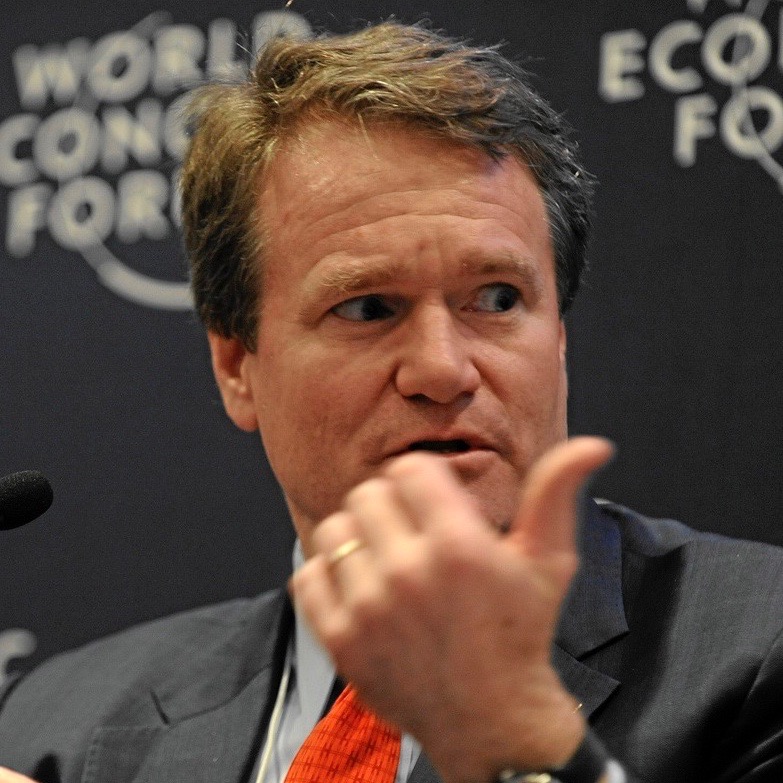
Trump, as with any tyrant, continues to try to punish and suppress any institutions and individuals that have offended him.
So he’s getting his regime to go after some big banks, such as JPMorgan Chase and Bank of America, that have tried to avoid doing business with him because of his record of fraud (not because of ideology). The two banks had rejected deposits from the seamy Trump Organization and likely refused to lend it money.
For years, Trump’s go-to-bank was Deutsche Bank, which way back in my business editor days we called “The World’s Largest Laundry.’’ It was especially enthusiastic about laundering Russian money. Which reminds me of Donald Trump Jr.’s famous remark in September 2008:
"Russians make up a pretty disproportionate cross-section of a lot of our assets, say, in Dubai, and certainly with our project in SoHo and anywhere in New York. We see a lot of money pouring in from Russia."