Our Environment: “Lizards on the Run” By Scott Turner
Scott Turner, Environmental Columnist
Our Environment: “Lizards on the Run” By Scott Turner
At an outdoor pool in Florida, Karen and I, both covered head to toe in sunscreen, stretched out on lounge chairs—she in the sun and me in the shade—and soaked in the scene. This was a good day for the pool—full sun and an outside air temperature in the low 80s.
As another couple, wrapped in towels, left their chairs and exited the pool area, I watched as a couple of Fish Crows landed in the fronds of an adjacent palm tree. The avian duo then flopped down from the fronds to the formerly occupied chaises to snatch tidbits of human food left behind.
GET THE LATEST BREAKING NEWS HERE -- SIGN UP FOR GOLOCAL FREE DAILY EBLASTThe crows were an unexpected entertainment. Fish crows make a brief, deeply nasal call that sounds to be like “gock.” When the birds were in the palm tree, they called nearly nonstop. On the chairs they were quiet.
Fish crows eat most anything. At the poolside, the crows seemed most interested in the chair crumbs. In fact, the crows seemed to ignore the various lizards that dashed among the pool furniture and the surrounding landscaping.
From my perch, I saw two types of lizards. Each kind was of varying sizes. One variety of the reptiles looked thin and dark and ran up and down the trunks of the palms. Sometimes one of these lizards stopped on the trunk, always in the shade, remaining stationary for several minutes.
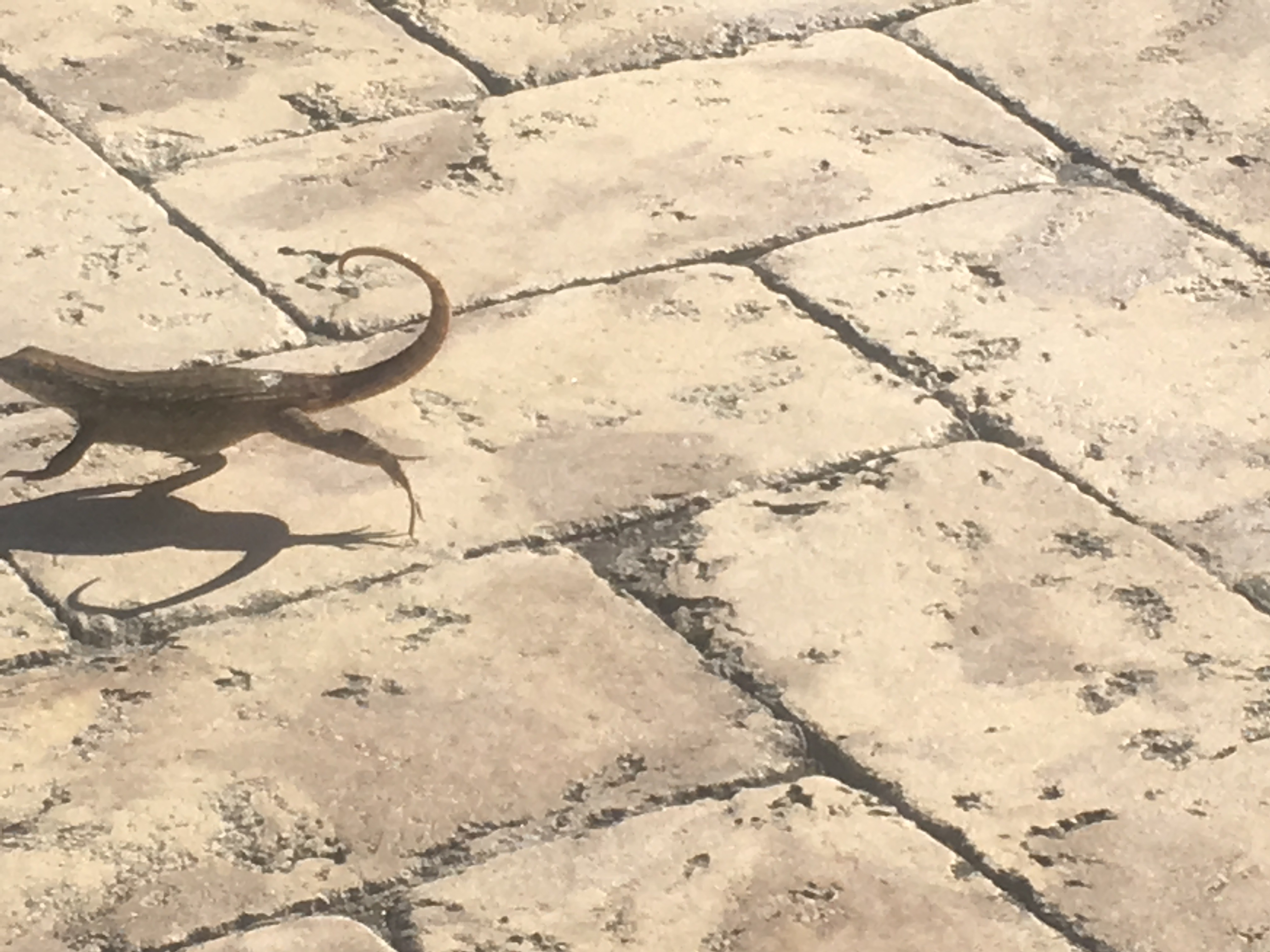
The second type of reptile was more robust than the first and traveled via the pool deck. These were green-brown animals that featured a scalier look. In particular, one individual lizard, which was maybe 8-inches-long from snout to tail tip, dominated the space around our chairs.
The most prominent feature of this lizard was its curled tail. That was a clue when I looked up images of Florida lizards. Indeed, the reptile at my sun-screened feet looked exactly like what is called a curlytail lizard, a non-native species first seen in Florida in the 1940s and now common where we sat—in Palm Beach County.
Found around pavement and stone, the curlytail sits and waits and then snares all sorts of insects. Other than its fearlessness of people and the curly tail, a feature of the lizard at our feet was that it raised and lowered its body every so often.
I researched this push-up-like performance and found a study published in 2012 that suggested this behavior was a display of strength by a male lizard that marked its territory—to warn other males away.
I joked that maybe we were sitting in the lizard’s lounge chairs. The reptile looked a little like the icon of a popular brand of insurance. So, kidding around I leaned over to speak to the reptile. Instead of responding, the lizard skittered away. So, like the other creatures of Florida, Karen and settled into our chaises to enjoy the setting.