Rescue 1 Responding: Chapter 23, a Book by Michael Morse
Michael Morse, Author
Rescue 1 Responding: Chapter 23, a Book by Michael Morse
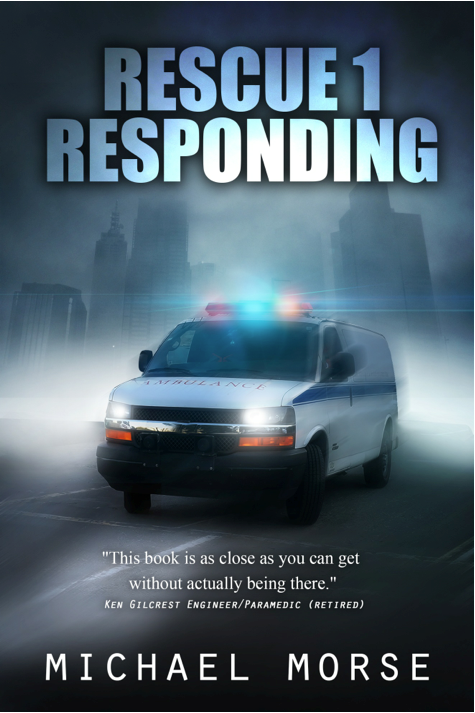
I’m glad I took the time to document what happens during a typical tour on an advanced life support rig in Rhode Island’s capitol city. Looking back, I can hardly believe I lived it. But I did, and now you can too. Many thanks to GoLocalProv.com for publishing the chapters of my books on a weekly basis from now until they are through. I hope that people come away from the experience with a better understanding of what their first responders do, who they are and how we do our best to hold it all together,
Enjoy the ride, and stay safe!
GET THE LATEST BREAKING NEWS HERE -- SIGN UP FOR GOLOCAL FREE DAILY EBLASTCaptain Michael Morse (ret.)
Providence Fire Department
The book is available at local bookstores and can be found HERE.
Note from the Author
This chapter brings Rescue Co. 1 and Engine Co. 13 to the home of a person suffering from a diabetic emergency. This is the meat and potatoes of EMS. Diabetics, dialysis, cancer, stroke, MS…the list is lengthy. People live their lives in relative obscurity behind the doors of the homes we pass thousands of times during our careers. It is truly an honor to be invited into those homes in the middle of the night and bring with us the things they need to get back on their feet, or to bring them to the place where they can get the medical treatment they need. People trust us, and I’ve never forgotten just how important that trust is. It isn’t me, or my partner that has earned that trust, or the firefighters that accompany us; it is the generations that have come before us, and delivered. Knowing that what we do now will pave the way for the future medics and firefighters, and continue the level of trust that the public has in us gives each and every 911 call a timelessness that should never be forgotten.
As much as I fool myself into believing that I am the center of the universe, “the job” never lets me forget that I am a small, but vital part in something far bigger. In case you hadn’t noticed yet, and the books are nearly through, I love the fire service, loved being a firefighter and EMT, and am well aware of exactly how fortunate I am to have been able to make a difference in the lives of people whom I had previously never met, and the people who will be responding to their emergencies long after I am gone.
Chapter 23
Every minute of rest is imperative at this hour. It is simply not natural to be on alert for thirty-four hours.
0305 hrs (3:05 a.m.)
“Rescue 1 and Engine 13 a still alarm.”
My mind takes a few seconds to realize that we’re heading out again. The rest of my body will have to catch up. I get up again, knowing that the despair I’m feeling will dissipate as the minutes go on. At this hour I usually go from anger when the tone hits to despair when I get to my feet, to acceptance by the time I get in the rescue to anticipation while en-route. When the anger refuses to make way for the rest of the emotions it’s time to get off the truck.
“Rescue 1 and Engine 13, respond to 26 Jillson Street for a diabetic.”
I get to the bottom of the stairs and realize I’ve forgotten my portable radio. Shit. Back up the steps. Engine 13 roars out of the station, Mike waits with the engine running and lights on. At the top of the stairs he hits the siren, thinking I must have slept through the alarm. I haven’t missed a call yet, no reason to start now. I retrieve the radio from the charger next to my bunk, turn around walk back into the hallway and slide the pole, landing at the rear of Rescue 1.
“What’s the hold-up?” asks Mike, grinning again.
“You’re going to look awfully funny with that siren up your ass,” I say.
“Promises, promises,” he laughs and we’re on our way to Jillson Street.
“Engine 13 to Fire Alarm, advise Rescue 1 we have a fifty-five year old male, diaphoretic and unconscious, assessing vitals.”
“Rescue 1, received the message.” I put the mic back in the cradle.
“I bet he doesn’t even know what diaphoretic means,” I say to Mike.
“He probably wouldn’t know a blood pressure from a blood vessel.”
“He probably never even felt a pulse.”
“He probably doesn’t even have a pulse.”
“That’s because he doesn’t have a heart.”
“He has a heart it’s just a tiny little thing the size of an appendix.”
“How big is an appendix?”
“As big as Captain Healy’s heart.”
“Rescue 1, on scene.”
Captain Healy meets us at the door.
“You’re gonna need the stair chair, he’s out cold.”
Mike has already retrieved the chair from the rear compartment, I’ve got the blue bag. There are a few steps before we enter the home, a small entryway, then a straight run of stairs to the second floor. We get up the stairs and find our patient, soaked from sweat, lying in the middle of a king sized bed, dressed in a sleeveless t-shirt and pajama bottoms. A woman, who I assume to be his wife, is standing next to the bed holding a glass of orange juice.
“Do you know his glucose level?” I ask her.
“We took it at eight it was 110.”
“Is he insulin dependant?”
He takes it morning and night.
Mike has straddled the bed to get a more current blood glucose reading.
“Twenty-two, he hit the jackpot!” he says, raising the glucometer in the air like a trophy. He has a way about him that enables him to be his usual crazy self without upsetting patient’s family members. People can usually see when a person is genuinely decent, even if they do act a little weird.
Arthur has the IV kit open and is fishing around for the necessary equipment. Captain Healy has cleared a path for us, moving a dresser and a throw rug out of the way. Jay and Steve have joined Mike on the giant bed and are dragging the patient to the side. I put on some protective gloves and get to work.
I remember my first diabetic emergency. I was a firefighter assigned to Engine 2 when a call came in for an unconscious female. We responded to a beautiful home on the East Side and found a middle-aged woman face-down on her kitchen floor. Her seven-year-old granddaughter called 911 when she found her grandmother and couldn’t wake her. The child was hysterical when we arrived, I had no idea what was going on. Kenny Loux, the driver of Engine 2 that day, had about three years experience then and had seen a number of similar situations. He made sure the woman’s airway was clear, listened for breath sounds then checked her pulse. The rest of us kept the little girl calm and waited for the rescue. These were the days before Fire Companies were equipped with automatic defibrillators, IV equipment and medications. All we could do was CPR, administer oxygen and wait for a rescue. Luckily, no CPR was necessary on this day. Kenny said that he thought this was a diabetic but he wasn’t sure, it could be an overdose, heart attack or any number of things.
After what seemed an eternity, Rescue 5 arrived on scene. Lieutenant Dave Raymond walked into the room and immediately went to work. I watched as he opened the blue bag, started an IV, drew up some medication and delivered it, all while explaining things to the woman’s granddaughter. Thirty seconds after the medicine entered her bloodstream, the woman on the floor’s eyes twitched. Then she moaned. Then her eyes opened. She sat up, looked around and asked, “what happened?” Dave calmly told her that her blood glucose dropped and he had to give her an amp of D-50 to get her back. She looked around her, saw all of the firefighters but was only concerned for one person in the room; her granddaughter. The girl ran to her then, hugged and kissed her, clung on and wouldn’t let go.
I thought I had witnessed a miracle. I’m not 100% sure but there is a very good chance that I decided on that day to eventually transfer to the rescue division. It took ten years, but here I am.
Arthur hands me the IV equipment then opens the box of D-50. I apply a tourniquet to the patients arm and search for a vein. Diabetics can be hard sticks, and Milton is no different. I want to use a large bore needle to better administer the D-50, which has the consistency of maple syrup, but from the look of things a twenty-gauge catheter will have to do. A couple of pats on the inside of the elbow and I think I see a vein. I rub some alcohol over the site and drive the needle home. Bingo, first shot, the little reservoir at the end on the catheter fills with blood letting me know I’m in. Mike takes over, fastens the drip set and adjusts the flow. Arthur pushed the D-50 through the IV line and into Milton’s bloodstream.
It is quiet. We’re all standing around the bed, waiting. First the eyes flutter, and then open. Milton looks around, sees six firefighters in his bedroom with his wife, shakes his head and says, “sugar went low.”
“Very low, you were in insulin shock,” I say.
Prolonged insulin shock can result in permanent brain injury. Milton probably took his insulin then neglected to eat properly. Overexertion can also be a cause. Whatever the cause, this was a serious medical problem.
“We’re going to take you to the hospital,” I say as Mike gets the stair chair ready.
“I’m not going to no hospital.”
“Yes you are,” I say, not very convincingly, I’m afraid.
“Thank you boys for helping, but I ain’t going, and that’s that.”
“You have to go, what if you’re your sugar drops again.”
He’s drinking the glass of orange juice and his wife has some peanut butter and crackers on the bedside. I’m reasonably certain that he will be fine, but I would much rather take him in for an evaluation.
“He won’t go,” says his wife.
“This is a serious situation,” says the Captain. “You really should go to the hospital. Think about your wife, what would she do if something happened to you?”
That almost cracked old Milton but he is a stubborn guy. He’s not going, and that is that.
Mike hands me a refusal form. While I fill out the necessary information, the guys clean up our mess and file out of the bedroom. Milton signs the refusal.
“Good night folks, and good luck,” I say as Mrs. Milton shuts the door behind me. I’ll have to find a way to replace the D-50 we used getting Milton back to the world of the living, but I’ll let Vinny worry about that, he’ll be here in a couple of hours.
Engine 13 leaves a cloud of exhaust as they pull away from the house on Jillson, Mike and I get into the rescue and close the doors in time to avoid the toxic cloud.
I consider forgetting to go back in service but pick up the mike instead.
“Rescue 1 in service, signed refusal against medical advice.”