


Investigation: Raimondo Administration Overestimated Cost of Coronavirus Testing by $150M
GoLocalProv News Team
Investigation: Raimondo Administration Overestimated Cost of Coronavirus Testing by $150M

In May, the House Finance Committee considered coronavirus budget costs provided to the legislature by the Raimondo administration, and the Governor’s fiscal team budgeted $150 million for testing during the remainder of fiscal year 2020 and for all of 2021 — a sixteen month period.
By August, Raimondo’s $150 million testing cost ballooned to $216.7 million according to a memorandum sent by Raimondo’s Jonathan Womer, Director of the Office of Management & Budget.
GET THE LATEST BREAKING NEWS HERE -- SIGN UP FOR GOLOCAL FREE DAILY EBLAST
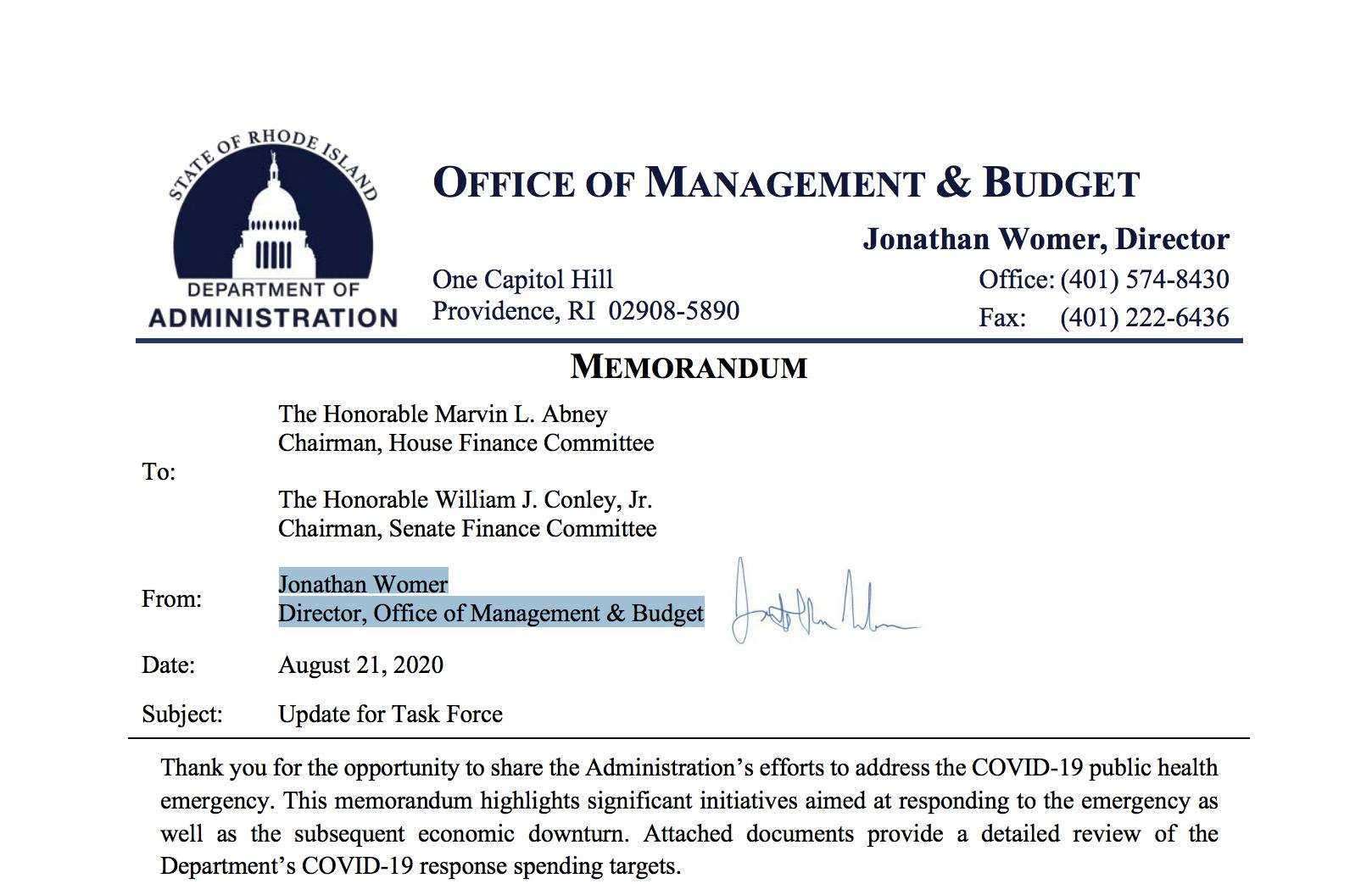
Now, a GoLocal investigation has found that in the first eight months the state has spent less than $30 million of the $216.7 million budgeted to cover 16 months of testing. And, if the present testing spending continues for the remained of the fiscal year -- the total testing cost will be approximately $60 million or $150 million less than Raimondo's budget costs.
“Roughly 460,000 tests have been processed by labs contracting with the State, or RIDOH’s State Health Laboratories,” said RI Department of Health spokesperson Joseph Wendelken.
“$14.5 million has been spent on lab contracts. A total of $29.7 million has been spent on testing as a whole. This includes money to support all the infrastructure around testing,” said Wendelken.
The average cost per test is $64 for state tests.
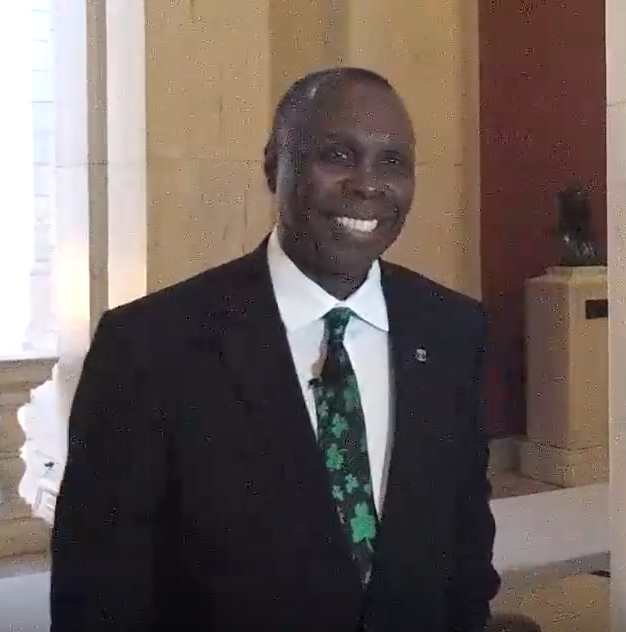
Chairman of the House Finance Committee Marvin Abney said the information provided during the pandemic has been flawed and lacks backup.
“It is extremely frustrating. This has been a moving target,” said Abney.
“When we got those numbers (in May) it had insufficient backup. Getting the exact costs for these has been a challenge,” added Abney.
The other 800,000 tests conducted in Rhode Island to date have been paid for a combination of sources, private insurance, directly by schools and colleges and university and private businesses and individuals.
CVS’s massive testing program launched in the spring was funded by the Trump administration.
The CVS strategy was seen as a smart way to attract new customers.
"Those of you who have been following us for some time know that CVS Health is much more than just your corner drugstore,” CVS CEO Larry Merlo told analysts on a conference call as reported by Fortune. "And in this era of COVID, our strategy of diverse assets across health care, this triad of care where connections are delivered in the community and home and in the palm of your hand could not be more important."
“I want meaningful numbers,” said Abney.
The budgeting for testing raises questions about the claims about the $1.25 billion federal funding via the CARES Act that has been solely controlled by the Raimondo administration.
Raimondo has repeatedly claimed her administration was increasing testing only to miss the stated targets repeatedly.
In July — five months into the pandemic — the nursing home industry criticized the Raimondo administration for the failure to implement a cohesive testing program.
“Today we are sounding the alarm that the lack of timely test results in our homes is causing harm to our residents and workers. Accurate and rapid testing is a necessity in coping with and managing this virus in our nursing homes and so far, we have been left to guess at where COVID-19 lies,” RIHCA President and CEO Scott Fraser in July. “RI’s nursing homes must have rapid responses to keep our residents and workers safe. This is truly a matter of protecting lives.”
On May 6, Raimondo outlined her plan to increase testing. In the first month of coronavirus cases in the state, Rhode Island had struggled to test over 200 people a day. By early May, the state did not test even 2,000 a day — but Raimondo said that the state was averaging 2,700 a day, and wanted to get to 20,000 a day by the fall.
“We’ve averaged 2,700 [tests] a day but we tend to have a dip on the weekends. We’ve already tested more than 80,000 Rhode Islanders,” said Raimondo in May. “I’d like to see us at 10,000 a day by July. And then we want to get to 20,000 a day…by end of September.”

Rhode Island’s testing reporting is lumping symptomatic with both asymptomatic testing going on at the colleges and universities and the general population.
Approximately half of the daily testing results are now asymptomatic testing which have very little disease infection.
GoLocal first reported that RIDOH has major data collection and reporting flaws. It cannot track real-time whether a test is asymptotic or symptomatic -- a significant data error according to former Rhode Island Health Director Dr. Michael Fine who helped both Central Falls and Pawtucket create their reporting systems and both can real-time track the different tests.
According to Wendelken, the state can only separate the asymptotic test results from symptomatic after the tests have been conducted and through staff work. “We get the information through case investigations (interviews),” he told GoLocal.
“I think it asks the question whether the strategy of investing all this money in testing has worked,” Fine said on GoLocal LIVE on October 21. “We have to look really hard at whether our strategy of putting all our effort into testing is working — and the evidence is it’s not. “
Going back to August, when college testing began in earnest, Fine criticized the decision to lump college testing with the general population.
“We have had some high testing numbers over the last week…college students doing baseline testing is a contributing factor,” said Wendelken in August. “The results for college students come to us the same way that other results come to us. The resulting laboratory reports to RIDOH."
But, by adding tens of thousands of college students, it only served to change the baseline data, says Fine.
“That 2% has become meaningless. What we want to know is how much community transmission there is,” said Fine. “We just need a way to measure that. The thing that matters most is the level of community transmission. These are not magic numbers.They’re a window into what’s happening.”
“Every time you dilute the denominator you confuse what it is we’re looking at — you need it stable over time,” said Fine. “We’re trying to measure how much disease is present in communities — and the percent positive doesn’t do that."
On Tuesday, Rhode Island reported that the state had tested 9,379 and reported 701 new cases for the day. When removing the college tests (3,053) and positive cases (20) the Rhode Island had 681 new cases in just 6,326 tests -- a positivity rate of 10.7%