


Whticomb: Trees Against Global Warming; We Need Those Irritating Scooters
Robert Whitcomb, Columnist
Whticomb: Trees Against Global Warming; We Need Those Irritating Scooters

The summer wanes.
The pavement wears
GET THE LATEST BREAKING NEWS HERE -- SIGN UP FOR GOLOCAL FREE DAILY EBLASTPopsicle stains.’’
-- From “August,’’ by John Updike (1932-2009)
“It's part of the American experience: We deal with mosquitoes in August, airport delays around Thanksgiving, expensive health care and the potential of being shot, at any time, by a semiautomatic weapon as we try to go about the most boring, precious, asinine aspects of our daily lives. ‘’
-- Monica Hesse, essayist and author
“Patriotism is often an arbitrary veneration of real estate over principles.’’
-- George Jean Nathan (1882-1958), magazine editor and drama critic
The most important story of the past week or so is that Ethiopian officials report that that nation planted 353 million trees on July 29 as part of a massive program to combat deforestation, erosion and the effects of global warming. It’s part of the developing country’s plan to plant 4 billion trees between May and October.
Ethiopian Prime Minister Abiy Ahmed said that “Ethiopia is set in our attempt to break the world record together for a green legacy.’’ Officials say that more than 2.6 billion trees have been planted in the current reforestation campaign. Who knows, but photos of newly planted fields show that it’s a hell of a lot.
As in other nations where intense population pressures and uncontrolled development have ravaged forests, with devastating long-term environmental, economic and social damage, Ethiopia, much of which is mountainous, has seen a huge decline in its forests in recent decades. According to the nonprofit group Farm Africa, the percentage of forested land in that poor nation has plunged to less than 4 percent from about 30 percent around the turn of the last century.
The fewer trees, the more global warming (plants absorb carbon dioxide) and the more erosion, since trees hold back soil that would otherwise wash down slopes.
There are major reforestation projects in other nations, perhaps most notably India. But there are other countries where destruction of the forests is accelerating. The scariest is Brazil, whose Amazonian rain forest has been called “the world’s lungs.’’ There, under the nation’s right-wing president (and Trump admirer), Jair Bolsonaro, restrictions on cutting down forests have been scaled way back. Loggers, ranchers and mining companies have been given much more freedom to ravage this vast and ecologically precious area.
xxx

They noted: “Shorn of tree canopy, sidewalk temperatures can be higher, sidewalks can seem noisier, and walkers along them are exposed to more air pollution.’’
We should indeed hug our trees, especially the big ones.
To read more, please hit this link:
Bacteria on Our Coast
Global warming of seas will inevitably mean more nasty bacteria in our region’s beaches and more closings, especially the further up our bays you go.
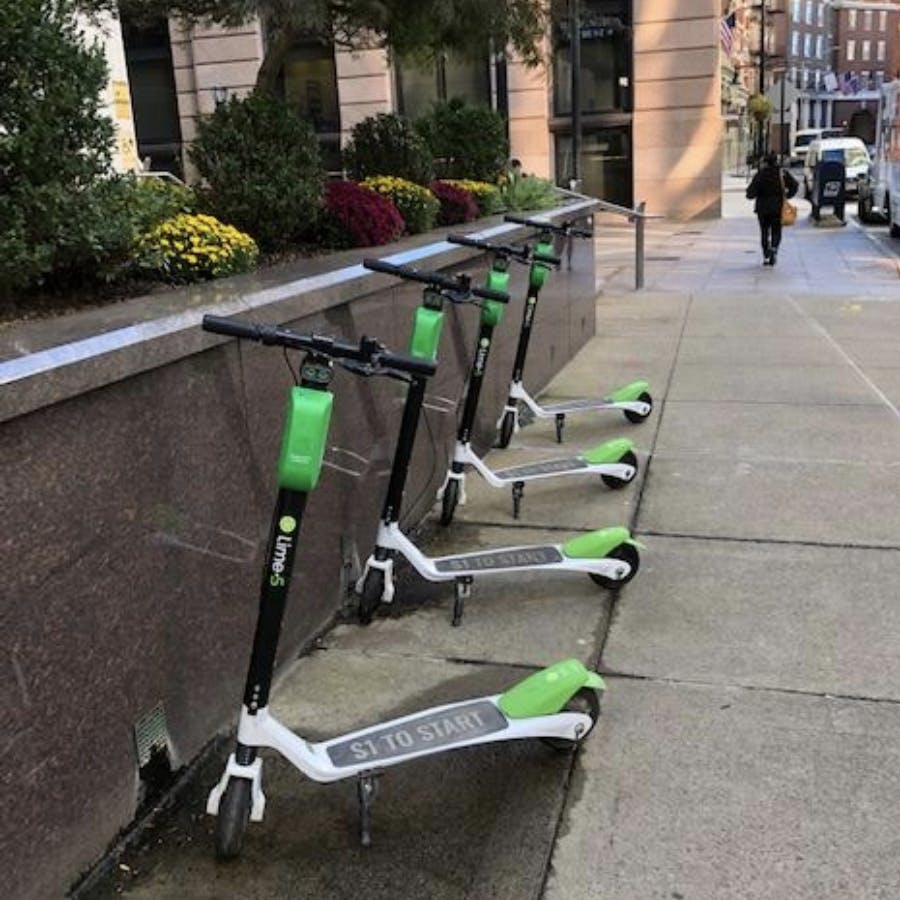
In other environmental news, GoLocal reports that Providence City Council President Pro Tempore Michael Corriea wants to ban JUMP Bikes and e-scooters from the city’s Ward Six until a community meeting can be held with transportation companies’ representatives.
Yes, we’re in the early, Wild West period of these new personal-transportation options.
New local ordinances and state laws are needed to control where they can be parked and retrieved, helmets should be mandated, and actions taken to discourage their vandalization. And there has to be a crackdown to make users of these things follow the rules of the road, such as obeying stop signs and traffic lights and barring people from riding them on sidewalks. A few of the users (especially boys and young men) use them like characters in a manic video game.
Still, we should put up with their inconveniences while appropriate rules are being crafted. They let people who cannot afford a car or truck get around easily; they take up far less space than other vehicles, and they don’t add to air pollution.
To read the GoLocal story, please hit this link:
Bristol’s Honored Sociopath
The Amanda Milkovitz’s long article in The Boston Globe about the nasty history of David Barboza of Bristol, R.I., is of course very disturbing in what he is said to have done, as is that someone with such a past (and not just in sexual matters) came to be treated as a honored civic leader, even receiving the town’s ultimate prize – being named in 2014 as chief marshal of the town’s nationally known Fourth of July parade!
As Ms. Milkovitz noted:
“This was the latest recognition for a man who’d held nearly every role in his hometown — cop, volunteer firefighter, and EMT; multiterm Town Council member; civil defense director; a local Democratic operative serving on various boards and commissions. He even was an administrative assistant at St. Mary’s Church and director of the cemetery.’’
So the most unsettling thing about Barboza’s career is how little his problematic history got in the way of his respected role in the town. I suspect that many, perhaps most such men would have moved far away lest scandal envelop them. But he apparently felt quite comfortable and safe staying in Bristol. Is there something about that town’s culture that explains this, or is it that most towns fall into silence in such matters and look the other way if someone like Barboza has a certain kind of influence?
To read Ms. Milkovitz’s article, please hit this link:
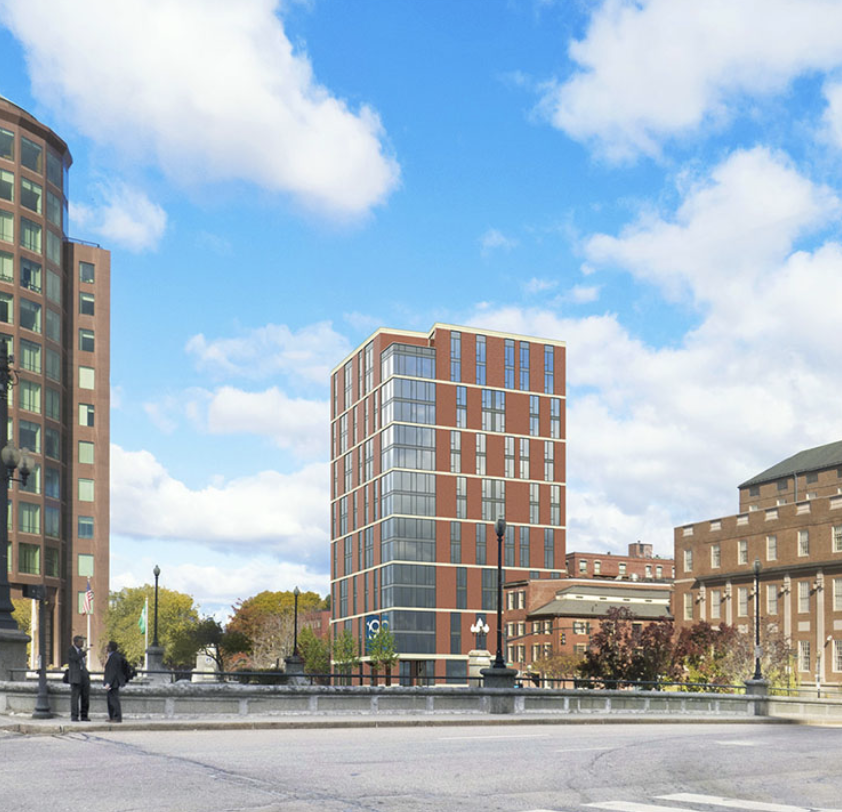
In New England and elsewhere an increasing number of colleges and universities are collaborating with private developers to build fancy apartment buildings (or call them “dorms’’) with heftier rents than students would pay to live in the usual barebones (often cinderblock) dorms.
In one way you could see this as a good thing because companies, not the colleges, pay to build the somewhat luxurious “dorms,’’ saving the institutions a lot of money (especially those in expansionary mode), which they can spend on other things, such as financial aid.
But a negative is that this housing separation between students from rich families and everyone else helps further widen class divisions in a time of yawning income inequality, which you can see all around you. Love those “gated communities’’! It does this in part by depriving middle- and lower-income students of much of the opportunity to mix with privileged students and gain access to their social and business connections. Residential segregation at colleges further consolidates the power of the permanent, hereditary upper class and reduces the sense of collective citizenship.
Speeding Up Repairs
It takes much longer in the U.S. than in other developed nations to build and repair public infrastructure, as my old friend Philip K. Howard, who chairs Common Good, has researched, and written about so well, in such books as Try Common Sense.
The Massachusetts Bay Transportation Authority is in need of massive repairs and major subway and commuter train service expansion. So it was heartening to read that the public-private partnership aspect of Gov. Charlie Baker’s 10-year, $18 billion transportation plan includes provisions to streamline the procurement process.
The Boston Globe had an example of how stuff gets held up and things can be moved along at a faster clip.
“Most notably, the {Baker} bill contains language aimed at avoiding what went down in Quincy last year: A development at the MBTA’s North Quincy Station ground to a halt after {state} Attorney General Maura Healey ruled the T broke the law by not bidding out work for a parking garage that would be built there. A private developer was going to build the garage, but it would have ultimately been owned by the T.
“Baker’s bill would avoid another such situation by relaxing procurement rules to allow developers to move forward on a wide array of public transportation infrastructure — from staircases to stations — that would be part of their projects but deeded to the state or the MBTA. ‘’
One of the more interesting Baker administration proposals is to set up a new, $50 million program for a $2,000-per-employee tax credit for employers who let workers telecommute, thus reducing the pressure on Greater Boston’s often clogged roads during weekday rush hours. Of course, few managers would be affected.
To read more about the Baker plan, which of course would very much affect Rhode Island, too, hit this link:
Other ‘Disgusting’ Congressional Districts
This item is regarding Trump’s Tweets calling at least part of Baltimore “a disgusting, rat and rodent-infested mess," where “no human being would want to live,” part of an attack on Democratic Congressman Elijah Cummings, an African-American who represents a “majority-minority’’ district that includes the troubled city as well as some affluent areas next to it. Writer and former Republican Max Boot wrote in The Washington Post:
“The racist nature of Trump’s attack is brought into sharp relief by pictures that are circulating on the Internet showing unsightly, garbage-strewn scenes not from Baltimore but from districts represented by Republican members of Congress. I can’t vouch for these photos, but the statistics don’t lie: Cummings’s district, with a poverty rate of 16.6 percent, is far better off than the districts represented by Rep. Harold Rogers (R-Ky.), which has a poverty rate of 29.1 percent; Rep. Ralph Abraham (R-La.), which has a poverty rate of 25.1 percent; or Rep. Carol Miller (R-W.Va.), which has a poverty rate of 23.3 percent. Indeed, of the 10 poorest states (Louisiana, Mississippi, New Mexico, West Virginia, Alabama, Arkansas, Kentucky, South Carolina, Arizona and Georgia), all except New Mexico are overwhelmingly Republican.’’
Why do people in these states, which decade after decade remain poorer than the rest of the country, keep voting for right-wing Republican politicians who don’t seem to do much to improve things?’ I’d say it’s often because of highly effective GOP diversionary appeals to social issues, such as abortion, gun rights and race.
I agree that some, but far from all of Baltimore, is a mess; Harbor Place, Johns Hopkins University and its famous medical complex and Peabody Institute (for music), the city’s museums and the Maryland Institute College of Art are there, too, as well as some spiffy residential neighborhoods.
I well remember the stretch of seedy sex shops, strip joints and bars called “The Block,’’ which had a certain raffish charm back in the ’70s, when my colleagues and I at a Delaware newspaper used to visit “Charm City’’ to cover events or interview people. And I miss those soft-shell crabs from the Chesapeake Bay we consumed in great quantities, washed down with Rolling Rock beer. Sadly, the region’s famous oysters were being wiped out by pollution in the bay, which Baltimore sage H.L. Mencken called a “great protein factory.’’
To read Mr. Boot’s Post column on Baltimore, please hit this link:
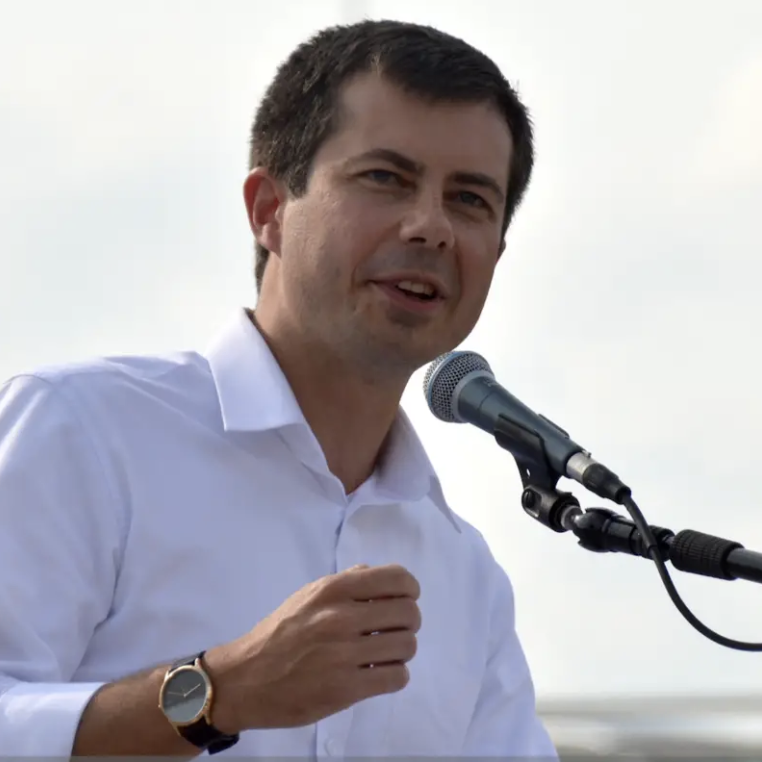
Presidential debates usually bore me, but I did watch some of last week’s Democratic debates. Once again, I was disappointed that the media, and I guess the public, tend to give more attention to big-talking legislators than to people who have actually and successfully run large complex governments, the nearest equivalent to the presidency being a governorship (not, say, being mayor of South Bend, Ind., which the very articulate and very young (37) presidential candidate Peter Buttigieg leads, or even New York City, whose mayor, Bill de Blasio, is also running for president).
Consider Democrat John Hickenlooper, the very successful former Colorado governor and Denver mayor, in a purple state, and Montana’s very successful current Democratic governor (in a very Republican state) Steve Bullock. Then there’s the very able governor of Washington, Jay Inslee.
Isn’t the presidency a government-management job, and so wouldn’t it be nice if presidential candidates had some extensive government- management experience? Of course, one of the problems faced by governors considering running for president is that they have to govern and deal daily with expected and unexpected problems, which takes time from speechifying/campaigning. Members of Congress have a lot more free time for campaigning and don’t get blamed for the sorts of crises that governors must address because they’re in charge of something big, with thousands of employees. That’s presumably why Mr. Hickenlooper waited to leave the governorship before running for president. Barack Obama’s lack of management experience sometimes painfully showed. Of course, sometimes such experience doesn’t work. George W. Bush was a catastrophically bad president and he had been Texas governor. But in general….
At least in the CNN-run debate Tuesday, the moderators often seemed more interested in pumping up some drama by trying to get the candidates to fight with each other than with drawing out details of their policy prescriptions. And on Wednesday, there was far too much yakking about candidates’ positions in the past, in Mr. Biden’s case some of it the distant past. Practicalities, opinions and knowledge change. As John Maynard Keynes said: “When the facts change, I change my opinion. What do you do, Sir?’’
A few other observations: There was too little time spent on foreign affairs, which in the end could be more important that domestic affairs. Remember 9/11? As for some Democratic candidates’ support for reparations for descendants of slaves – an electoral death wish! Debate sound bites are inappropriate for something as complicated as health-care reform. Biden better promise to serve only one term, and choose a very strong running mate.
Slurs
How far we’ve come. When I attended two all-boys schools and a mostly male college back in the ‘60s, virtually no one talked about any classmate’s sexual orientation. Too fraught a topic. Allusions/slurs were vague – “light in his loafers,’’ etc. And now we have a serious presidential candidate, Pete Buttigieg, who is married to a man. That may mean he can’t get nominated next year, but at his age he has lots of time.

Regarding the Chinese dictatorship’s choice between continuing to tighten its control over Hong Kong in the face of pro-democracy demonstrators even via another Tiananmen Square-style massacre, and loosening up to gain the West’s approval, I think they’d do the former. For the regime strengthening itself trumps everything else, even at the risk of briefly jeopardizing its economy by briefly scaring foreign investors away from the great money center of Hong Kong.
The regime has been sending troops to the border with Hong Kong and is ready to move in and put down any revolt with gunfire. Terror works.
Disunited States
As the crackup of the Soviet Union reminds us, no country, however big and powerful, is forever. (Russian dictator Vladimir Putin is hard at work trying to recreate a version of the Soviet Empire.)
That includes the U.S., whose regions seem to be separating themselves from each other at an accelerating rate. The most notable case is how the Northeast (and particularly New England) and West Coast see their differences widening with the old slave states. There’s an entertaining discussion of this in a FiveThirtyEight.com piece called “Political Confessional: The Man Who Thinks the U.S. Is Better Off as a Bunch of Separate Countries.’’
To read it, please hit this link:
Fabulous Food in Fraught Times
Boris Fishman’s latest book, Savage Feast: Three Generations, Two Continents, and a Dinner Table, is a sometimes grim, sometimes funny, sometimes mellow memoir, a travelogue and a bunch of recipes by a hyper-sensitive New York-based writer who left what is now called Belarus in 1988 when he was 9, dragging along loss, identity confusion, fear, hope, humor and intense appreciation of good meals, especially Slavic ones.